
Fire service must evolve to face climate change and threat of terrorism – report
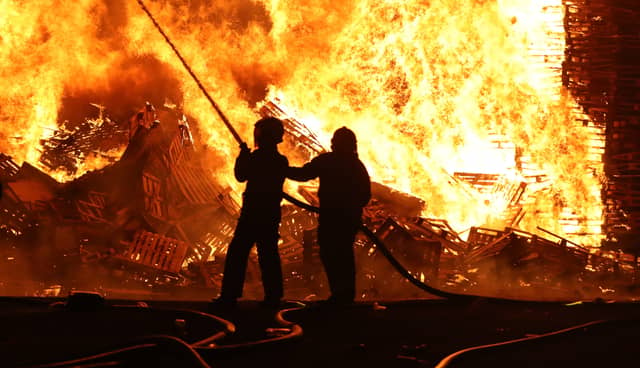

The fire service should evolve to ensure it is prepared for risks such as terrorist threats and increased flooding and wildfires linked to climate change, Scottish ministers have said.
The Scottish Government has published its Fire and Rescue Framework for Scotland 2022 which sets out ministers’ expectations of the Scottish Fire and Rescue Service (SFRS) and provides it with priorities and objectives.
It states that the overriding purpose of SFRS remains to improve the safety and well-being of communities and said that preventing fires and reducing their human, social and economic impact is a priority for the service.
The framework also said that SFRS “should be alive to the broader challenges facing our communities and evolve to meet new risks”.
As the nature and sophistication of the terrorist threat to the country “continues to evolve”, it states that SFRS should continue to work closely with its partners in Scotland and across the UK to understand current threats and ensure it has “robust multi-agency and service plans in place” should an attack happen.
It states: “SFRS crews should be prepared to respond appropriately to prevent further harm to life or infrastructure.
“As a national service, SFRS should continue to evolve to meet new and emerging risks across communities, including Mass Casualty Events.
“Going forward, SFRS firefighters should be appropriately trained and equipped to be deployed as part of a coordinated multi-agency response to such attacks.”
First Minister, Nicola Sturgeon, declared a global climate emergency in April 2019 and ministers said that SFRS must continue to address and prepare for new challenges as Scotland faces more extremes of weather.
Climate change is predicted to increase Scotland’s rainfall resulting in more severe and widespread flooding, while increased wildfires have also been linked to climate change.
Ministers said that SFRS must be sufficiently equipped to deal with the effects from wildfires and flooding, in particular, and should also prevent and reduce its own greenhouse gas emissions.
They suggest that SFRS should commit to transitioning over to ultra-low emission fleets, renewable energy and heat, low carbon buildings and materials.
Community Safety Minister, Ash Regan, said: “Throughout the pandemic, SFRS has been at the forefront in meeting the needs of local communities from delivering prescriptions and food to using rural fire stations as Covid testing sites.
“In addition to the challenges which Covid recovery brings, Scotland is also facing significant changes as a result of climate change, population changes and the expectations the public quite rightly holds for all public services.
“All organisations need to evolve to these new demands and this framework sets out how SFRS can do more for the people of Scotland, while adapting to the changing nature of risks facing communities across the country.”
She added: “In addition to the challenges which Covid-19 recovery and EU exit bring, Scotland is facing changes in our climate, our population and in the expectations the public holds for all public services.
“While the resultant challenges that Scotland is facing may be more complex, they also serve to foster opportunities for dynamic public sector organisations like SFRS to flourish.”