
Firefighters spend fourth day tackling wildfires
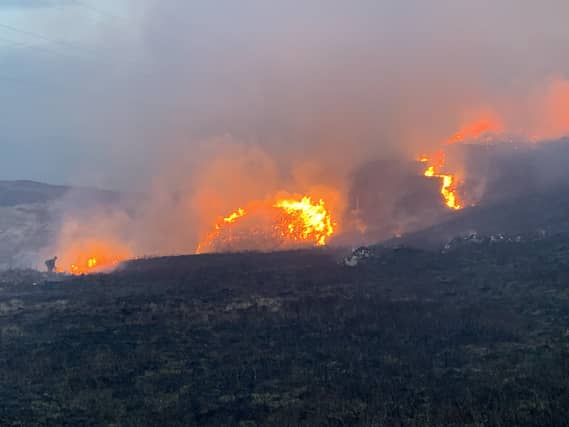

Firefighters are spending a fourth day tackling wildfires which have been burning on a “vast scale” in northern Scotland.
The Scottish Fire and Rescue Service (SFRS) said at 1pm on Tuesday that eight fire appliances remained at various locations extinguishing pockets of fire, from Nairn in the Highlands to Knockando in Moray.
Dozens of firefighters have been involved in tackling the blazes, which broke out on Saturday.
They have used specialist equipment including all-terrain vehicles, fogging units, leaf blowers and beaters on the ground, with SFRS wildfire tactical advisers co-ordinating the response.
SFRS deputy assistant chief officer Ross Robison said: “The vast scale of these fires has been challenging for our crews over the past four days, particularly because of the strong winds that have caused the fires and smoke to spread further across the landscape.
“There has been a significant deployment of resources to the area, including on call and whole-time crews from Aberdeenshire, Moray and Highland who have been working effectively alongside landowners and partner agencies.
“I’d like to recognise the efforts of all firefighters who attended and particularly those who are on call and often combine this role with other jobs in the community.
“They continue to be invaluable in responding to incidents like these that impact hugely on rural areas.
“We’ve been supported by the use of helicopters provided by partners for water bombardment and we have deployed specialist wildfire teams and assets.”
Several roads have been closed while emergency services deal with the wildfires.
People living and working in the area are advised to keep windows and doors closed if smoke is visible.
Scottish Land & Estates (SLE), which represents rural businesses, highlighted the role gamekeepers have played in helping to tackle the fires.
It called on the Scottish Government to urgently prioritise investment in wildfire prevention and response through measures including better resourcing of SFRS and more training for firefighters.
While the situation has improved following rainfall, land managers and gamekeepers remain concerned about persistent smouldering, particularly in areas of deep peat, and will continue to monitor the situation closely over the coming days.
Ross Ewing, director of moorland at SLE, said: “The Scottish Fire and Rescue Service played a vital role in this incident, particularly in command, control and co-ordination, but the reality is that the majority of the hands-on firefighting was undertaken by gamekeepers – using their own equipment, experience and local knowledge.
“Without that rapid response from the land management community, the situation could have been far worse – and concerns remain that flare-ups could yet occur.
“Their efforts were exceptional, but we cannot rely on goodwill and geography to deliver a credible wildfire response.
“In this case, private investment by landowners in their employees and specialist equipment averted a catastrophe. Ministers must recognise this when future spending decisions are made.
“Real weaknesses in our national resilience to wildfire have been laid bare in this incident.”
In response, Community Safety Minister Siobhian Brown said the Government had supported the SFRS with “substantial” annual budget increases.
“The Scottish Fire and Rescue Service (SFRS) is fully prepared to respond to wildfires and I am grateful to them and other responders for their outstanding efforts in recent days to keep people and property safe,” she said.
“We continue to support SFRS with substantial year-on-year budget increases that enable it to deliver the high standard of services required to keep communities safe. This year’s Budget includes £412.2 million for SFRS – an increase of £18.8 million.
“The Scottish Government is working with SFRS to support full implementation of its wildfire strategy, which will see the continued roll-out this year of new equipment, vehicles and personal protective equipment.”
Assistant chief officer Craig McGoldrick, who is the SFRS’s director of training, safety and assurance, said: “Wildfires in Scotland are getting bigger and lasting longer, which ultimately requires a more significant response.
“The current wildfires in Highland and Moray are an example of this. They are now in their fourth day and we have had significant resources in these places working to make the area safe.
“We launched a Wildfire Strategy in 2023, which is supported by a planned spend of around £1.6 million over the course of three years. This includes the provision of all-terrain vehicles and a range of specialist equipment. This has been supplemented by the creation of fourteen wildfire tactical advisor roles around Scotland, supporting crews to bring incidents to a safe conclusion.”