
Former RAF casualty reporter who had to watch footage of troops dying writes children’s books about mental health
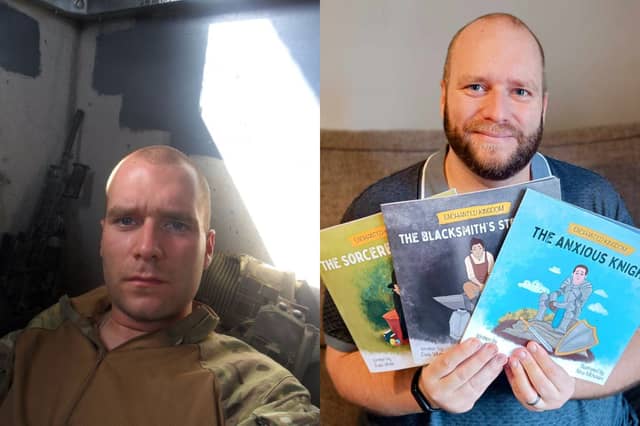

A former RAF casualty reporter, whose job watching footage of British troops getting killed in Afghanistan caused him to develop PTSD, depression and pushed him to attempt suicide, has now written children’s books about mental health to help his son and other youngsters understand “the struggles of others” and their own emotions.
Pete White, 36, a mental health consultant, who lives in Newport, Shropshire, with his wife, Kelly White, 40, a hotel receptionist, and their two-year-old son, Zack, joined the RAF at age 21 and was sent to Afghanistan in April 2011 as a communications engineer.
But, soon after he arrived, he was given the role of casualty reporter, where he would “sit in a room on (his) own watching British troops getting killed” for 13 hours a day, seven days a week, with around two incidents per shift. To cope, he binge ate and made himself vomit.
Two years later, Pete became a mental health consultant to help others, inspired by his experience in a previous job in IT when he talked one of his apprentices out of suicide.
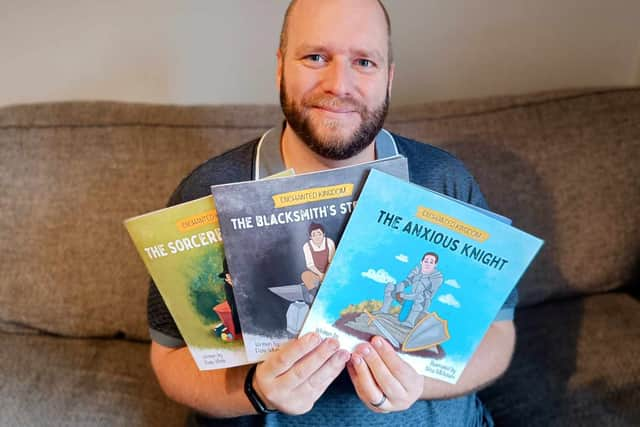
In June 2023, while having an anxiety episode, he decided to help educate his son on what it’s like to have anxiety and depression through fantasy books he wrote entitled The Anxious Knight; The Blacksmith’s Struggle; and The Sorcerer’s Secret – all of which tackle a different mental health struggle and illustrate it so children can understand.
Pete told PA Real Life: “My job in Afghanistan was to piece together the timeline and how someone was injured or killed.
“What it boiled down to was, for 10 weeks, I had to sit in a room on my own watching British troops getting killed and there was nothing I could do.
“I remember once I saw a small child, probably the same age as my son is now, who the Taliban had shot and burnt – I saw her little body on the side of the road.
“I hope my books can help children out there with their mental health, and also help them understand the struggles of others.”
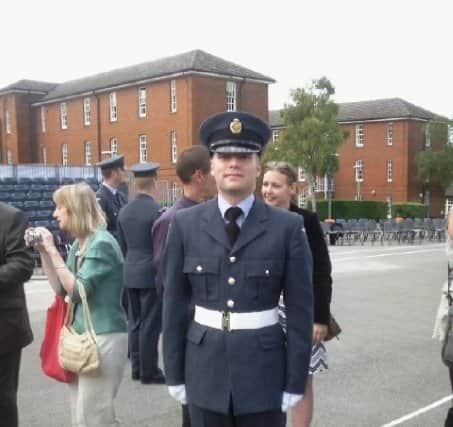
Pete joined the RAF in 2009, at age 21, after being inspired by his uncle, dad and grandfather who served in the military.
He completed six months of basic training, and then went on to become a communications engineer, before being sent to Afghanistan in April 2011, where he spent three weeks working on a “secret computer system.”
Pete explained: “They didn’t know where to put us so they basically invented jobs for us – I was a nightwatchman so I sat down in front of six big screens every night, monitoring the communication networks.
“Then, I was given the role of a casualty reporter – I would monitor any new reports coming in when a service person was injured or killed.
“There was also a helicopter landing pad right outside my door for the medical evacuation helicopter and I’d see bodies go on that.”
For the most part, Pete felt like he could “switch off” and did not get physically upset, but it took a psychological toll on him.
“It was a very gradual thing – I didn’t see anything unusual or weird about it then, but I think it was my coping mechanism.
“I had no control of what was going on out there, and I think it was my way of getting some level of control.”
While working, Pete said he did not receive any support.
“There was absolutely nothing in place – there was very much the expectation of, ‘you’ve got a job to do, just crack on with it’,” he said.
“We had some guys trained in trauma risk management but I don’t recall ever being spoken to by those guys, and that was it – we had six weeks at home, and then had to go back to work and crack on as normal.”
When starting work again in 2012, Pete felt like “something wasn’t right” as he was losing sleep, he was angry, felt low and kept having nightmares.
Over time, these symptoms worsened, and in 2014, he became psychotic and attempted suicide.
He explained: “I lost all touch with reality – I thought it was my purpose to fly to Syria and single-handedly kick out ISIS somehow.
“It wasn’t until I was at my very worst that I got diagnosed with PTSD – before that, I wasn’t taken seriously.
“I had periods where I’d self-harm, and it became very clear to everyone that I had no future left in the military.”
So, in 2017, Pete was medically discharged.
Two years later, he decided to become a mental health consultant, because at his previous job, when he was working in IT, he realised that mental health was not a priority in the workplace, and he even talked one of his apprentices out of suicide.
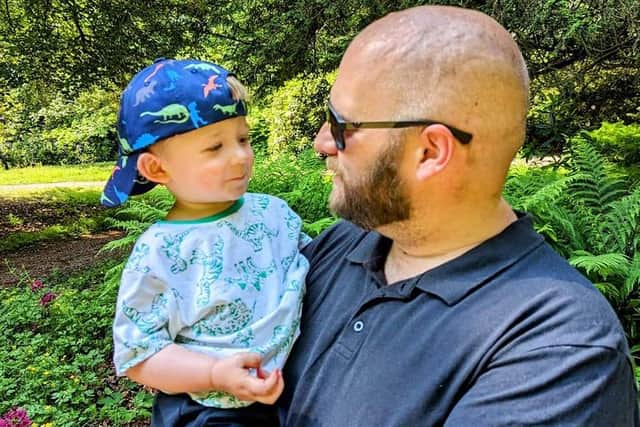
He said: “I realised I wanted my son to understand my anxiety and PTSD so if he ever sees me having a panic attack he will understand what it is, why it happens, and that it doesn’t make a person any less.
“So, I got my laptop and wrote a first draft of a children’s book called The Anxious Knight.”
Pete then realised that he wanted to touch on other mental health difficulties he has had so, under the group title The Enchanted Kingdom: Where Empathy Ignites and Adventures Unfold, he decided to write further books called The Blacksmith’s Struggle, about depression; and The Sorcerer’s Secret, about overcoming past adversity, and his next book will be about a King with PTSD.
Pete said: “In The Anxious Knight, he is sent on a mission to retrieve a magical sword, but he has a lot of anxiety and worries a lot, even about things that don’t really make sense to worry about.
“In The Anxious Knight, he talks to a kind wise lady and she gives him a round pebble and tells him how in years gone by the pebble used to be a rough stone, but after all this time, it’s come out stronger.”
On why he thinks it is important for children to understand these mental health struggles, he said: “I think emotions are very intangible things, so they’re quite hard for children to understand.
“Sometimes they find it hard to express certain feelings and it comes out in a different way, such as anger, and I want them to be more in touch with their emotions.
“I think then, in the future, if they ever have any difficulties with their mental health, they might be more likely to chat to people about it.”
PA Real Life approached the Ministry of Defence for comment, however, they did not respond in time for publication.
To purchase Pete’s books, visit: enchanted-kingdom.com.
For support, contact: samaritans.org.