
Four-time World’s Strongest Disabled Woman felt disability meant she ‘failed as a mother’ until she found powerlifting
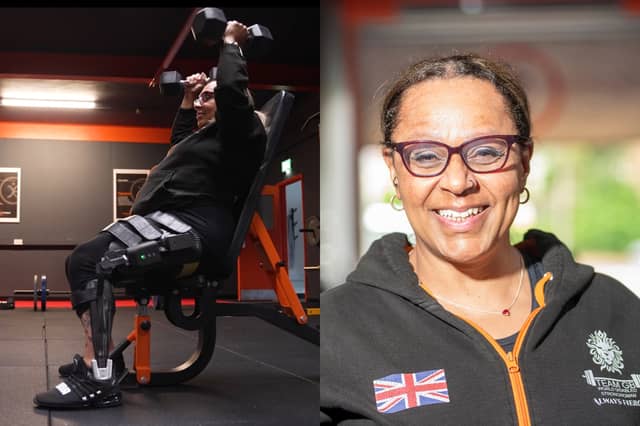

A four-time World’s Strongest Disabled Woman once felt she was “failing as a mother” because of her disability until para-powerlifting and a bionic leg gave her a new lease of life.
Alfie Scott, 52, a receptionist, who lives in Basingstoke with her husband, Alan Scott, 66, was a sporty teenager and dismissed her severe joint pain for growing pains.
The mum of two and grandmother of one discovered, at the age of 25, she had stage four osteoarthritis, which led to her having 20 surgeries, which did not improve her condition.
Her left foot became paralysed by the age of 30, with doctors even offering amputation which she turned down, and Alfie struggled with depression, weight gain, and was frustrated at not being able to play with her children.
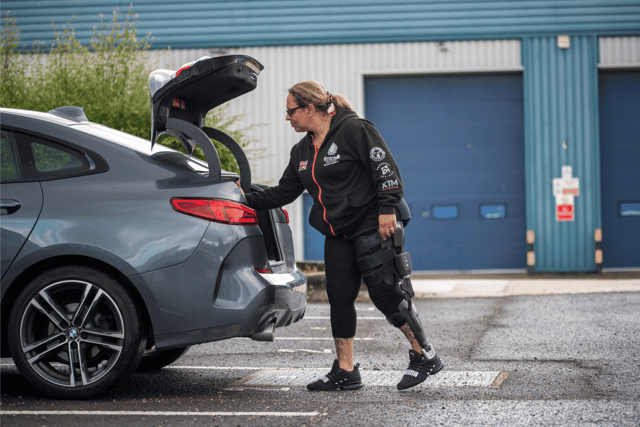
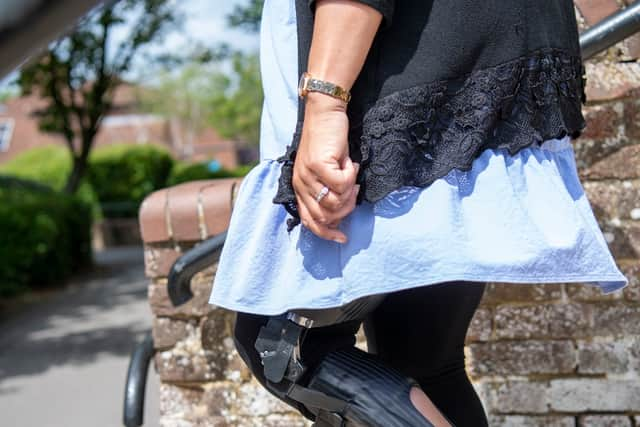
In 2021, she tested a revolutionary bionic leg that restored her ability to walk pain-free for the first time in 25 years – she now feels like she has got her life back.
Alfie told PA Real Life: “I missed a lot of time with my children when they were small.
“I didn’t feel like I was the mother I should have been because I was stuck in this rut with this leg that didn’t want to work properly.
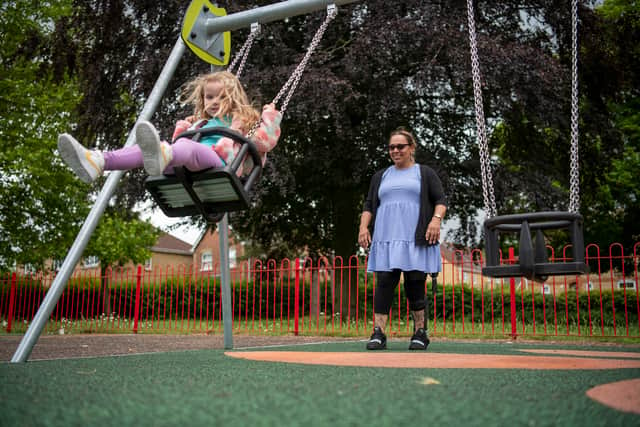
“Now, I can take my granddaughter to do things, we can go anywhere.
“The freedom it gives you is absolutely amazing – I don’t really think I do it justice when I say it is like getting a new limb.”
As a teenager Alfie was very active but experienced severe pain after exercise, which she dismissed as growing pains.
In her 20s, the pain continued, but she avoided seeking medical advice until, at the age of 25, she seriously injured herself while bending down to reach the video player in her living room.
She hurt her knee and foot, and was diagnosed with stage four osteoarthritis, which resulted in more than 20 surgeries on her joints over the course of 20 years, none of which relieved her of the pain.
By the age of 30, her condition declined even more – she ruptured her Achilles tendon and calf muscles, and her left foot became paralysed.
She was even offered an amputation, which she declined, instead relying on crutches and foot braces.
She said: “I went from this sporty, fit person to extremely depressed, miserable, and I felt like I was failing as a mother because I couldn’t play with my children.
“I would fall over all the time too.
“It was traumatic.”
Then, in 2012, she found inspiration while watching the London Paralympics.
She said: “I watched a man swimming in the Paralympics with no arms and no legs, and I thought, ‘Lord, if he can do something, there’s got to be something out there for me’.
“So I thought, ‘Right, I’m going to try to go to the gym and see what happens’.
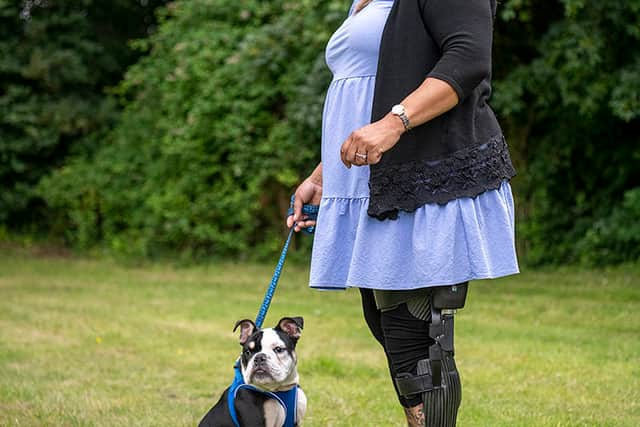
Alfie began going regularly and eventually got a trainer who introduced her to powerlifting.
Alfie ended up going to a British weightlifting taster day and later joined the squad.
In 2013, she began competing in para-powerlifting, going on to win several competitions.
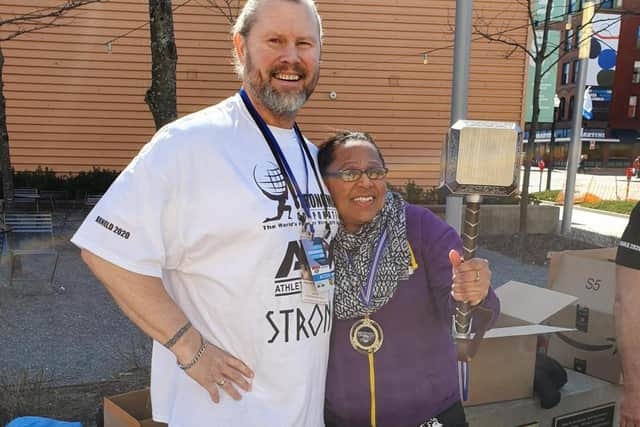
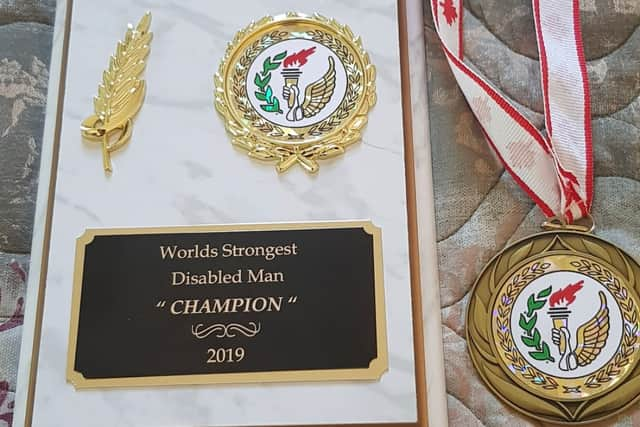
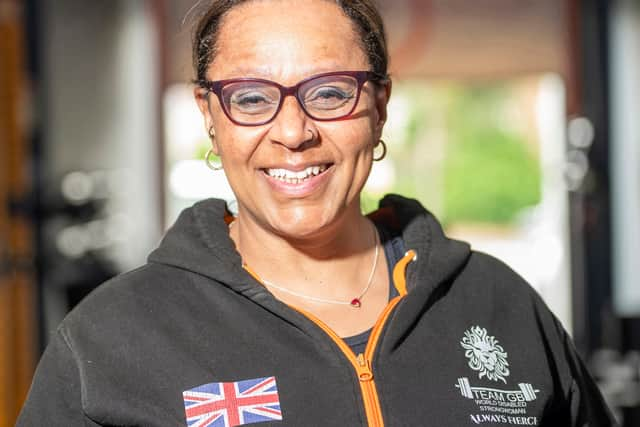
She has won the World’s Strongest Disabled Woman championship four times.
In 2019, she won the competition in Ontario which included pulling a 2,000lb (907kg) UTV vehicle for 20 metres in 62 seconds.
In 2019, while seeking sponsorship for an upcoming event, she contacted Blatchford, a leading manufacturer in orthotic and prosthetic devices.
Through this, Alfie was selected to pilot a prototype of the Tectus bionic leg in 2021 – it uses springs, hydraulics and sensors to deliver a more natural gait.
Its adjustable spring-assist mechanism ensures optimal leg extension just before heel strike, promoting smoother, more symmetrical walking.
The bionic leg transformed Alfie’s life – she lost weight, regained her health, and found her true passion in para-powerlifting.
“Suddenly, I regained my freedom – it was the best feeling in the world.
“On the very first day, I found myself crying in the clinic because I hadn’t experienced that kind of mobility in 25 years.
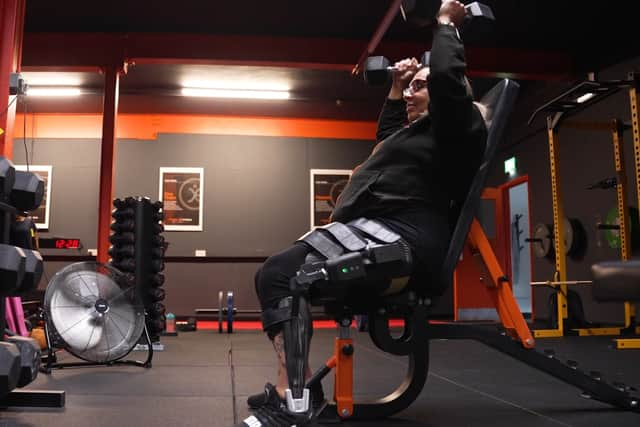
“With my new bionic leg, there’s nothing I can’t do. I can tackle slopes, walk on grass, navigate cobblestones, and manage stairs with ease – activities that were impossible for me before.
“The pain I endured for decades has completely disappeared.”
She was especially grateful to be able to play with her grandchild – something she had missed out on with her own children.
Alfie continued to compete until 2023 and now works as a liaison, helping others on similar journeys and empowering other women.