
Frankie Dettori and the unforgettable ‘Magnificent Seven’
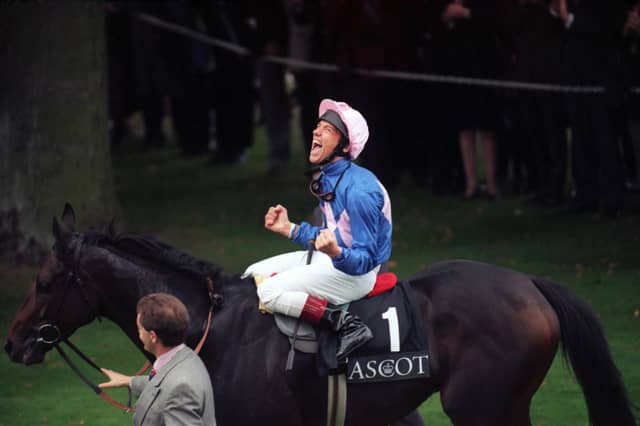

As Frankie Dettori prepares to bring his career to a close at the end of 2023, his name will forever be etched in Turf legend for what he achieved on an unforgettable afternoon at Ascot in 1996.
On Queen Elizabeth II Stakes day, with the BBC cameras rolling, he went through the card with seven winners from seven rides – his ‘Magnificent Seven’.
It was a historic occasion within the sport, but it resonated in the big wide world, too, securing a special place in popular culture for the Italian jockey.
Willie Carson had gone close with six winners from seven rides on Northumberland Plate day at Newcastle in 1990, though his through-the-card chance had disappeared as early as the third race.
But the status of the meeting at Ascot on Saturday, September 28, ensured that nothing could match the impact of Dettori’s supreme achievement.
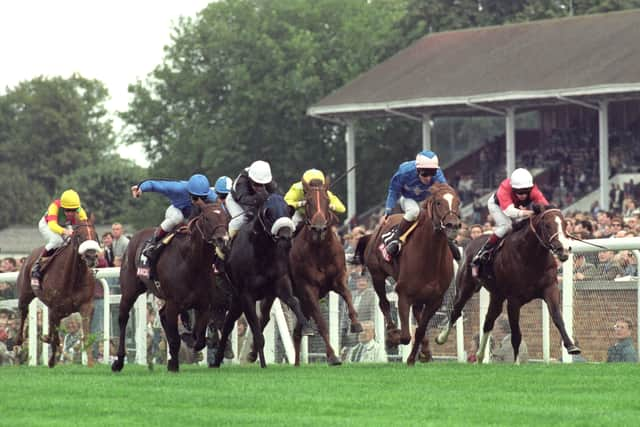
Dettori began by winning the Cumberland Lodge Stakes on Wall Street (2-1), and followed that when Diffident (12-1) scrambled home by two short heads in the Diadem Stakes.
Both horses were owned by his Godolphin paymasters, who also provided his mount in the day’s feature Group One race, the Queen Elizabeth II Stakes.
Mark Of Esteem was sent off a 100-30 chance and put up a career-best performance in beating Henry Cecil’s crack filly Bosra Sham by one and a quarter lengths.
With the yankees already in the bag, Fatefully (7-4) won the next race, another handicap, by a neck in the Godolphin colours, and number six came up when the Ian Balding-trained juvenile Lochangel (5-4) led all the way for victory by three-quarters of a length in a conditions event.
And so to the remarkable chain of events surrounding the seventh race. The two-mile Gordon Carter Handicap was the revenge of the mug punters.
Long derided by ‘serious’ punters for filling the bookmakers’ satchels with easy money from bets built on ridiculous dreams, they were on Dettori’s mount Fujiyama Crest to a man – or woman – as the final leg of an unheard of seven-timer. It could not happen, surely.
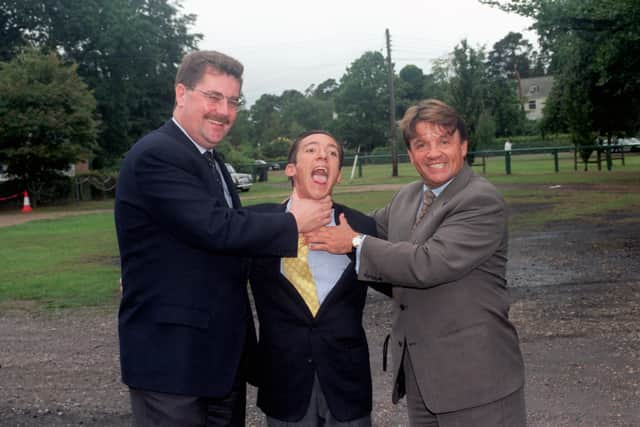
Early-bird punters were locked into a price – William Hill went 11-1 – but there were still millions to be saved in the offices if Fujiyama Crest’s odds could be slashed.
The off-course representatives smashed into the horse, but the on-course layers stood their ground.
In an unprecedented situation, bookmakers at Ascot could not believe their luck in the amounts of money being thrown at them at such poor odds, and they wanted to take as much of it as they could.
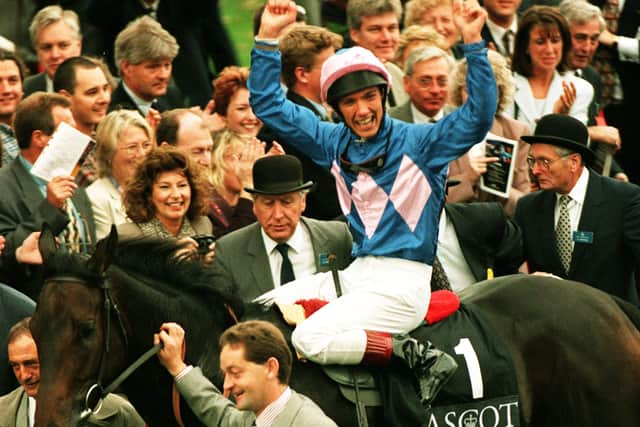
Dettori bounced him out of the stalls and was soon in front, playing catch-me-if-you-can, and as they turned into the final straight he was still there as the crowd’s roars reached frenzied proportions.
Pat Eddery delivered a fierce challenge on Northern Fleet, throwing everything into the finish, but Fujiyama Crest held on by a neck.
Dettori returned to the winner’s enclosure among delirious racegoers and shell-shocked bookmakers, while off-course the number crunchers were totting up losses to the industry of about £30million, with Hills over £8m down and Ladbrokes even more.
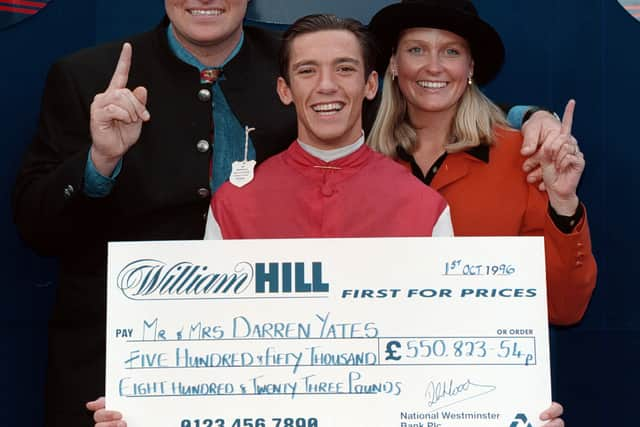
Two of the ‘mug punters’ were now half-millionaires, and many others were to be paid out the sort of returns that had fuelled their dreams.
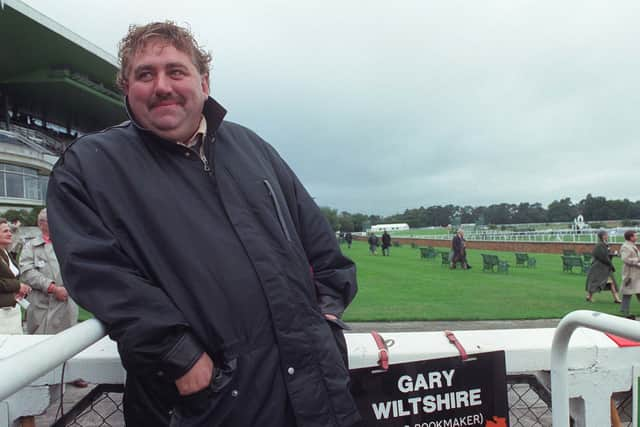
“I thought the seven races looked hard at Ascot, so I thought I’d go there and try to win a few quid, never dreaming it was going to end like that. ‘It was just an amazing thing that happened.
“I lost over £1m – and just in the one race. I was winning going into the last.”
The day was immense for Dettori, both for his unique place in racing history and for his image outside it. Never again would he be a little fish swimming in the shallows of celebrity.
Little wonder then that when the opportunity arose to acquire a special memento of the day, he took it – and bought Fujiyama Crest.