
Frederick Douglass ‘amongst the people he loved’ as statue unveiled in Belfast
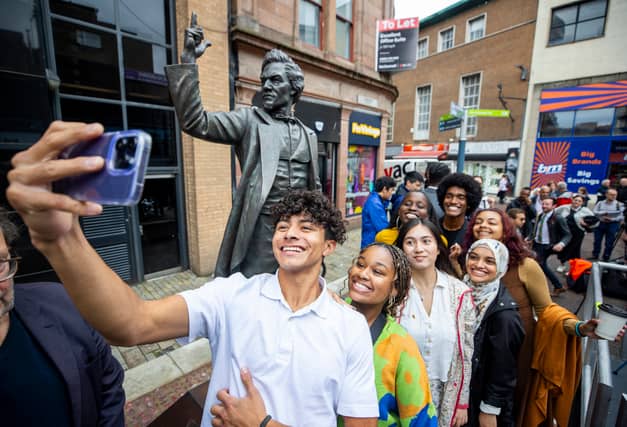

Frederick Douglass is “amongst the people he loved”, as a statue of the anti-slavery campaigner has been unveiled in Belfast.
Douglass was born into slavery, but managed to escape in 1838 and went on to become a national leader of the abolitionist movement in America, known for his eloquent speeches and writings.
He first visited Belfast in 1845 at the invitation of the Belfast Anti-Slavery Society and returned for a second visit in 1846.
Professor Christine Kinealy, the director of Ireland’s Great Hunger Institute at Quinnipiac University in Connecticut, is the author of Frederick Douglass and Ireland: In His Own Words.
At the unveiling of the statue Dr Kinealy told the PA news agency of Douglass’ significance to Belfast.
“Frederick Douglass is increasingly a symbol of international social justice,” she said.

Douglass gave around 50 speeches in his time in Ireland and could speak for up to two hours without notes.
Dr Kinealy said the statue was a homecoming for Douglass, who often expressed his love for the city.
“He was just so incredibly articulate, and so thoughtful in his commentary, and even more incredible when you think it was illegal to teach people who are enslaved to read or write, so he was totally self taught,” she said.
“I think the most beautiful is that when he was leaving Belfast, he said: ‘Wherever else I feel myself to be a stranger, I will always know I have a home in Belfast.’
“And to me that’s what today represents, Frederick Douglass finally coming home to Belfast to be amongst the people he loved.”
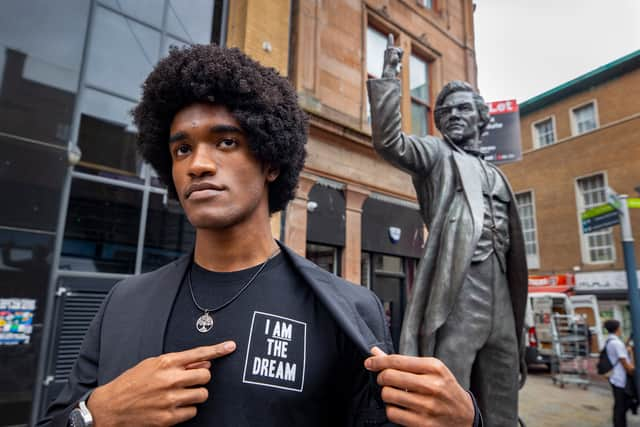
Some 12 students from the US attended the unveiling as part of their work with the Frederick Douglass Global Fellowship, a programme that studies social justice leadership in America, South Africa, and Ireland.
Fellowship student Akil Cole, from Georgetown University, said he was “inspired” to see the statue of Douglass in Belfast.
“We’re able to remember them for their work… but I think more importantly, there are people that actually still care about his work, about social justice, about equity, about access to rights, not just in a historical sense, but in a very present sense,” he said.
“So it’s nice to be here for this. It’s also important to remember that this moment is just a moment and after this we have to get back to work.
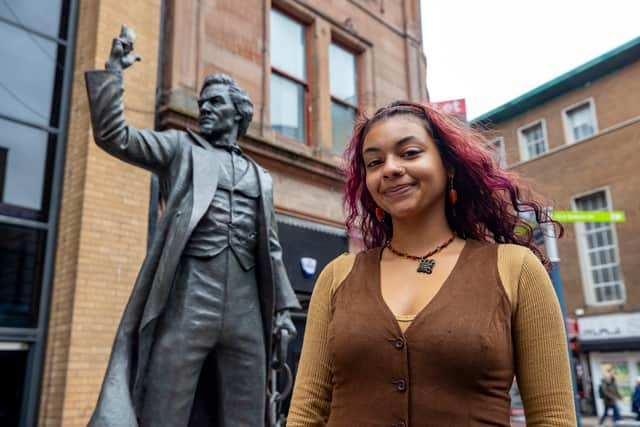
Zoriana Martinez, fellowship student from Wayne State University, said the statue was a sign of “international camaraderie”.
“I think it really just reminds us that we’re not all so different apart from each other,” she said.
“I think that Frederick Douglass kind of spoke about when he was out here, how he felt like he really was treated like a human for the first time, and really just seeing that kind of sense of international camaraderie and international collective.
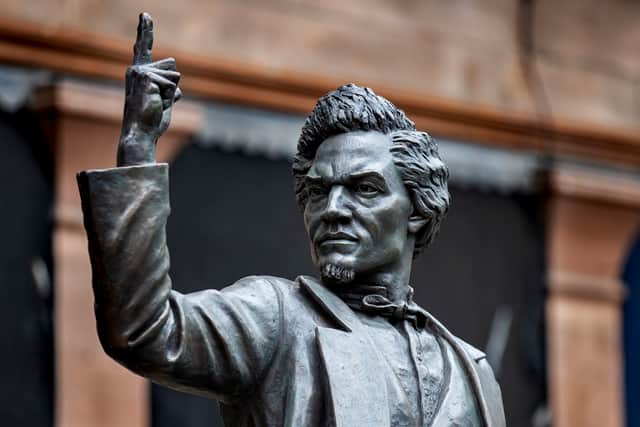
The life-size statue was created by renowned Scottish figurative sculptors Alan Beattie Herriot and Hector Guest.
The first statue of Douglass in Europe, it is located beside the historic First Presbyterian Church in Rosemary Street where he delivered lectures during his time in Belfast.
Belfast Lord Mayor Councillor Ryan Murphy said: “I think it’s absolutely fantastic, it’s important that we tell the history of Belfast.”
He added: “Frederick himself was the leader of the abolitionist movement, he was a former slave and he had to come to Britain and Ireland in fear of being captured again back in America, and during that time he noted the welcome that he received in these parts.
“He was brilliant in terms of his ideas and his beliefs, and I think it’s important this is here and we can actually tell that story, and talk about his ideas and beliefs, and they’re still as relevant today as they were in the 19th century.

Tukura Makoni, policy officer from the African Caribbean Support Organisation Northern Ireland, said the statue would represent “many things to many people” but added that the African/Caribbean community were not engaged with the process of the statue being built.
“The way we can improve things for all communities here in Belfast is by including them in processes that dictate the things that are influential or significant in our lives, the basic things,” he said.
“Even when looking at the erection of this statue, the African and Caribbean community was not consulted, was not engaged about how we feel about the statue.”
He added: “We weren’t consulted about where it was going or that it was even going up.

Belfast has been confirmed as the host city for Douglass Week 2024 which commemorates the life of the anti-slavery campaigner.
The week will feature events staged in person and online in Belfast and across Northern Ireland, as well as the Republic of Ireland and the USA.