
Gabrielle ‘Coco’ Chanel was the first superstar fashion designer, says curator of V&A exhibition

As well as introducing groundbreaking garments for women, Gabrielle ‘Coco’ Chanel embodied her brand in a way no other designer had done before, a new exhibition highlights.
“Before her, designers weren’t really known,” says Oriole Cullen, curator of modern textiles and fashion and the V&A. “Their names were known, but they weren’t visible figures within society.”
“The Chanel brand as it stands [today] is really based on these ideas that she ushered in 100 years ago,” Cullen says, which is where the exhibition title comes from.

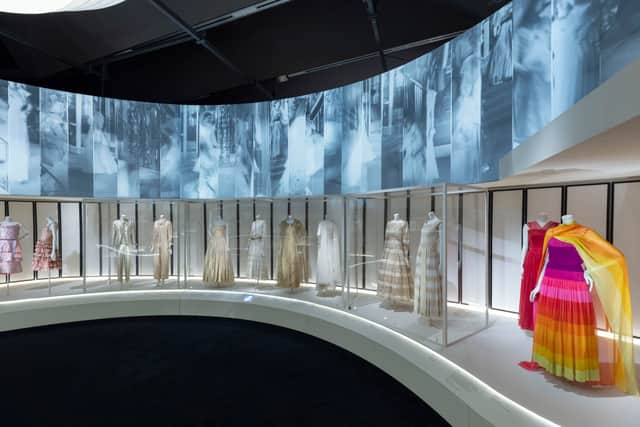
Bringing together nearly 200 outfits, the show features items from the opening of her first millinery boutique in Paris in 1910, to the showing of her final collection, two weeks after she died in 1971.
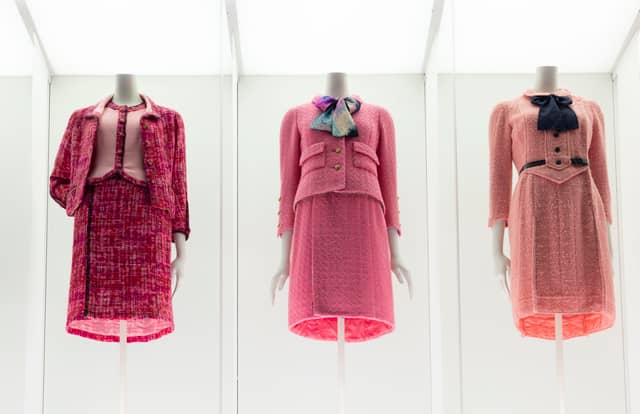
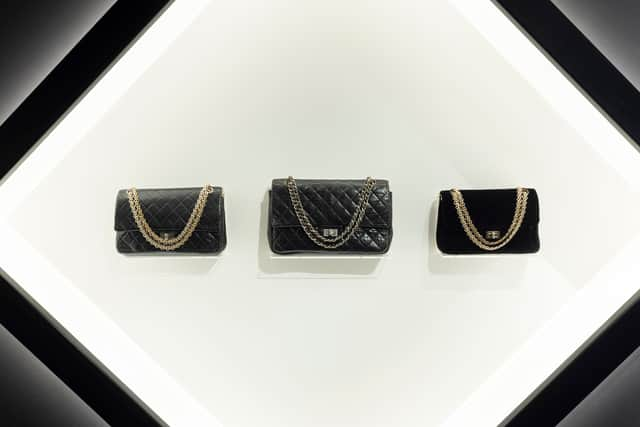
Signature designs on display include little black dresses, tweed suits and quilted leather handbags – the most iconic of which is the 2.55 bag.
“The 2.55 has never really gone out of fashion since she designed it in 1955,” Cullen says.
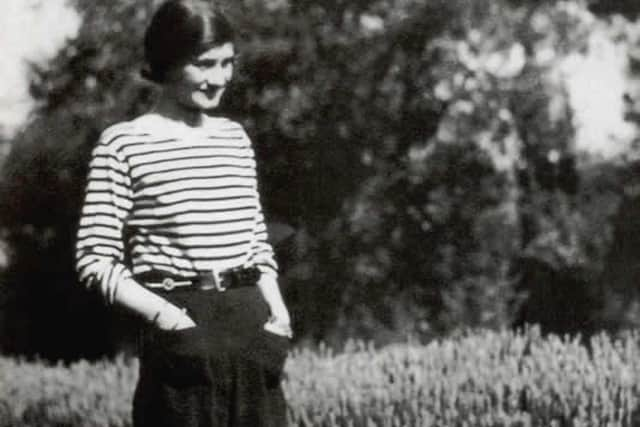
Part of the upper echelons of French society, Chanel initially relied on wealthy lovers, such as French ex-cavalry officer Etienne Balsan and English polo player Arthur Edward ‘Boy’ Capel to fund her boutiques.
Later becoming a celebrity in her own right, she amassed a personal fortune, thanks to the success of her fashion, accessories and cosmetics lines.
“The perfume Chanel No5 was introduced in 1921, but then introducing make-up in 1924 and skincare in 1927, she was really ahead of her time,” Cullen says.
“It’s something she was doing because she was designing for herself.”
Chanel is credited with helping to liberate women from the constricting corsets and long skirts that were de rigeur at the turn of the century, and for popularising softer textiles, such as jersey.
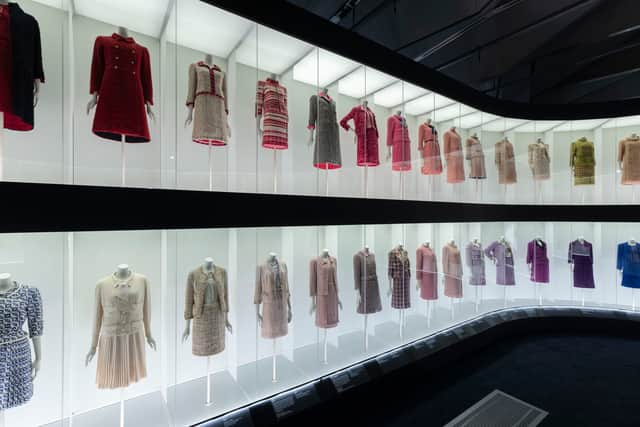
The exhibition – which was originally staged at Paris’s Palais Galliera in 2020 – highlights the brand’s UK and Ireland connections via British Chanel Limited.
“This was an umbrella company set up in 1932 to work with an array of British textile manufacturers,” Cullen explains. “From lace in Nottingham, cotton velvets from Manchester, wools from Huddersfield, and also voiles and silks from Carlisle.
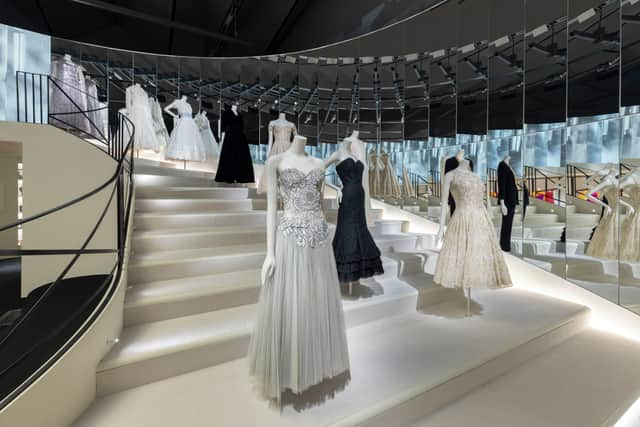
Split into 10 sections, the exhibition concludes with a recreation of the mirrored staircase from Chanel’s Paris atelier.
“Gabrielle Chanel used to sit at the top of the stairs when she was having presentations,” Cullen explains.
“The models would descend and this faceted mirror would reflect back the audience’s faces to her, so she could read the mood in the room.”
Gabrielle Chanel. Fashion Manifesto opens at London’s V&A Museum on September 16. Tickets available at vam.ac.uk/chanel.