
Gaza death toll exceeds 20,000 as Israel expands ground war against Hamas
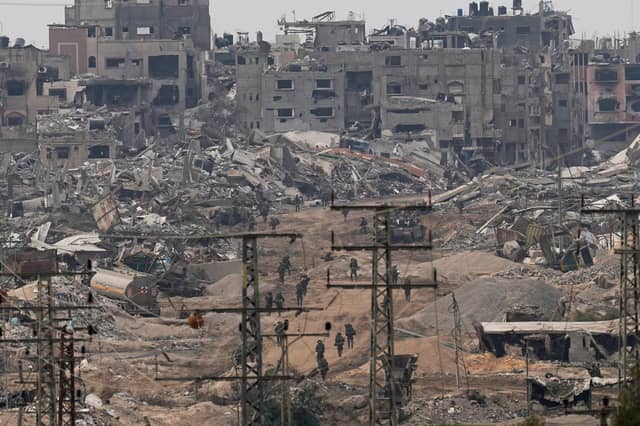

Israel’s war to destroy Hamas has killed more than 20,000 Palestinians, health officials in Gaza have said.
The announcement comes as Israel expanded its offensive and ordered tens of thousands more people to leave their homes.
The deaths amount to nearly 1% of the territory’s pre-war population.
Israel’s aerial and ground offensive has been one of the most devastating military campaigns in modern history, displacing nearly 85% of Gaza’s 2.3 million people and levelling wide swathes of the tiny coastal enclave.
More than half a million people in Gaza – a quarter of the population – are starving, according to a report from the United Nations and other agencies.
Israel declared war after Hamas’s October 7 attack, in which militants from Gaza stormed into southern Israel, killing some 1,200 people and taking some 240 hostages. Israel has vowed to keep up the fight until Hamas is destroyed and removed from power in Gaza and all the hostages are freed.
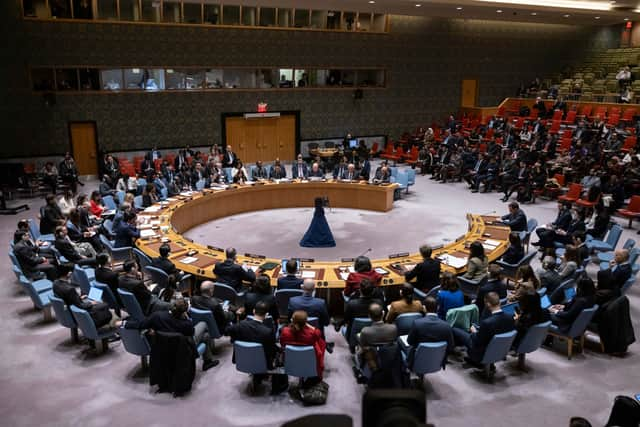
After many delays, the UN Security Council adopted a watered-down resolution on Friday calling for the immediate acceleration of aid deliveries to civilians in Gaza.
The United States won the removal of a tougher call for an “urgent suspension of hostilities” between Israel and Hamas. It abstained in the vote, as did Russia, which wanted the stronger language. The resolution was the first on the war to make it through the council after the US vetoed two earlier ones calling for humanitarian pauses and a full ceasefire.
“That such a brutal conflict has been allowed to continue and for this long – despite the widespread condemnation, the physical and mental toll and the massive destruction – is an indelible stain on our collective conscience,” he wrote on the social media platform X, formerly Twitter.
Israel, shielded by the United States, has resisted international pressure to scale back its offensive. The military has said that months of fighting lie ahead in southern Gaza.
Evacuation orders have pushed displaced civilians into increasingly smaller areas of the south as troops focus on the city of Khan Younis, Gaza’s second largest.
The military said late on Thursday that it is sending more ground forces, including combat engineers, to Khan Younis to target Hamas militants above ground and in tunnels.
On Friday, it ordered tens of thousands of residents to leave their homes in Burej, an urban refugee camp, and surrounding communities in central Gaza, suggesting a ground assault there could be next.
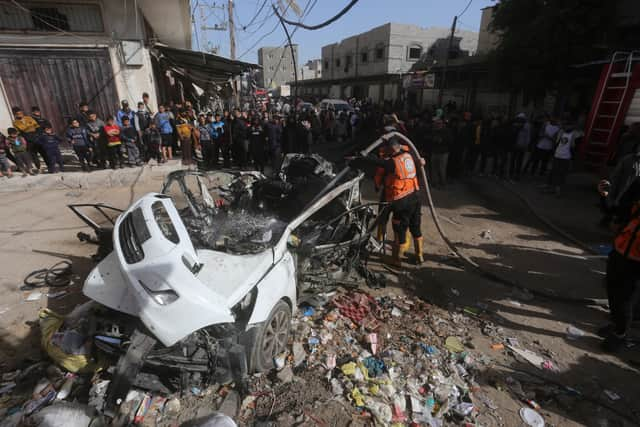
Rafah is one of the few places in Gaza not under evacuation orders but has been targeted in Israeli strikes almost every day.
The air and ground campaign continued in the north, where Israel says it is in the final stages of clearing out Hamas militants.
Mustafa Abu Taha, a Palestinian farm worker, said many areas of his hard-hit Gaza City neighborhood of Shijaiyah have become inaccessible because of massive destruction from air strikes.
“They are hitting anything moving,” he said of Israeli forces.
Gaza’s Health Ministry said it has documented 20,057 deaths in the fighting and more than 50,000 wounded. It does not differentiate between combatant and civilian deaths. It has previously said that roughly two-thirds of the dead were women or minors.
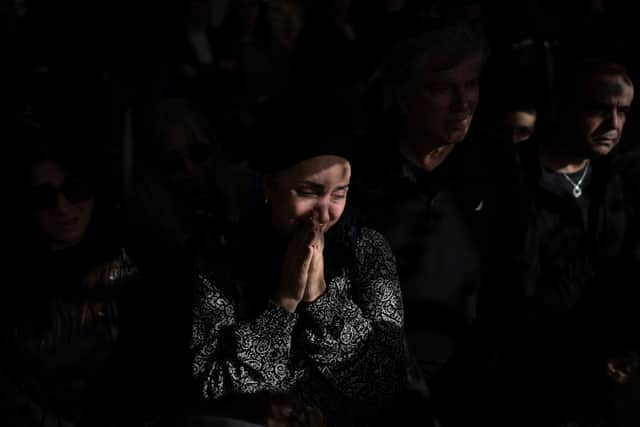
Israel’s military says 139 of its soldiers have been killed in the ground offensive. It says it has killed thousands of Hamas militants, including about 2,000 in the past three weeks, but it has not presented any evidence to back up the claim.
For most of the war, Israel also stopped entry of food, water, fuel and other supplies except for truck convoys of aid from Egypt, which cover only a fraction of the needs in Gaza.
Because of insufficient aid entering Gaza, the extent of starvation has eclipsed the near-famines of recent years in Afghanistan and Yemen, and the risk of famine is “increasing each day,” the UN report said.
An Israeli military liaison officer with Gaza said there is no food shortage in Gaza, saying sufficient aid is getting through.
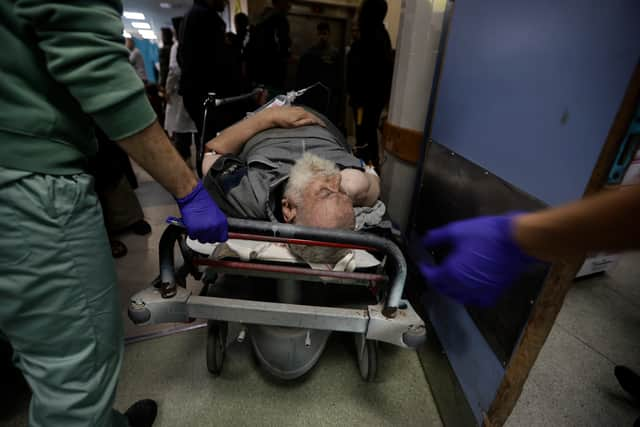
The war has also pushed Gaza’s health sector into collapse.
Only nine of its 36 health facilities are still partially functioning, all located in the south, according to the World Health Organisation.
The agency reported soaring rates of diseases in Gaza, including a five-fold rise in diarrhoea and increases in cases of meningitis, skin rashes and scabies.