
GDP figures deal blow to one of Sunak’s five priorities

News that the economy shrank in October has dealt a blow to one of Rishi Sunak’s five priorities.
But he may see hope that another of his priorities can be achieved after seeing off a backbench rebellion on his Safety of Rwanda Bill – viewed by some Conservatives as vital to “stopping the boats”.
The priorities have dominated the Prime Minister’s public appearances this year, after he promised in his new year’s speech to halve inflation, grow the economy, reduce debt, cut NHS waiting times and stop small boat crossings.
Saying there would be “no tricks, no ambiguity” on delivering the pledges, Mr Sunak asked the public to judge his Government on “results”.
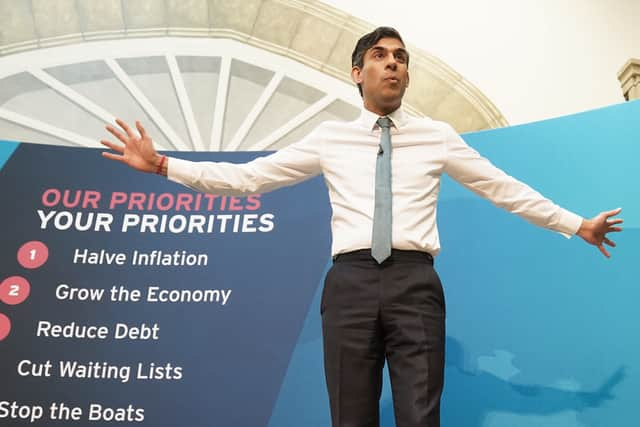
– Halve inflation
The Prime Minister has met his pledge to halve inflation this year.
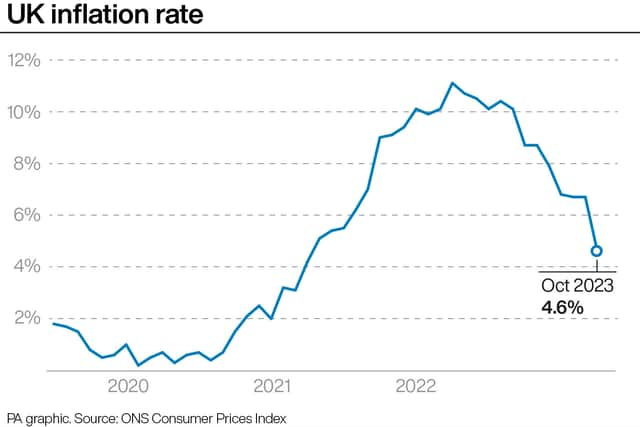
Economists suggested the fall in inflation was largely due to lower energy costs and rising interest rates rather than Government action, but Mr Sunak hailed the figures, saying he has “delivered” on his “top priority” for the year.
However, Bank of England governor Andrew Bailey sounded a note of caution, saying it was “much too early to declare victory” against inflation.
Despite the fall over the past year, Mr Bailey said inflation remained “too high” at more than double the bank’s target rate of 2%.
– Grow the economy
A surprise fall in GDP during October means Mr Sunak faces more of a struggle to meet his target of growing the economy.
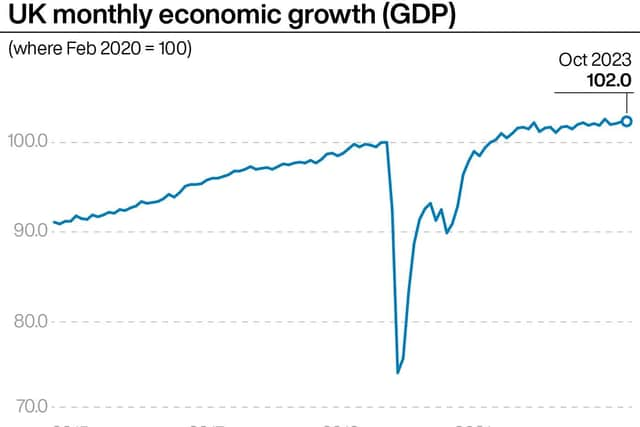
If the economy continues to contract towards the end of the year, even this very modest gain could be wiped out, although economists suggest it is too early to say the UK is heading for a recession as falling inflation and rising wages could boost growth figures in the last two months of 2023.
But the economy is still struggling. In the third quarter of this year there was no growth at all, according to the ONS, and the economy was approximately the same size in October as it was in January.
Even if Mr Sunak is able to claim a technical victory in his efforts to grow the economy, the overall picture for 2023 looks set to be one of stagnation.
– Reduce debt
It remains uncertain whether the Government will be able to reduce its overall debt by the end of the year.
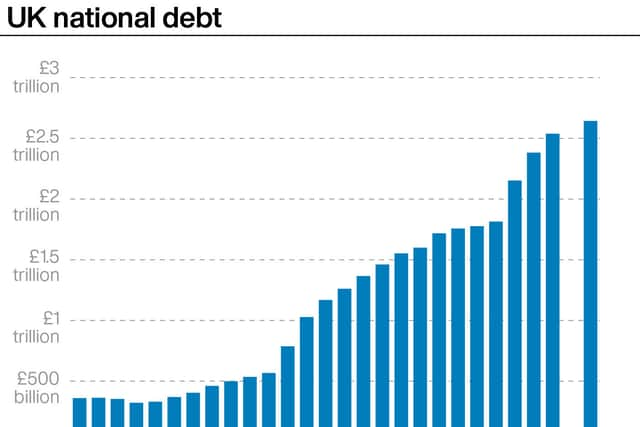
But the figure is still lower than it was at the end of 2022, when total net debt was 99.5% of GDP, and although annual borrowing is higher this year than last, it is still lower than forecasts suggested it would be.
However, there is a further complication in that the Government usually uses a different figure – public sector net debt excluding the Bank of England.

Further revisions to these figures are likely and Mr Sunak did not set a deadline for reducing debt; the Chancellor’s fiscal rules, for instance, only talk about debt being forecast to fall in five years’ time.
Mr Sunak therefore seems unlikely to be able to claim a straightforward victory on this target, although some measures may allow him to do so.
– Cut NHS waiting lists
On current measures, it appears as if Mr Sunak will fail to meet this target.
The number of people waiting for NHS treatment reached an estimated 7.77 million in September, a record figure and around 9% more than a year ago.
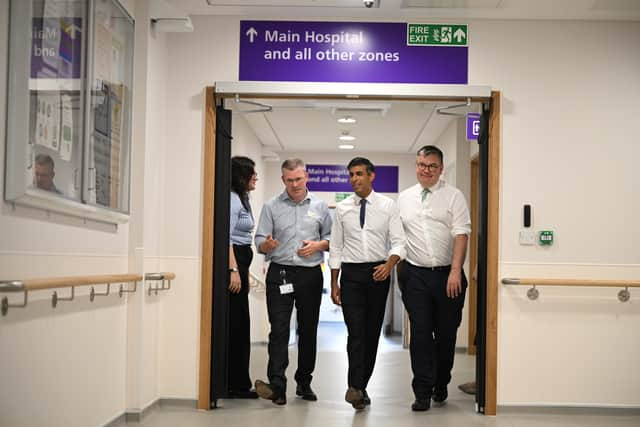
The number waiting longer than two years for treatment has fallen by 90% since September 2022.
Waiting lists of more than 18 months, 15 months and 12 months have reduced over the same period, though the number of people seeing longer waiting times began to creep up again in September.
Figures show an estimated 10,200 people were waiting more than 18 months for treatment in September, compared to just under 9,000 in August and 7,300 in July.
– Stop the boats
After defeat at the Supreme Court in November, Mr Sunak will treat Tuesday’s vote on his Safety of Rwanda Bill as a small victory on the path to stopping Channel crossings.
Tuesday’s vote is not the end of the matter. There remains the potential for Tory rebels to torpedo the Bill in the Commons if the Government does not make concessions, and the House of Lords could pose a major stumbling block and may even vote it down altogether.
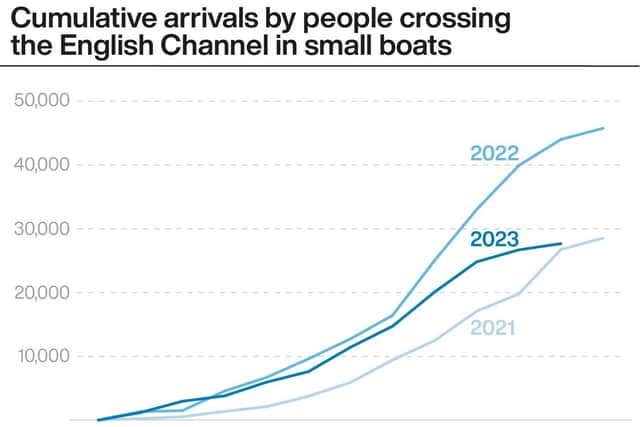
The Rwanda policy is not the only method the Government is trying to reduce the number of crossings, with the Government co-ordinating enforcement measures with French authorities and signing returns deals with countries such as Albania.
Crossings have reduced. In the year so far, around 29,900 people have been detected crossing the Channel in small boats, compared to 44,800 in the same period last year.
There is some debate as to whether this is down to new legislation, better enforcement or simply worse weather, but whatever the cause, there is still a long way to go before Mr Sunak can claim to have brought the crossings to a halt.