
Government’s plan for new living wage will see end of minimum wage
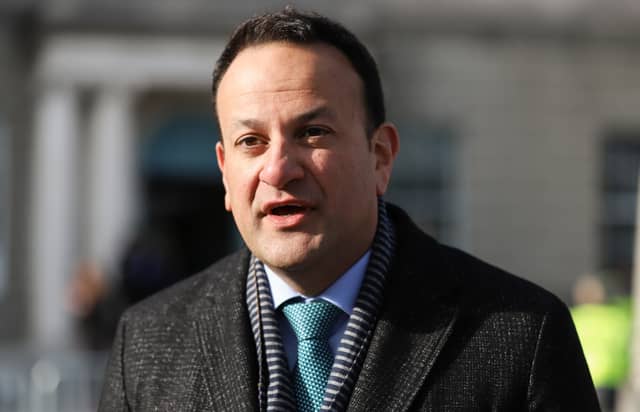

The Government has unveiled plans to introduce a living wage which will replace the current minimum wage and see higher wages among the lowest paid workers.
Tanaiste Leo Varadkar said the living wage will be set at 60% of the median wage in any given year.
This will bring the national minimum wage of 10.50 euro per hour up to 12.17 euro per hour.
It will be phased in from next year and continue until 2026.
Mr Varadkar said the Government has given the Low Pay Commission the flexibility to introduce the full living wage in less than four years “if economic circumstances allow it”.
Mr Varadkar also said that workers who “get up in the morning or work late at night” and work up to 40 hours work a week, should earn enough to live on and have a “decent standard of living”.
The Tanaiste said he will brings his plan to various groups, employers, unions and the public for consultation.
A living wage aims to provide workers with an income that allows them to have an acceptable standard of living through setting a minimum hourly wage rate.
Asked whether he believes 12.17 euro per hour – which equates to an annual salary of 22,782 euro – is enough to live on given the rise in inflation, Mr Varadkar said: “I think you have to bear in mind that everyone’s circumstances are different.
“At the moment, we have one of the highest minimum wages in the world.
“However, if you adjust that for the cost of living in Ireland, it comes in around six or seven but still quite high relative to other countries.
“This will be a significant improvement on that, bringing it up to a level that’s substantially higher than it is now.
“It’s important to bear in mind that people who currently earn the minimum wage, many are students who for example live at home, don’t necessarily have to pay rent, don’t necessarily have to pay utility bills.
“Very often people who currently earn the minimum wage are not the main earners in the house. It’s the second or third income in the household.
“What we don’t want to do is to price them out of the labour market. So you always have to bear that in mind. The most important workers right is the right to work and if we went too high, or too fast, you could see people losing their jobs.

“So these are the kinds of things we have to take into account.
“I think the Low Pay Commission has done that in the recommendation.
“This is a proposal made by the Low Pay Commission unanimously – employers, union reps, independent experts, backed up by research from Maynooth University.
“We’re now going to consult with the public, with unions, with employers and within government on it.”