
Grow your own salad bar on your windowsill

Want to grow summer salads, but don’t have a garden?
Don’t despair! Tomatoes, peppers, leaves and herbs could still be added to your homegrown menu this summer, and they can perk up your windowsill, too…
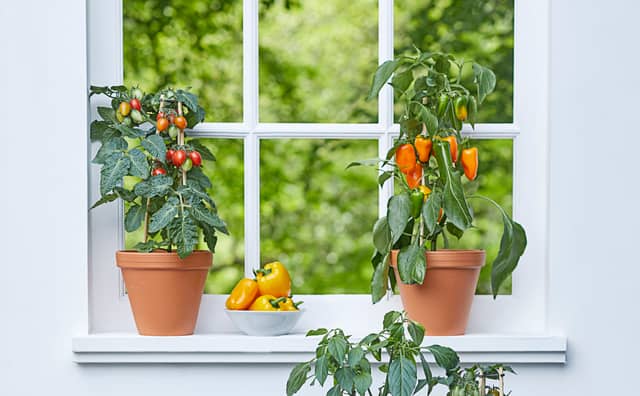
Garden centre chain Dobbies has introduced a ‘Pick-N-Joy’ range of mature plants for those who want to be able to pick tomatoes off the vine and peppers off a plant (available in-store only) – perfect for windowsills.
It’s also easy to grow typical salad herbs, including parsley and basil on your windowsill. You can buy a pot from the supermarket, then split the plant into smaller pots when you get home, to give the overcrowded roots space to grow.
So, what are the best salad ingredients to grow on your windowsill?
Cut-and-come-again leaves
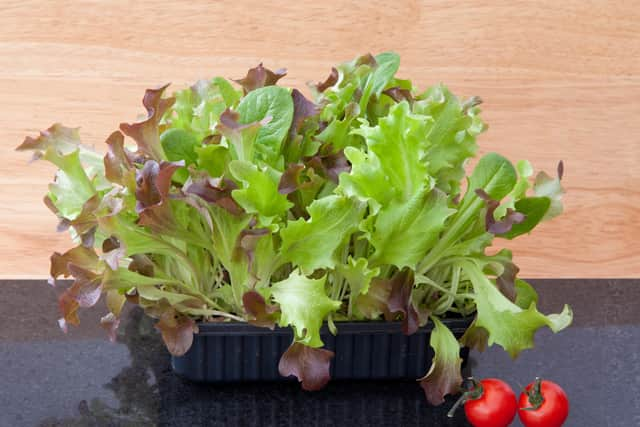
For the best results, sow a small amount of seeds every two weeks. If you can’t put the pots outside in summer, try to move them into a partially shaded spot when it’s hot, or the plants will bolt (run to seed) and taste bitter, she advises.
Tomatoes
According to new research from Dobbies and Censuswide, tomatoes are set to be the most popular crop this year.
For those with plenty of time, you could sow a micro ‘house’ variety, which will grow in a 15cm pot on a sunny indoor windowsill. Varieties including ‘Micro Tom’, ‘Heartbreaker Vita F1’ and ‘Vilma’ will all grow on sunny windowsills in small spaces.

The garden chain’s senior houseplant buyer, Claire Bishop, advises: “Simply water a few times a week as needed, and if you have an outdoor area or balcony, you can place outside during the summer months – although this isn’t necessary as these plants are self-pollinating.”
If your windowsill gets enough light and warmth, they’ll continue to grow well into autumn, she predicts.
Sweet peppers and chillies
You can grow mini peppers and chillies on your windowsill, as long as you have plenty of light and sun. Look for types with small fruits, as well as those that are shorter and narrower.
Chillies may be more suitable, as the plants – and fruits – tend to be smaller.
Check when buying seeds or plug plants that the pepper has ‘dwarf’ or ‘patio’ in the name, as some smaller plants are designed for indoor growing – if you’re not sure, ask at your local garden centre.
Grow them in a good quality compost and give them plenty of water, feeding with diluted tomato fertiliser, once the fruits are set.
Microgreens
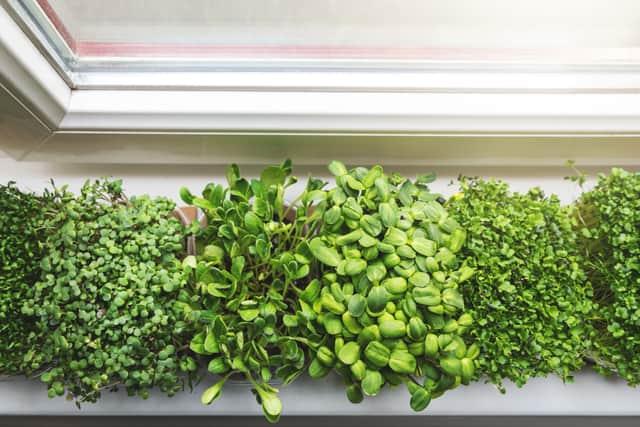
“Grow microgreens on a sunny windowsill, either in a seed tray or shallow repurposed food container,” Hart advises. “Fill the container with peat-free compost and sow the seeds thickly and evenly.”
Water them regularly with a fine spray bottle to keep the compost damp, as microgreens will wilt if underwatered, and harvest when they are 3-5cm tall, she advises. If you want fresh shoots throughout the year, you’ll need to sow at weekly intervals.