
Gym manager who survived cardiac arrest forms unlikely bond with gym member after ‘saving his life’ from same condition
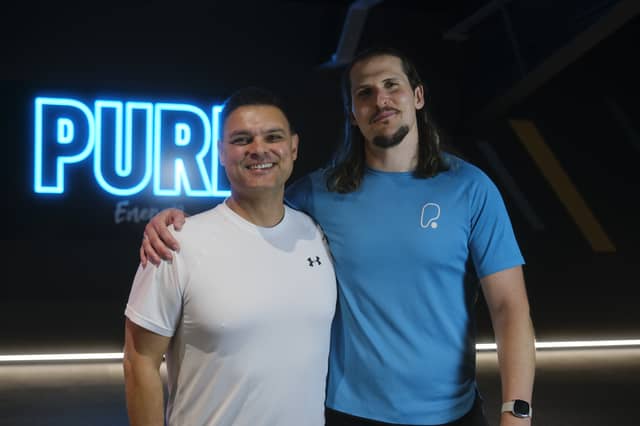

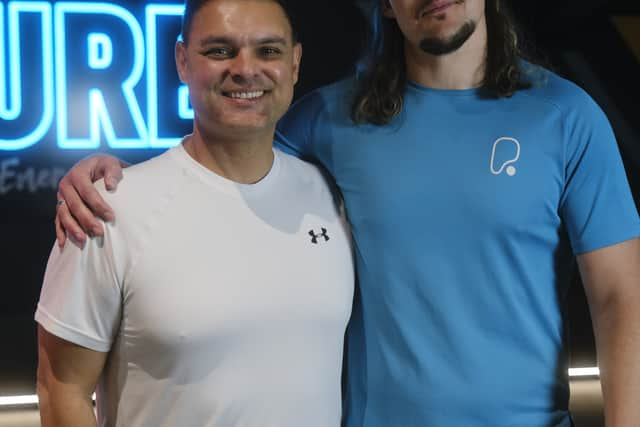
A gym manager who survived a cardiac arrest has formed an unlikely bond with one of his gym members after he “saved his life” from the same condition during a spin class.
Andy Palmer, 35, who lives in Nuneaton, Warwickshire, with his wife, Danielle, also 35, had just clocked on for his shift at a PureGym in January 2024 when he experienced a cardiac arrest – a result of an inherited heart condition.
After having a pacemaker fitted and getting back to work, Andy was teaching an early morning spin class in July this year when one member of the group, Andrew Ward, 49, from Tamworth, Staffordshire, suddenly fell off his bike.
Rushing over, Andy spotted something was seriously wrong when Andrew’s face turned grey and his lips were blue – symptoms eyewitnesses had noticed on Andy during his own cardiac arrest – and he quickly started administering CPR.
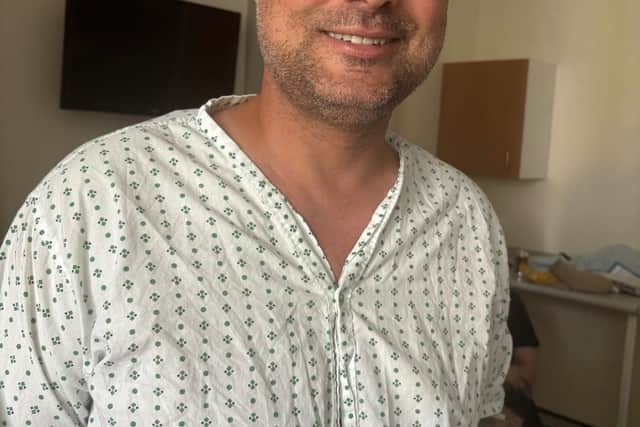
Seeing each other for the first time again in the gym was “emotional” – and the two have bonded over their shared experiences, referring to themselves as “cardiac arrest buddies”.
Both Andy and Andrew are now determined to raise awareness for the importance of CPR training, which saved both their lives, and they want to highlight the British Heart Foundation’s (BHF) RevivR tool – which teaches CPR in just 15 minutes from a phone or laptop.
Andrew, a national sales manager, told PA Real Life: “I just gave Andy a big hug when I first saw him but it’s such a weird thing – how do you genuinely thank someone who saved your life?
“They literally had my life in their hands and because of everything they did, I’m now standing in front of them.
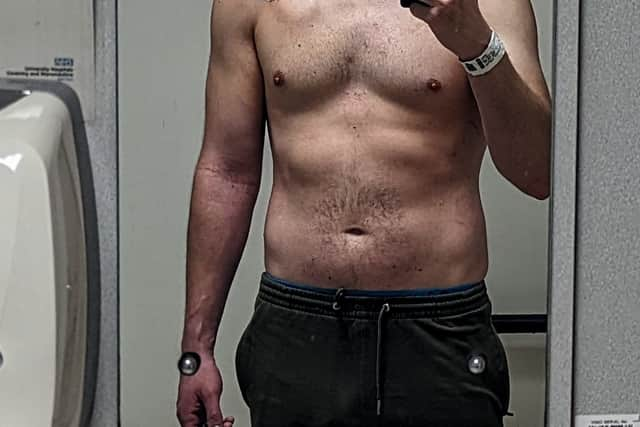
Andy added: “Life is fragile and it can be taken away at any point – do your best to enjoy it while you can.”
According to the BHF, more than 40,000 out-of-hospital cardiac arrests occur in the UK each year, and the chances of survival more than double with timely CPR and defibrillation.
The condition, caused by a mutated gene, results in “deficiencies and improper construction of the heart around the electrical signalling and muscles”, Andy said.
In November 2023, he received an echocardiogram, a scan to look at the heart and nearby blood vessels, and the results indicated he may need a pacemaker.
While waiting for an MRI scan to confirm this, he experienced a cardiac arrest on January 29 2024 at a PureGym in Nuneaton, where he was working as an assistant gym manager at the time.
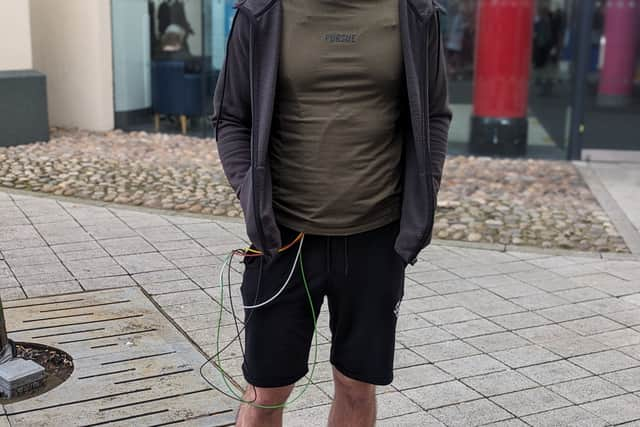
“I had felt absolutely fine, there were no warning signs and I had no idea it was coming,” Andy said.
“About 20 minutes into my shift, I had the cardiac arrest.
“My memory of the day is all but completely gone.”
Andy’s colleagues were able to start administering CPR, before he was rushed to University Hospital Coventry & Warwickshire.
Following his cardiac arrest, Andy had a pacemaker fitted on February 13 2024.
Andy was teaching an early morning spin class on July 7 this year at a PureGym in Tamworth, where he now works as a gym manager.
An avid gym goer, Andrew said the 6.30am spin class is “a pretty regular thing” for him, but he “doesn’t remember anything” from that particular day.
“I got halfway through the class and my heart stopped,” Andrew said.
Andy said he suddenly heard “a bang” and saw Andrew had fallen off his bike.
“An off-duty police officer who was in the class was able to speak with them quickly and I cushioned Andrew’s head while he was having convulsions – but when they stopped, his breathing stopped.”
Andy said “the penny dropped” when he took in Andrew’s complexion, where “his face was grey and his lips were blue”.
“Eyewitnesses from my cardiac arrest later told me my face was grey, my lips were blue – and I knew this was serious,” Andy said.
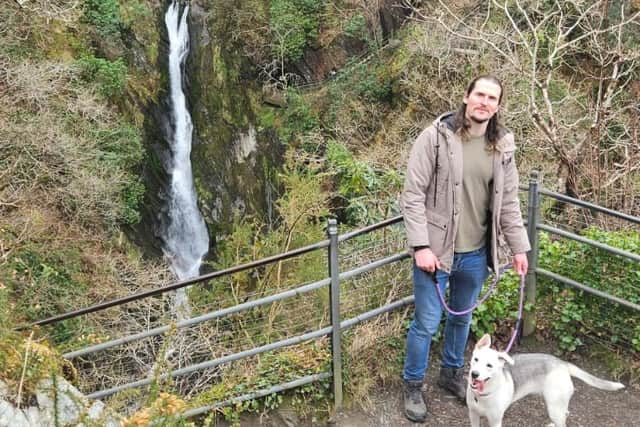
Having received CPR training through PureGym, and having recently completed the BHF’s RevivR course for a refresher, Andy started CPR on Andrew.
PureGym, the official gym partner of the BHF, have on-site defibrillators installed in all their UK branches, along with detailed instructions to enable members of the public to use them.
On this day, however, an off-duty nurse, who was exercising in the gym at the time, came to assist and started using the device on Andrew.
“Andrew had a lot of good forces pulling for him that day,” Andy said.
Two ambulances were called to the gym, as well as an air ambulance and police.
“I felt numb and a bit shell-shocked,” Andy said, as Andrew was rushed to Royal Derby Hospital in an ambulance.
There, Andrew received an angiogram, a type of test used to check blood flow to the heart muscle, which revealed two blockages in his arteries.
He had three stents fitted, with two in one artery.
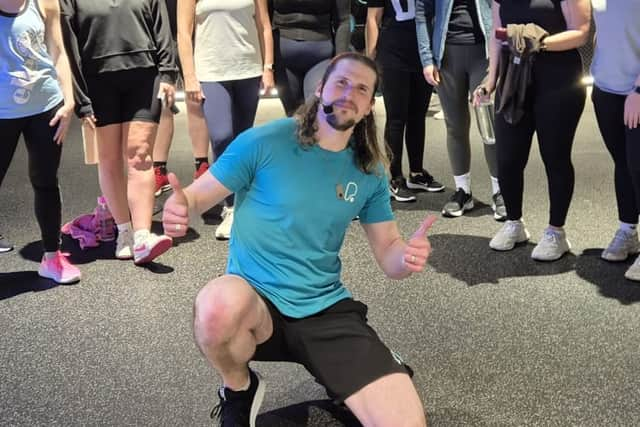
“It did come as a shock because there were no real warning signs, I was just getting on with my day until I wasn’t,” Andrew said.
Once Andrew was stable, his wife, Jodie, 41, uploaded a post to a local Facebook group to inform those involved that he was doing well.
On seeing the post, Andy said he felt “pure joy”.
“It felt like the best news I’d had in a long time,” he said.
“It was a relief to know we’d given him that fighting chance until the professionals could see to him.”
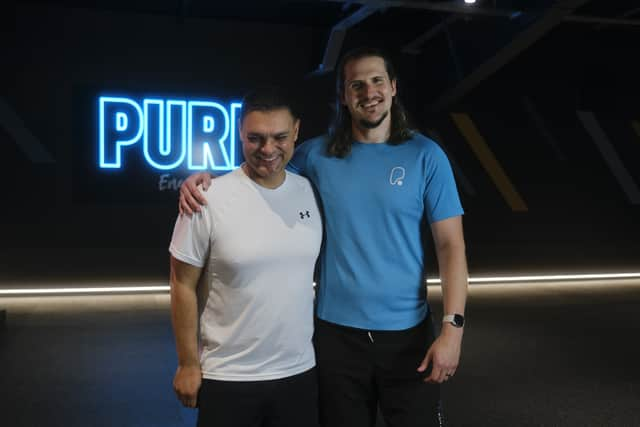
“We spent a lot of time bonding over our trauma and talking about our experiences,” Andy said.
Andrew added: “I can’t really put into words how it feels, it’s wild really.
“We laugh and joke about it now – one of the things we say is that we’re cardiac arrest buddies.”
Andy and Andrew feel their experiences of surviving a cardiac arrest have altered their perspective on life.
“It makes you realise how precious life is and how short it can be,” Andrew said.
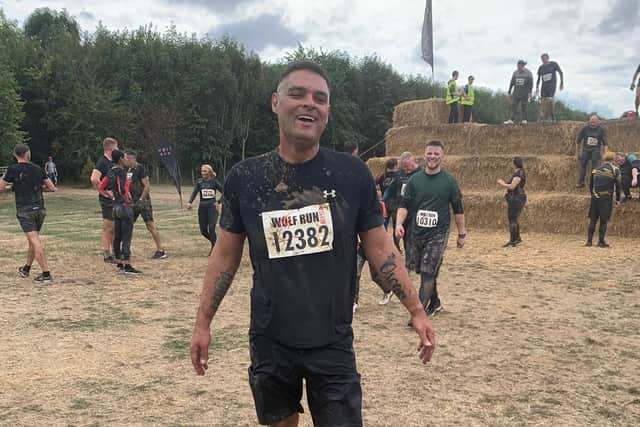
Andy added: “You’ve got to enjoy what time you’ve got as best you can.”
The two are now determined to raise awareness of CPR training, and they highlighted the importance of using the BHF’s RevivR tool.
The free online training tool teaches CPR in 15 minutes, and users need a digital device, such as a phone, and a cushion to practise on.
Users also receive a CPR certificate on completion.
“Knowing CPR is so important, it’s better to have the training and not need it rather than the other way around,” Andy said.
Andrew added: “Learn CPR, learn where defibrillator machines are in public, learn how to use them – that outcome can change someone’s life.”
To find out more about the BHF’s CPR tool, RevivR, visit: bhf.org.uk/revivR