
Halo Trust to double staff in Ukraine as it faces ‘epochal’ mine clearance
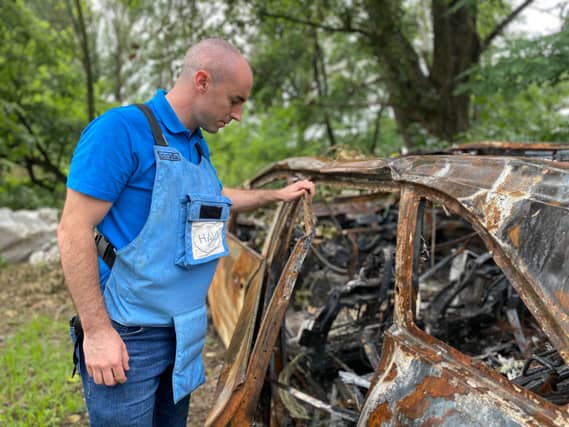

The world’s largest demining charity, the Halo Trust, is doubling its staff in Ukraine this year as it faces an “epochal” challenge to clear liberated areas of explosives.
As the one-year anniversary of Russia’s full-scale invasion approaches, the charity is undertaking a “huge” training programme to expand its staff in the country to around 1,200 this summer.
It is impossible to know exactly how many mines, shells and rockets require to be disposed of, but the process is likely to take decades.
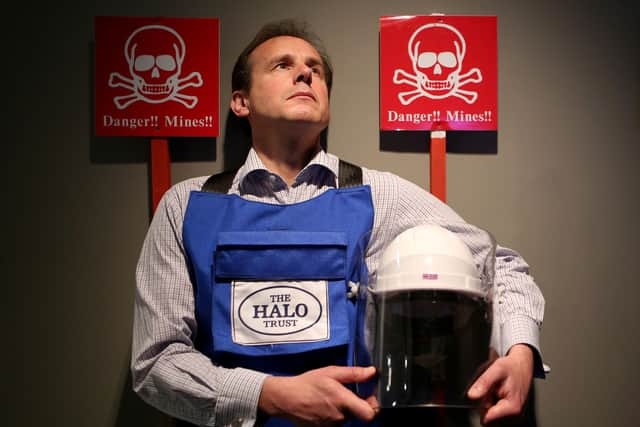
Speaking at the trust’s headquarters in Dumfriesshire, he told the PA news agency: “The area the Russians have occupied is about the size of the whole of the United Kingdom. It’s absolutely vast.
“They’re firing about 40,000 artillery rounds a day, of which about 10% are not going off. So there are still live rounds buried in the ground.
“They are laying landmines on an extraordinary scale. They’re using cluster munitions, using rockets, they’re using missiles.”
The Halo Trust has been active in Ukraine since 2015, when conflict in the east broke out.

Staff are currently examining the situation around the southern city of Kherson, following Russia’s withdrawal from it in November last year.
Mr Cowan said: “When the war began in earnest in February, we had to withdraw people.
“Some ended up having to join the Ukrainian army, some ended up with other responsibilities, and we’ve had to rebuild the programme.
“We went down to about 200 staff, and now we’re at 630.
“By the summer, we’ll be at 1,200. It’s really a huge programme of training, of re-equipping, of pivoting from Donbas to around Kyiv and then expanding to Kharkiv and to Mykolaiv.”
The Halo Trust, which operates in 28 countries around the world, trains local staff for its mine-clearing work.
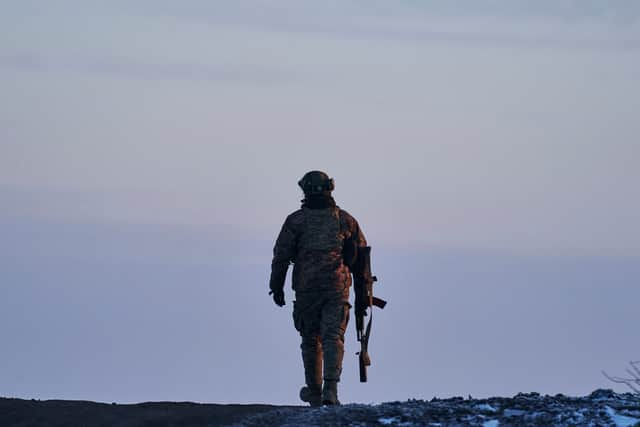
This will only affect the Halo Trust’s work if Russia gains significant ground, he said.
While the charity is impartial, it has not been allowed to work in Russian-held parts of Ukraine.
The Halo Trust’s head of European operations, Mike Newton, said 125 minefields have been identified in northern Ukraine alone.
He has been to Ukraine to help staff relocate their operations after the full-scale war broke out.
Until recently, the most dangerous types of explosives were anti-vehicle mines often found in northern Ukraine, he said.
Anti-personnel mines and booby traps are now emerging as a threat in areas which have been recaptured by Ukraine.
Mr Newton said: “In Kharkiv, there are certain areas where you’re seeing anti-vehicle mines, mixed with anti-personnel mines, mixed with booby traps and cluster munitions.
“There are unique operational challenges for us in Ukraine now, such as we haven’t seen in the entire time the Halo Trust has been operating.”
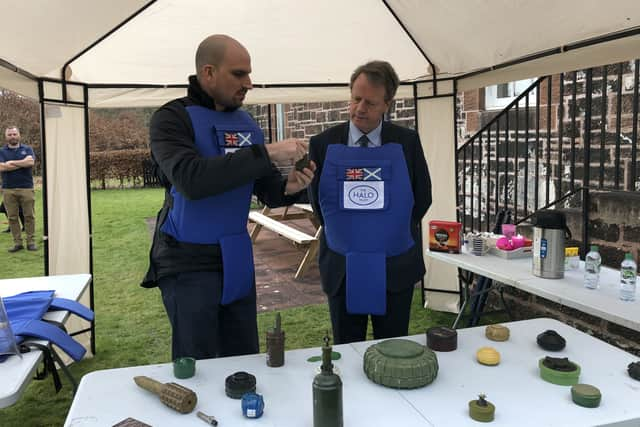
During a visit by Scottish Secretary Alister Jack to the trust’s headquarters near Thornhill this week, Mr Newton showed him a robotic mine-clearing device which the charity is now using to safely remove explosives.