
Health system under pressure from Covid wave, say health officials
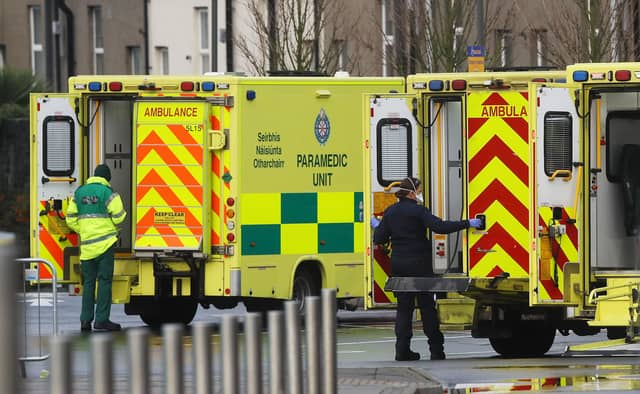

The Irish health system will be “challenged” in the coming days, as the country nears the peak of the current wave of Covid-19, it was claimed.
Health officials warned on Friday that the latest wave of Covid-19, fuelled by the Omicron variant, was causing significant disruption to the health service.
HSE chief executive Paul Reid said that many staff remained absent due to Covid-19.
He said it was “impossible” to “put a ring of steel” around Irish hospitals.
He said that in some areas, restrictions on hospital visits had been arranged in response to the latest wave with elective surgeries also impacted.
Speaking on RTE radio, he promised that the HSE has a “committed supply line” of antigen tests, with 350,000 supplied each week.
Earlier HSE chief operations officer Anne O’Connor said that approximately 12% of healthcare staff are now absent due to Covid-19 across all healthcare services.
This is around 14,000 to 15,000 staff, she said, adding: “This is something that us impacting all of our services.”
She said that healthcare services across the country are “doing all they can”, with staff returning early from leave and others being redeployed.
Ms O’Connor said that the HSE will face the “inability” to do some scheduled work, due to a surge in Covid-19 cases and a rising number of people in hospital with the virus.
However, she also told RTE radio that people needing “time-dependent care”, such as cancer patients, were being prioritised.
It comes amid a warning from Nursing Homes Ireland that its own survey suggested that around 8% of staff in nursing homes are absent due to Covid-19.
“Staff have endured an extremely difficult two years and very severe pressures continue to present, Nursing Homes Ireland chief executive Tadhg Daly said.
Parents and guardians have also been urged to bring children forward for vaccination, in a joint call by Health Minister Stephen Donnelly, chief medical officer Dr Tony Holohan and chair of the National Immunisation Advisory Council Professor Karina Butler.
From Saturday, all five- to 11-year-olds will be offered a Covid-19 vaccine.
“Over the Christmas period we reported the highest daily numbers of confirmed Covid-19 cases.
“As we wait for more evidence to emerge on the severity of infection with the Omicron variant, it is important that we continue to encourage all of those eligible for vaccination to come forward,” Mr Donnelly said.
“As a parent of children in this age group myself, I know that children have many questions about Covid-19 and about this vaccine, and it is important to ensure they can access the information material the HSE have made available.”
Prof Butler, a paediatric doctor, said that “the benefits of vaccination far outweigh the risks”.
Dr Holohan warned: “While we know that most children in in the 5-11 age group will experience a very mild form of this disease, for a small few, they may become severely ill.”
On Friday afternoon, Higher Education Minister Simon Harris confirmed that all colleges and universities will return from Monday.
It came following a meeting with today with student, staff and management representatives.
Schools returned on Thursday, with reports of pupil and teacher absences in schools across the country.
Mr Harris said that it would be a “staggered reopening”.
He said students would see “five of our higher education colleges reopening on Monday and a further five reopening the following week.
“Others will follow throughout the course of the month.”
He said that his Department was working to run “vaccination weeks” on campuses to give students a chance to receive booster jabs.
The National Public Health Emergency Team (Nphet) met on Thursday to discuss the latest Covid-19 situation.
Health officials are not believed to have recommended any new restrictions to the Government.
It comes as the country continues to experience record case numbers.
A further 23,817 cases of Covid-19 were confirmed in Ireland on Thursday, a new record daily total.
However, politicians have expressed optimism that high case numbers are not translating into a surge in patients in intensive care.