
Highlights and trends from RHS Chelsea Flower Show 2023: sustainability, wildlife and weeds


Gardens featuring more weeds and less formality have taken centre stage at this year’s RHS Chelsea Flower Show, placing more emphasis on letting nature take control.
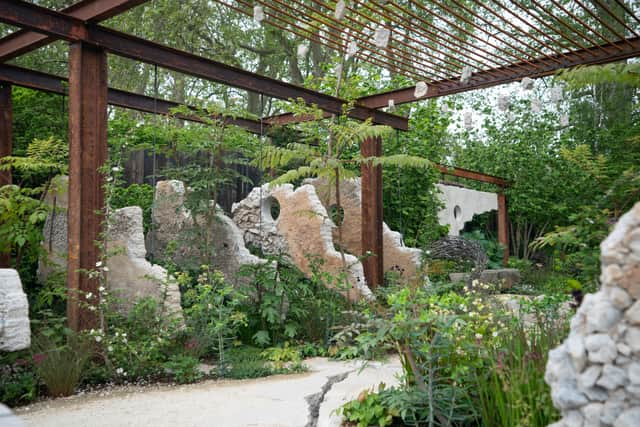
This year’s show is likely to spark controversy, reckons garden designer Andrew Duff, co-chair of the Society of Garden Designers and managing director of the Inchbald School of Design.
“There’s a clear message about sustainability and environmental factors in an aesthetic way. There’s a loss about actually, what is a garden supposed to do?” he says. “Right across the show, the inference is that nature’s taking control… maybe that it’s OK to let weeds grow and let things get a little bit ruinous.
“But at the end of the day, people like a lawn, they like to look after a space – that’s part of being in a garden – and it’s time that we need (to address) that controversy,” Duff adds.
Reflecting on the topic, Matthew Pottage, curator of RHS Garden Wisley, says: “We are having a climate crisis. We do need to garden environmentally sensitively. Is this the place to be showing that? It’s arguably the world’s best flower show, so this is the place.”
5 highlight gardens from this year’s RHS Chelsea Flower Show
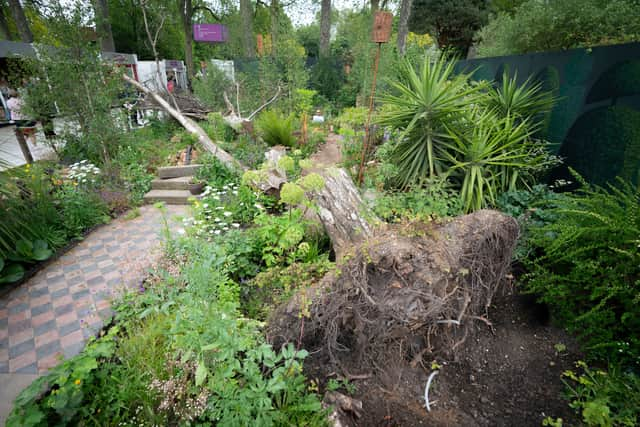
Love it or hate it, this garden is likely to cause a stir with its partly demolished house, so-called ‘weeds’ and a fallen tree. Designer Cleve West has admitted it’s a ‘Marmite garden’ – people will love it or hate it.
“There’s a sense of abandonment, which is so clever. Cleve West has done a partly demolished ruined house with the idea of nature taking over,” Duff observes. “He’s saying it’s a metaphor for what it is to be young and homeless. There are nettles and dandelion seedheads. It’s really going to question what beauty is in a plant – and I think we need to have that discussion.”

If you’re looking to take home some plants with you, be inspired by the beautiful Benton irises in rich shades of pastels and deep yellows which you’ll see in designer Sarah Price’s Nurture Landscapes show garden, inspired by the artist and plantsman Cedric Morris.
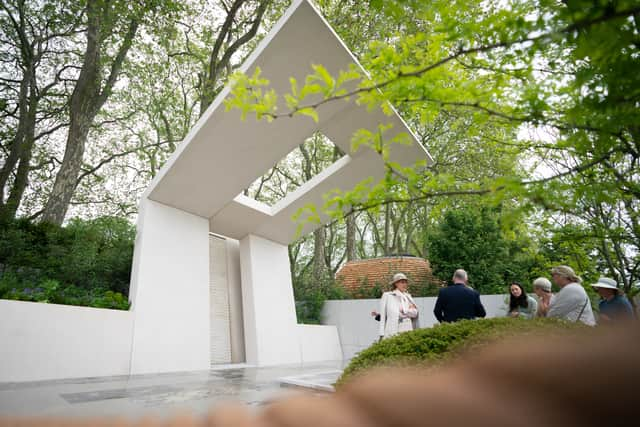
Designers Gavin McWilliam and Andrew Wilson’s garden aims to deliver an uplifting spiritual space, reflecting the emotional experience at the end of life (it’s going to a bereavement site after the show).
“Controversially, they’ve used concrete, but with the idea that this concrete is going to be around for hundreds of years,” says Duff. “It’s not a single use concrete.
“It has a simple palette of planting, is cool and calm and you immediately feel rested. The minimal use of materials and colour palette was really special and a moment of calm in the entire show. It was a relief to get to it,” Duff adds.

Top designer Chris Beardshaw’s garden has a much more traditional garden feel, with a structured order in the colourful planting against a backdrop of clipped yew, including peonies and salvias, plus inspired woodland planting.
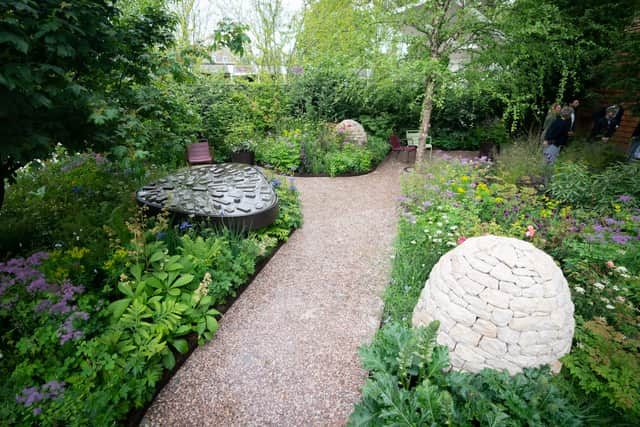
Putting wheelchair access at the forefront of their design, Charlotte Harris and Hugo Bugg (Harris Bugg Studio), have created the eighth garden for the eponymous charity, which builds gardens to improve the lives of people with spinal cord injury.
The wheelchair-accessible space, influenced by the ways of seeing from a bed or a wheelchair, features tactile stone cairn and a table water feature to encourage wildlife, while a garden pod provides a cocooning place for physical and emotional shelter. After the show it will be relocated to Sheffield’s Princess Royal Spinal Cord Injuries Centre.
“There’s an incredible depth of planting, which is mind-blowingly beautiful, and beehives of warm cut stone which kind of replace topiary – they’ve made topiary out of stone,” says Duff.
Top trends
These are some of the key gardening trends to emerge from this year’s event.
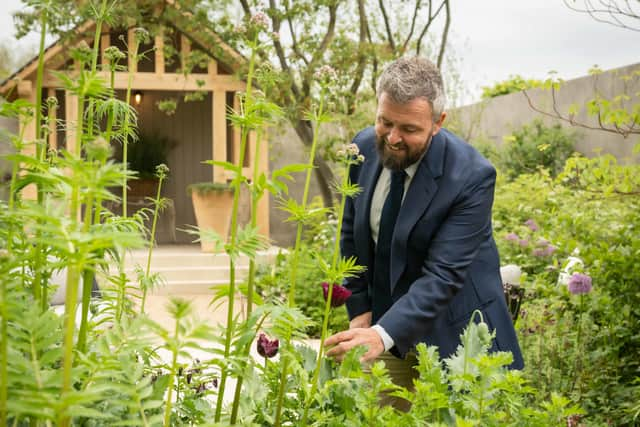
“Unsurprisingly, there’s going to be the awareness of wildlife-friendly planting,” says Pottage. “There’s lots of habitat in gardens, but hopefully showing that can be beautiful as well. There are lots of logpiles, lots of water, lots of native plants, but also lots of gardenesque planting.”
Reclaimed and reused
Crushed concrete, piles of rubble, bare sand, re-used bricks and other recycled material dominate many of the show gardens’ pathways and form decorative features in several gardens. There’s a message to get gardeners thinking about how they might reuse materials, which formerly headed for the skip.
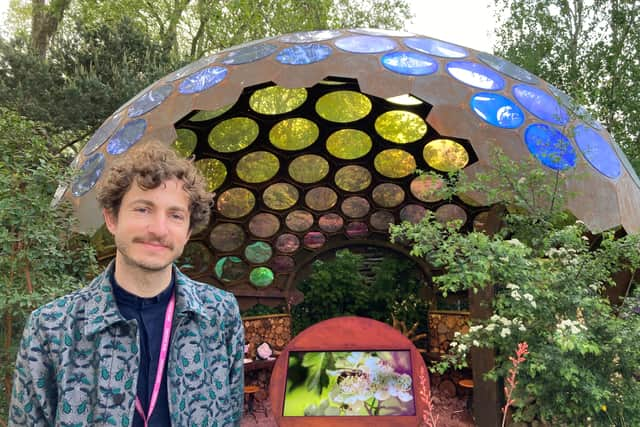
Award-winning designer Tom Massey, who has this year designed The Royal Entomological Society Garden, predicts: “Reuse of waste materials is going to be a big thing.”
He uses crushed construction waste in his show garden, including crushed bricks and concrete to create a textured, aesthetic backdrop for the planting along with deadwood. “These waste materials are really good habitat for insects,” he points out.
Plants

Drought-tolerant plants are also being pushed – some 55% of perennials in the show gardens are drought-tolerant, almost double that of last year, including fennel, salvia and cistus.
Weeds
Dandelions and other weeds feature in some of the gardens. Chelsea gold medallist Cleve West notes: “People get their knickers in a twist about weeds but they are the pioneer plants that stitch everything together.
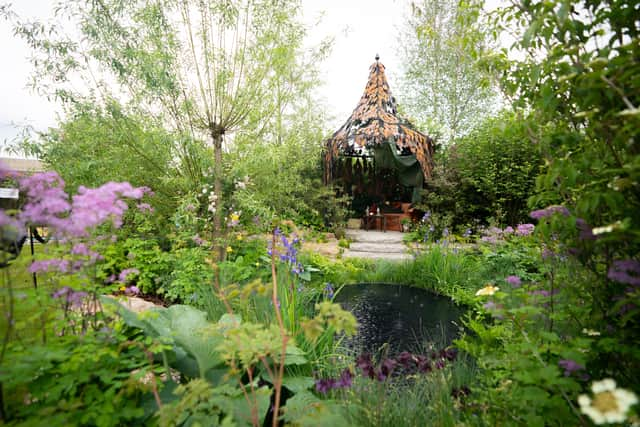
Massey adds: “Dandelions are an early source of pollen and nectar for bees – and insects are in mass decline, so we need to be more considerate in the way we manage and maintain our gardens.”
Sculpture
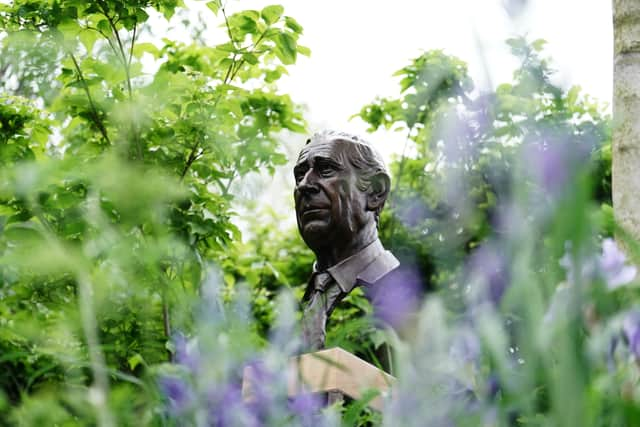
Nods to the Royal Family abound, from bronze bust of the King in A Garden of Royal Reflection and Celebration, which features some of the Windsor family’s favourite plants including roses and camassia, plus several crowns featuring flora and fauna.
Standing at just under 7m is the biggest driftwood sculpture ever displayed at Chelsea, a Wyvern dragon perched on a tree, the centrepiece of sculptor James Doran-Webb’s exhibit.
And paying homage to the unsung heroines of horticulture at The Monument is the ‘Women in Horticulture’ exhibit honouring the likes of Janaki Ammal, Beth Chatto and Gertrude Jekyll.
Bigging up small spaces
Guy Barter, chief horticulturist for the RHS, says people are likely to be planting bigger trees on their balconies and also using drought-tolerant species. “This year there’s a pollinator section, a wildlife bath, and drought-resistant plants.”