
How to plan the perfect Great Migration trip to Kenya’s Masai Mara

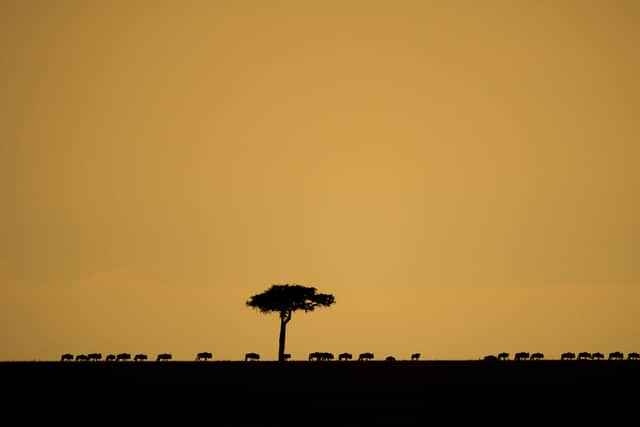
A thick black line runs along the horizon, moving at a slow and steady pace. Without any definitive beginning or end, it seems to stretch for infinity, a bold marker that will underscore the skyline for several months.
This parade of ‘black ants’ has travelled from Tanzania’s Serengeti National park to reach the vast plains of Kenya’s Masai Mara National Reserve, following the smell of rain and fresh pastures.
As we draw closer, a chorus of see-sawing moos grows louder, and a rising sun backlights the fine flowing beards and shiny curved horns of several hundred wildebeest.
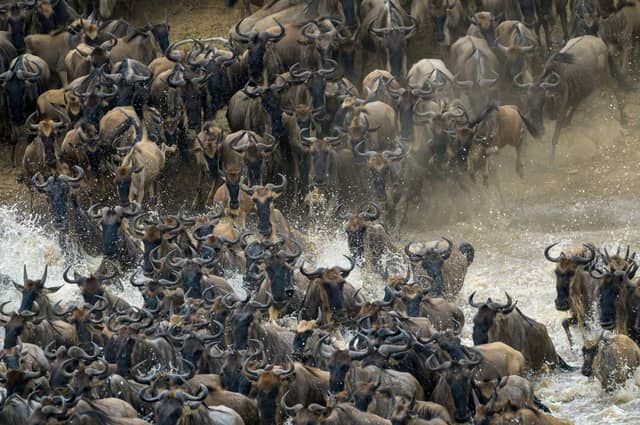
Every year, more than 1.5 million wildebeest arrive in the Mara, accompanied by thousands of zebra and gazelles. One of Africa’s last big movements of animals is in constant rotation around neighbouring Tanzania’s Serengeti eco-system, but it’s their arrival across the Sand and Mara rivers bordering both countries that draws the biggest crowds.
In an epic knife-edge spectacle, animals charge across crocodile-infested waters, dodging the claws of predatory lions waiting in ambush, to reach new grazing grounds.
“They’ve arrived earlier than usual and in big numbers,” explains Jackson, predicting a bumper year.
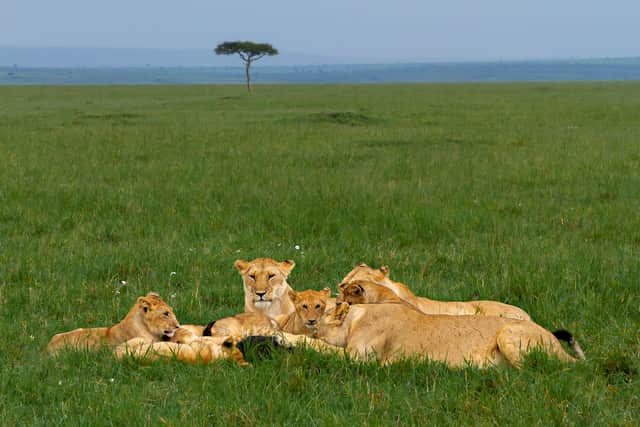
“Predators follow the migration,” explains Jackson, who grew up in nearby town Aitong and now works for the Asilia safari company. “Even beyond the river, there’s always a lot of action at this time of year.”
It’s no surprise this is the busiest period for tourism in the Mara. In the past, horror stories of overcrowding and bad behaviour along the river – from driving right up to the crumbling clay banks to blasting loud music – have marred the experience.

Founder of Rekero Camp, one of the first permanent structures in the reserve, Gerard Beaton is familiar with the ebb and flow of tourism in the Mara.
“There was nothing here when we started and levels of poaching were high,” he explains when we meet at the tented camp, set on a prime position overlooking the Talek river – another crossing point for zebra and wildebeest. “Some of the staff were so frightened they left.”
In 2000, when the camp set up home here, wildlife was much harder to track.
Gerard’s wife, Rainee, an artist, shows me an early pamphlet advertising the camp featuring her illustration of a Dorobo bushman wrapped in animal pelts.
“That was one of our first trackers,” she recalls. “He arrived looking like that, seeking to exchange some goods, and ended up staying.”
Back then, the camp had simple canvas A-frames and bucket showers.
“We thought it was the height of luxury!” Rainee jokes.
Now managed by Asilia, Rekero has undergone an extraordinary transformation will retaining its earthy soul as an authentic safari camp.

A screen decorated with a print of guineafowl feathers echoes the decoration on a pair of antique candlestick holders used when the camp first opened, Rainee tells me.
But it’s the communal decking area of the camp that commands the best view. Set above the river, there’s always some activity to observe – from hippos honking and blowing bubbles, to gangly giraffe tentatively bowing their long necks for a drink.
Gerard recalls staying behind in camp one afternoon, while all the guests had set off to watch river crossings.
When to go
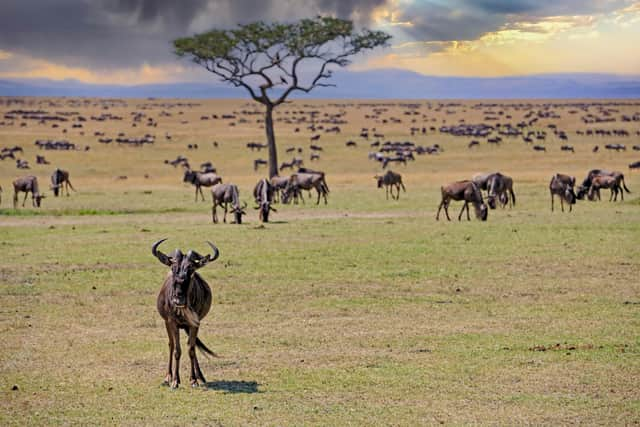
It’s possible to follow the great migration throughout the year, observing different stages in the wildebeests’ life cycle. The animals spend most of their time in Tanzania’s Serengeti area, mass calving in the southern plains of Ndutu in January and February. River crossings can be seen from both the northern Serengeti and the Mara. Typically, the animals cross back and forth from Kenya between July and late September – sometimes until October, depending on the rains.
Does it happen every day?
Like everything in nature, there are no guarantees. Seeing a river crossing requires dedication and patience. Typically, guides will receive news that animals are gathering in large numbers at one of several crossing points. Then, it’s a matter of finding a good spot – far enough back to avoid disrupting the wildlife – and waiting for up to a whole day. Crossings can last from 10 minutes to several hours, depending on the number of animals.
How to plan your trip
Stays at Asilia’s Rekero camp cost from £638 per night full board. Visit asiliaafrica.com