
HS2 unveils test designs as it aims to create UK’s ‘most comfortable’ train seat
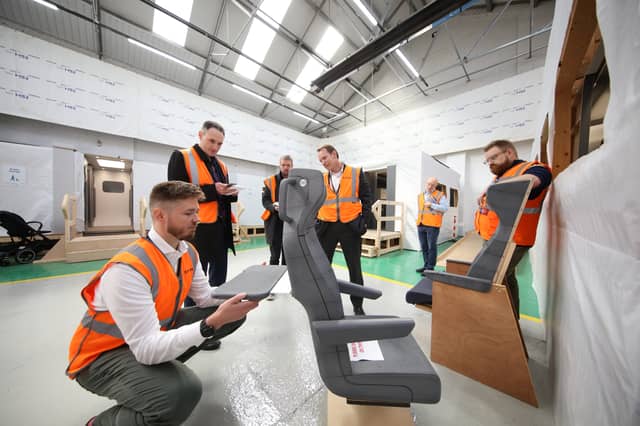

HS2 Ltd has unveiled test designs for its high-speed trains, including what it hopes will become the most comfortable seats on any UK rail service.
Standard class seats will have market-leading legroom of 87cm, according to full-size concepts at train manufacturer Alstom’s Derby factory.
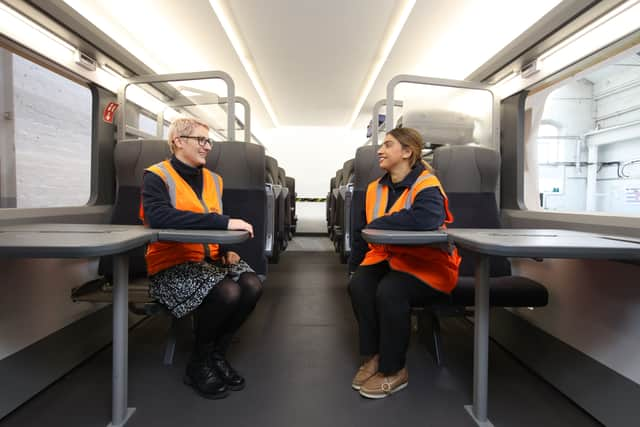
The bottom part of HS2 seats will be able to slide forwards, enabling passengers to recline without encroaching on the space of the person behind them.
Passengers travelling on some existing trains run by operators such as Thameslink and Great Western Railway have complained that thin padding makes the seats uncomfortable for long journeys, comparing them to ironing boards.
HS2 Ltd senior rolling stock engineer James Dawson said the ambition is for HS2 services to have “the most comfortable seat on trains in the UK”.
He went on: “We know there been issues with some recent seats, we know the failure, we know why that is.
“We’ll start off by looking at what’s in the cushion to make sure that’s comfortable and robust, and look at the geometry of the back.”
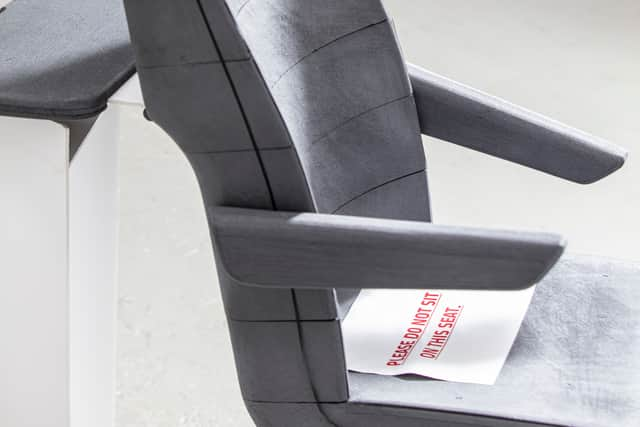
He said: “As an industry we have done a pretty bad job with some of the previous inter-city seat designs, and there’s been a lot of public backlash. These will be much better.
“It’s hard though, because if you’re buying a car, you buy a car that’s comfortable for you.
“If you’re designing a train, the challenge is to try and get it as comfortable as possible for different groups.
“It wouldn’t surprise me if you get some people who say ‘I don’t know what you’ve done, it’s uncomfortable’.”
Mr Aslett said the industry has made progress in designing more comfortable seats, citing examples from FirstGroup-owned operators Lumo and Avanti West Coast.
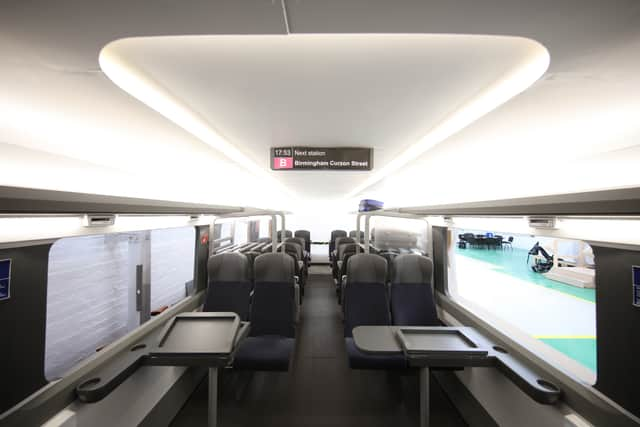
The process of designing HS2 carriages began in 2022 following the awarding of a £1.9 billion contract to an Alstom-Hitachi joint venture to design, build and maintain 54 high-speed trains.
Consultations have been conducted with more than 100 people with a range of needs, including parents with young children, cyclists and wheelchair users, leading to the creation of mock ups of train carriage sections.
Further testing will lead to more tweaks before a final design is created in early 2026.
Onboard toilets will have a number of features aimed at solving problems suffered by passengers on many existing services.
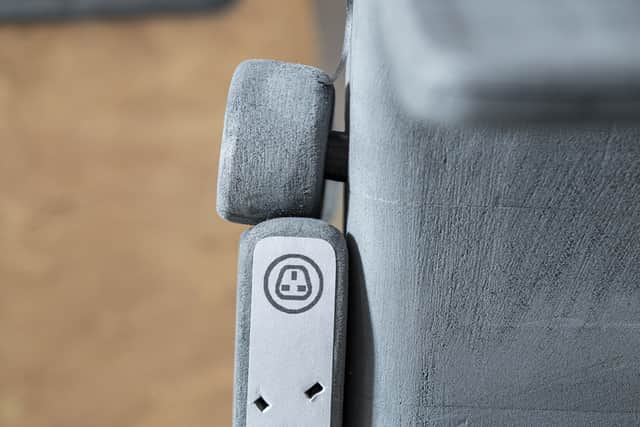
Information screens will display how many minutes before the train will reach the next station, and a pull down seat will be available to keep toddlers restrained while their parents use the toilet.
In the main carriage sections, the glass used for overhead luggage racks will be frosted.
This is a result of privacy concerns on some existing trains, where unfrosted glass can reflect electronic device screens, making them visible to other passengers.
HS2 trains will offer bookable spaces for bicycles, wheelchairs and unfolded pushchairs, level boarding at HS2 stations, and have larger-than-normal head room due to more equipment being stored under floors and at the ends of carriages.
Mr Dawson said: “We’ve taken all of the feedback from all the user groups, and we’ve made – and will be making in the future – design tweaks to reflect that feedback.
“One of the things we’ve tried not to do is overdrive for one particular user group.
“People who use wheelchairs come here with a very specific set of needs which are completely different to somebody who has a buggy.
“Everything’s a compromise. We’ve got to try and make the best of all of those different competing user needs in what is actually quite a constrained place.”