
‘I felt helpless before I taught my dog how to talk with buttons – now we can interact with each other more as equals’
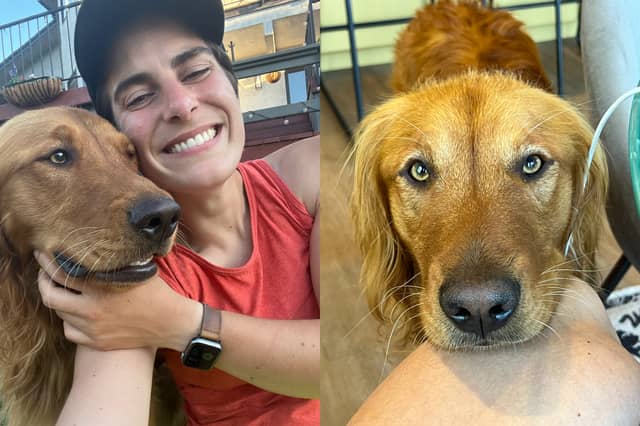

A woman who felt helpless when her Golden Retriever was “terrified of the world” as a puppy, having panic attacks almost daily, has said teaching him how to talk and communicate with buttons has allowed them to interact with each other more “as equals” and the dog is now more confident and “jolly” than ever.
Christina Lee, 32, a software engineer, who lives just outside San Francisco, USA, brought Cache home in May 2021 and was excited for the “honeymoon” period ahead.
However, from the first day they met, Cache was “just terrified of everything” – he would “shut down”, freeze, and have panic attacks – and Christina did not know what to do.
She said she “cried all the time” because she did not know what her future held, and it was “devastating” to see how much pain he was in.
Desperate for answers, Christina, who was living in San Francisco at the time, then moved out of the city and became a dog trainer, and she later discovered button training.
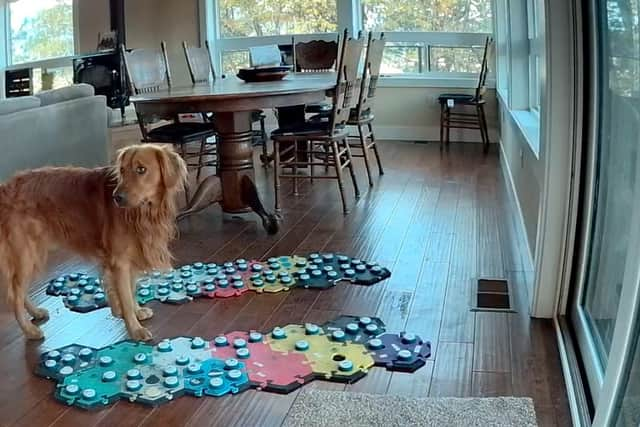
Now, nearly three years later, Cache is able to communicate using 130 paw-sized buttons – which say words such as play, sad, cuddles, outside, grandpa, and grandma – and Christina has even set up an Instagram page @cachecowadventures, to share videos of them communicating, which now has more than 300,000 followers.
While Cache had a challenging start in life, he is now thriving and in a “great place” – and Christina said “seeing that joy feels really special”.
“If you think that you have loved dogs, and then you meet them on this level, I’ve realised I did not know what love was before this,” Christina told PA Real Life.
“For example, to know that Cache is sitting there, thinking of his grandma, and that he wants to go visit her, your heart just grows five sizes.
“I just value being able to interact with him on a more equal basis – it feels really special.”

She had planned to get a Golden Retriever in her late 20s, and she started preparing years in advance.
She set up and started funding a new bank account for general pet expenses and veterinary bills, and even traded in her old car to purchase a larger vehicle for her “fluffy” arrival.

“From the moment I got him, he was very scared of the world, just terrified of everything,” she said.
“I had this idea of, I’m going to get this Golden and they’re so bouncy and so fluffy, they love people, they love dogs, and we’re going to live this life where my dog loves the world.
“But then I got Cache home and none of that came true.
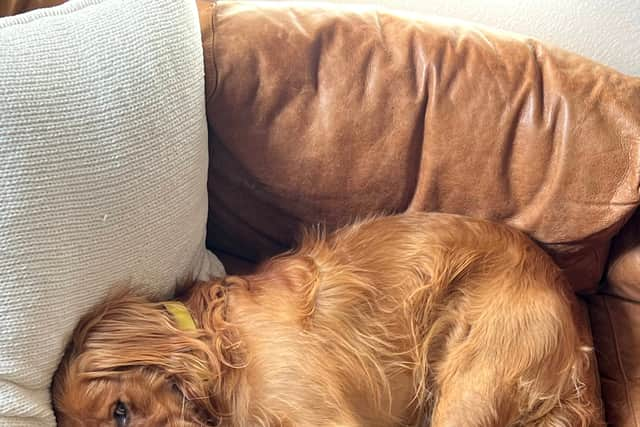
Cache, who had separation anxiety, would “shut down”, freeze, be unresponsive, pee on himself, and fight with other dogs, and he just “stopped responding to the world”.
His heightened emotional state also led to stomach issues, where he stopped eating, a lack of sleep, and diarrhoea, which was “scary” for Christina.
With the hustle and bustle of San Francisco further exacerbating his anxiety, Christina made the difficult decision to move out of the city, leaving many of her friends behind.
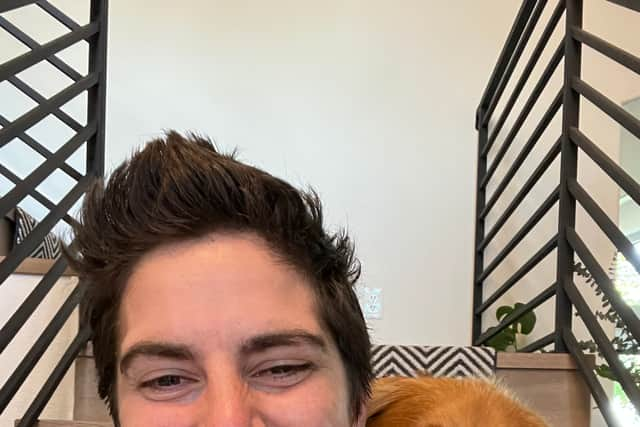
“I was just stuck in the house every hour of every day with him because, if I tried to leave, it would give him a panic attack, and it broke my heart to see him that way,” she said.
Christina said she knew she had to take action to help him because “rehoming him was not an option” and she did not want to “punish him for having feelings”.
This led her to become a dog trainer to broaden her knowledge, and she soon discovered Cache had many health problems and allergies, which was “a huge piece of the puzzle”.

With confidence building and celebrating even the tiniest of movements or actions, his confidence grew, and he was no longer so “reactive”.
“I think a big part of our relationship now is that we had to fight for every piece of it,” Christina said.
“When you have to work diligently at something, I think you can end up with phenomenal results.

When Cache was six months old, Christina discovered the book How Stella Learned To Talk, and even before she finished reading it, she knew she wanted to try it with her pet.
She ordered the paw-sized buttons, which lie flat on the floor and have specific words written on top of them, because she wanted to learn and understand what truly makes Cache “happy”.
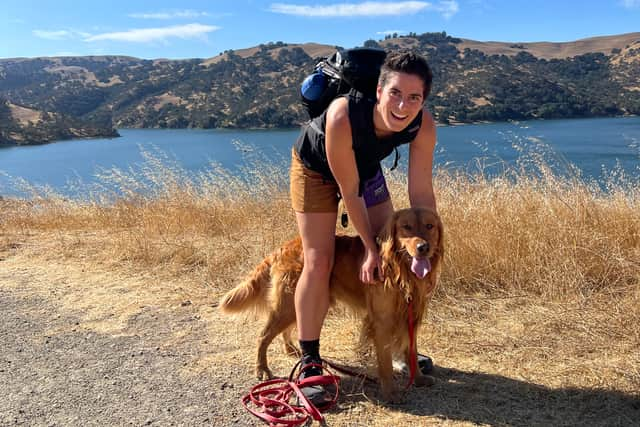
Christina said there has been “wild progression” over time, but she wants to stress that Cache has never been forced to use the buttons – contrary to what people comment online.
She said the use of the buttons is “completely optional” and she ensures she pays attention to his body language and other natural signs of communication.
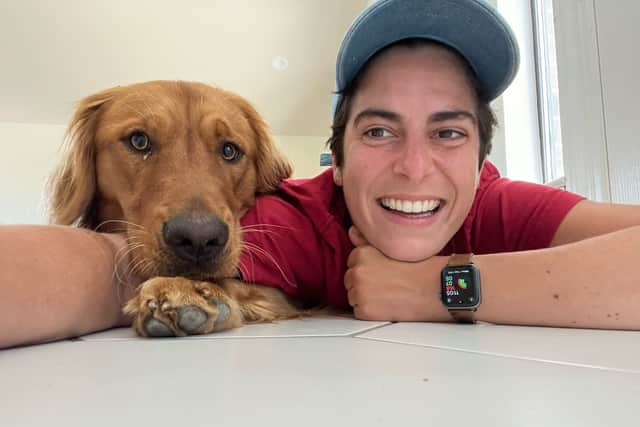
“Buttons are completely optional and they should be something that is used by the dog because it improves their quality of life,” she said.
“It gives them the ability to request things and to communicate back to you, and I strongly believe that that makes the relationship better – but it should be their choice to do it.”
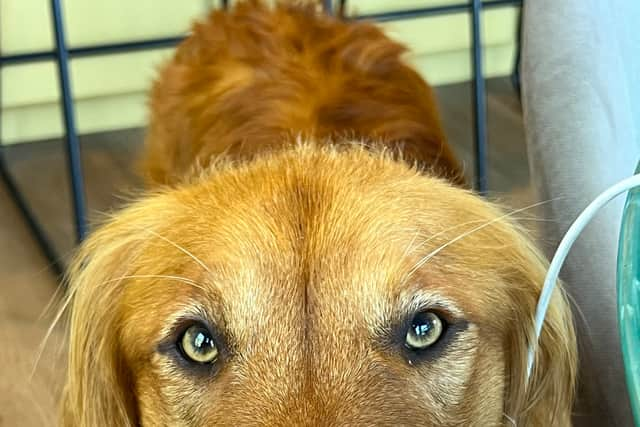
Her aim now is to help people understand that dogs have preferences and that “tiny changes can be so impactful for them”.
“If someone had told me as a child, you could grow up and talk to your dog, I would have been so excited – and that’s what’s happening now,” Christina said.
“What a world we live in, that we can do these things, and that’s my primary goal. I know there are hard things in the world, but there are also incredible things happening, too.”
To find out more about Christina and Cache, visit their Instagram page @cachecowadventures