
‘I lost my hair, breasts and ovaries to cancer aged 40 – I had to rebuild my body and I don’t feel at peace with it’

This article contains affiliate links. We may earn a small commission on items purchased through this article, but that does not affect our editorial judgement.
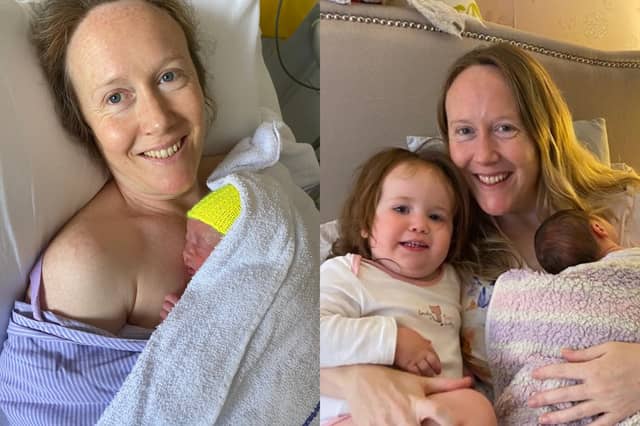
A mother who was diagnosed with breast cancer while 32 weeks pregnant has spoken of the pain of losing her hair, having a double mastectomy and ovary removal surgery in quick succession after giving birth, saying: “I felt like I had to rebuild my body again.”
Antonia Skinner, now 46, was diagnosed with lobular breast cancer the day before her 40th birthday in 2020, when she was heavily pregnant with her second child.
She had learned in November 2019 that she had a BRCA2 gene mutation – which increases the risk of developing breast cancer – after losing her mother to the disease in 1993 and her sister’s diagnosis in 2019. After she noticed dimpling in her breast and a lump, she said she “wasn’t shocked” to learn she also had breast cancer.
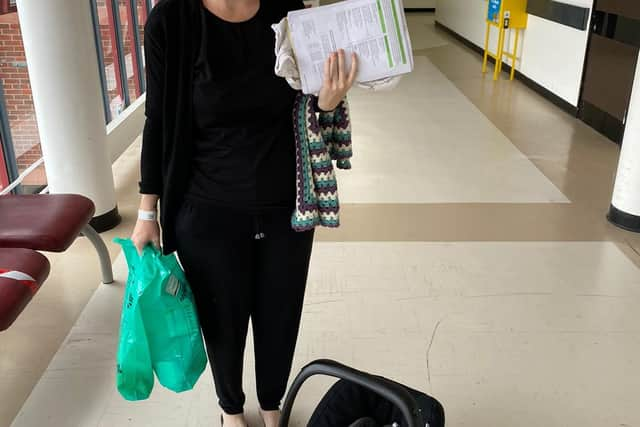
Her life transformed in a matter of months, with the “the choice of never having any more children taken away” on top of battling cancer while caring for her newborn and her older daughter, then aged one.
Now, Antonia is cancer-free but still reeling from her early menopause, an experience that she said has “changed me”.
“I fit into a really unique category of people,” Antonia told PA Real Life of her early menopause experience.
“It is such a lonely time, especially when you’re young. I’ve got friends who range from all ages, some of them are now pre-menopausal, but at the time they weren’t, and even though we talk about menopause and stuff, they just can’t relate to my situation, although they really try,” she added.
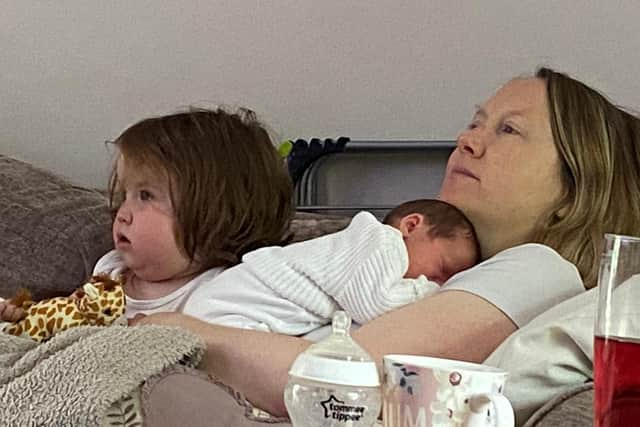
Antonia was 32 weeks pregnant with her second child when, in May 2020, she noticed dimpling in her left breast and felt a lump.
Having lost her mother to breast cancer in 1993, and seeing her sister go through diagnosis and treatment in 2019, Antonia knew that there was a high likelihood that she might have breast cancer too – particularly as she had recently learned that she had the BRCA2 gene mutation, which increases the likelihood of developing breast cancer.
After consulting her GP and being referred for a biopsy, Antonia received her diagnosis on May 5 2020, the day before her 40th birthday.
She said that she “wasn’t shocked” by the news, but was disappointed the signs had not been spotted on a mammogram she had had in early 2019 – though she later learned that lobular breast cancer, which she had, is notoriously difficult to detect on mammograms.
“The initial conversation was, are we going to get you to have the baby first, or are we going to do a mastectomy?” Antonia said.
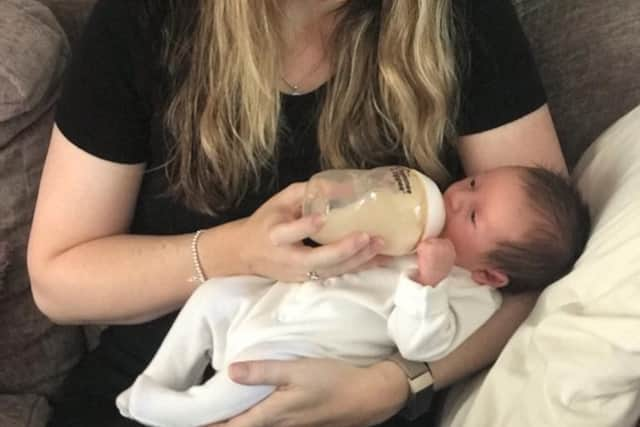
Antonia delivered her daughter at 35 weeks on June 2 2020 through a planned Caesarean section, and after a short period of recovery, she had a double mastectomy on June 21.
Because of the BRCA2 gene, she said: “I was adamant that I wanted to have a double mastectomy, rather than just a mastectomy on the boob that was affected.”
On July 8 she began chemotherapy, which was administered every two weeks from July to October, and the frequency meant that “just as I started feeling better from one session I’d have it again, and then I’d be like, ‘here we go again’”.
Antonia said that she did not experience too many side effects from the chemotherapy, apart from severe sickness, but the hardest part was losing her hair.
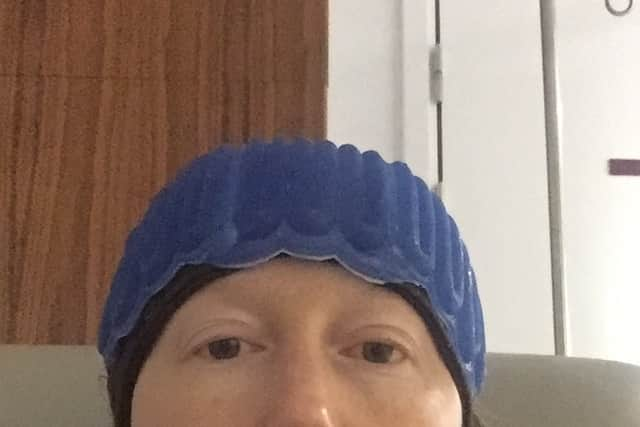
“Out of everything, that really affected me,” she said of her hair loss.
After her chemotherapy, Antonia had three weeks of radiotherapy, after which she had her ovaries removed as part of her treatment because of her genetic mutation and the risk of the cancer returning.
“I wanted my ovaries. I wanted to keep them, but I also wanted to stay alive,” she said.
Her oophorectomy in November 2020 had “quite a lot of impact overnight”, Antonia said, as she was plunged immediately into menopause at the age of 40.
“I just didn’t feel like me, really,” she said.
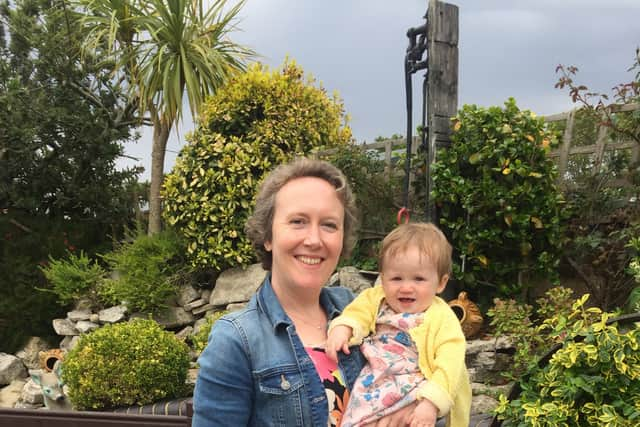
“I just don’t feel at peace with it,” she continued, adding that she feels acutely aware of the fact that her children will never know the ‘old’ her, pre-menopause.
“I’ve tried lots of different things that I can try to help to manage the symptoms, like I have reflexology, I exercise a lot, I try to eat healthy, but it’s just so difficult. And the symptoms do actually change as well.”
Antonia said her treatment and surgery hugely impacted on her relationship with her femininity – she had lost her hair, her breasts and her ovaries in quick succession, and was “desperate” to have reconstructive surgery on her breasts.
Breast reconstruction can be done during the mastectomy surgery, but in Antonia’s case the procedure was delayed by a year because of Covid-19, her treatment, and the fact that she had just had a baby.
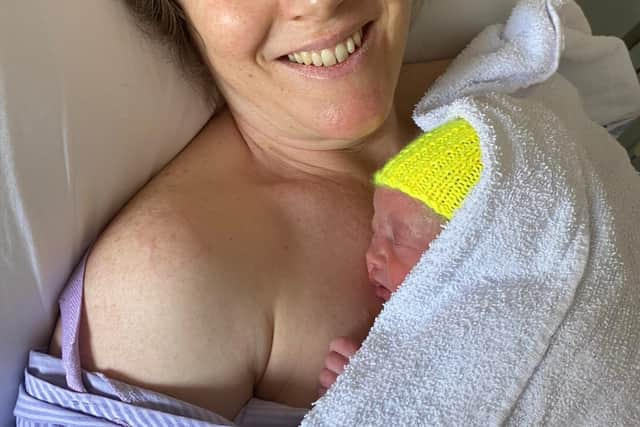
While she struggled with her mastectomy, Antonia said losing her ovaries was “harder, because obviously you can’t ever get that back, and there’s nothing you can really do”.
She also found it difficult to contend with the fact that “the choice of never having any more children was taken away from me” – she hadn’t decided whether she would have more children, but now the decision was out of her hands.
“But I just feel very grateful that I’m still alive and I have got my children, and they’re healthy. So I just try not to think about that, because it’s not an option,” she said.
Antonia said that going through early menopause was more difficult than the cancer treatment, since with the treatment “you know at the back of your mind that it is only short-lived, because you’re not going to be having chemotherapy forever”.
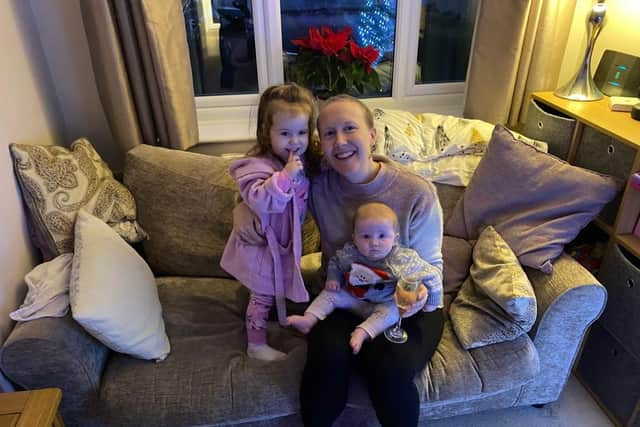
Finding resources and support for menopause after cancer was difficult for Antonia, who found that the resources available to her were more positioned towards natural menopause.
She found a lifeline in Dani Binnington’s Menopause and Cancer podcast, which is produced as part of Binnington’s non-profit organisation of the same name which supports cancer survivors through treatment-induced menopause.
“I fit into a really unique category of people, and there just isn’t anything apart from Dani’s podcast, which I kind of stumbled across, and that’s what I’ve always gone back to, because I just feel that they understand,” she said.
“I even tried putting myself in touch with a menopause specialist, because I get private medical care through work, but I just felt they weren’t equipped to deal with my current situation,” Antonia added.
“They knew a lot about menopause, but they didn’t know anything about my situation.
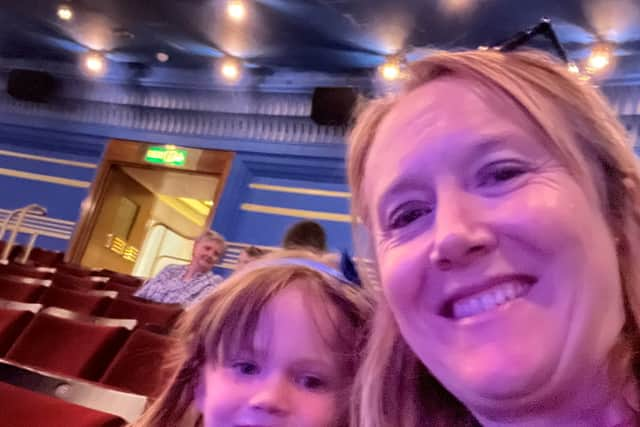
Now cancer-free and being closely observed in case of recurrence, Antonia has reflected on her journey as a whole.
“It has changed me,” she said.
“I’m not the person I was prior to the cancer, and I quite often think about life post cancer, before cancer, I put it into boxes…
“On the whole, I try to be positive and try to think it’s happened, and that’s part of my story.”
For those seeking support about menopause after cancer, Dani Binnington’s book Navigating Menopause After Cancer: A comprehensive, empowering guide to all your treatment options, where to get help and how to feel better is available to buy from Amazon and major bookstores.