
‘I thought my world was over when a rare autoimmune disease attacked my three-year-old’s brain’
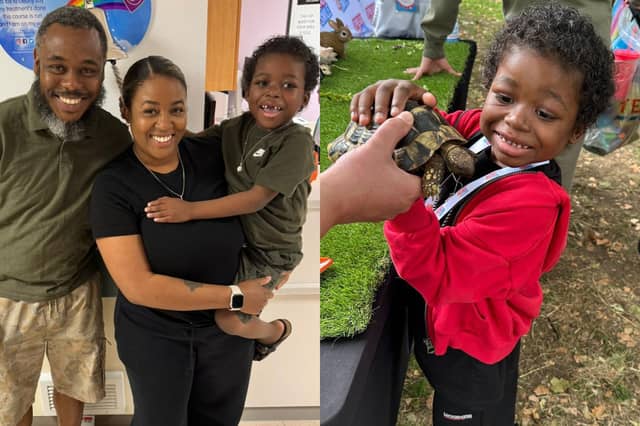

A mum from London thought her “world was over” when her three-year-old son was diagnosed with a rare autoimmune disease which attacked his brain, making him unresponsive and leaving her feeling like “he wasn’t there”.
During a two-year stay at Great Ormond Street Hospital, Sebrina Limrick’s son, Amari, needed to relearn how to walk and talk after being diagnosed with encephalitis.
Encephalitis is an inflammation of the brain, which is caused either by an infection invading the brain (infectious encephalitis) or through the immune system attacking the brain in error (post-infectious or autoimmune encephalitis), according to Encephalitis International. For Amari, it was the latter.
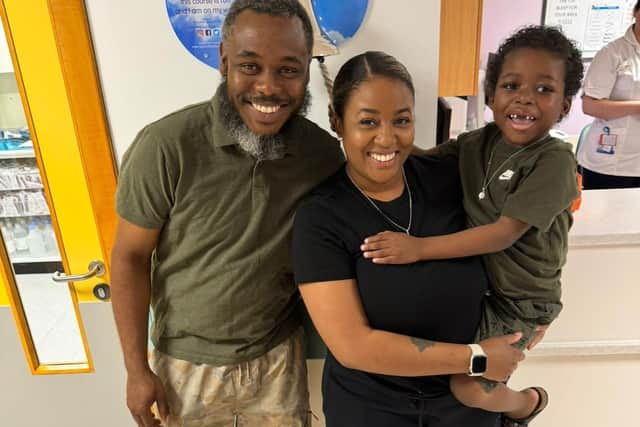
“He was the sort of boy who was always outside running around, but then he started to sleep a lot,” Sebrina, 35, told PA Real Life.
“He suddenly didn’t want to leave the house and didn’t want to do any of his favourite activities, which made me a bit more concerned.
“One night he woke up and was just staring in the corner of the room, and was babbling but I couldn’t understand what he was saying.
This prompted the concerned mum to call 111 and head to the hospital on May 10, where she began to believe “that something must be going on with his head and his brain”.

“At this point, I was getting incredibly frustrated,” said Sebrina. “When we were finally seen, I showed the doctor videos of what he was usually like, compared to what he was doing at the time.
“We were fortunate enough that a doctor on call that night consulted our doctor and said: ‘I think I know what this is. I think he has encephalitis’.”

“I kept speaking to him and singing to him so that he would know that I was there, because it felt like he wasn’t there,” said Sebrina.
“I felt like my world was over.”
Amari’s father Collin was stuck in Antigua waiting for a visa at the time, which added to the stress.
“It was really tough to have to call him and give him all this bad news,” said Sebrina.
Collin luckily managed to get to the UK to be there for when Amari was put into an induced coma on May 15 and transferred to The Royal London Hospital where doctors managed to get the fluid from his spine and do an MRI, which confirmed that he had anti-NMDA receptor encephalitis.
This type of autoimmune encephalitis produces symptoms like an altered mental state, behavioural changes and agitation, seizures, abnormal movements, hallucinations, sleep disturbance and decreased consciousness, according to Great Ormond Street Hospital.
Once Amari woke up from the coma, Sebrina was told that he would have to learn to walk and talk again.
“A doctor explained that his seizures would start to slow down and eventually stop, and that then he would be able to start getting more use of his limbs, and eventually start to talk,” said Sebrina.
“They said to be safe, they wanted to take him off the ward and start his treatment on rituximab in intensive care, where he could be monitored 24/7.”
Although at the start everything looked positive, suddenly Amari’s liver and kidneys started failing, leading to two weeks of dialysis.
“I would be breaking down in an absolute mess and he would be an absolute agony but would still have this big smile on his face or would just put his thumb up.”
Amari moved to Great Ormond Street Hospital (Gosh) on August 10 2022, just before his fourth birthday, and he remained there as an in-patient for two years, during which time he had a number of surgeries, treatments and rehabilitation sessions.
“During this time, I remember thinking that I needed to be strong for Amari, and strong for my husband as I needed to be able to take in all this information,” said Sebrina.
“I needed to be able to read and do research and find out what questions to ask. I felt like I became a nurse, a doctor and a carer all in one very, very fast.
At Gosh, they noticed that his stomach was expanding quickly, which led to the discovery of strictures in his stomach.
“He ended up on quite a lot of very strong pain medication and was connected to a pump pretty much 24/7, which then meant we weren’t allowed to take him out for some fresh air or go for walks, and that then made life 10 times harder,” recollected Sebrina.
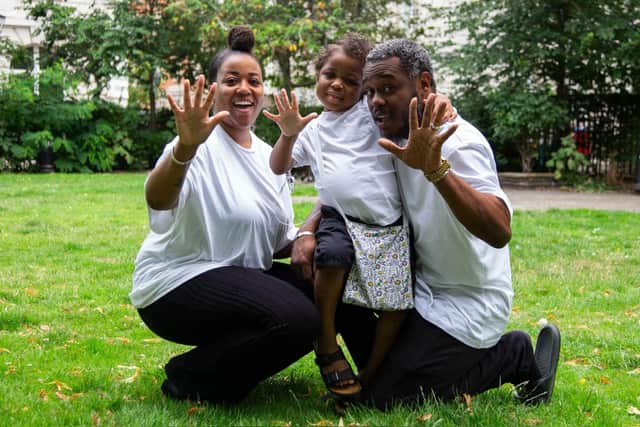
Amari had the transplant on October 5 and 6.
While Amari’s hospitalisation was heartbreaking and stressful, Sebrina says that the Spread a Smile charity provided relief amongst all the difficulties.
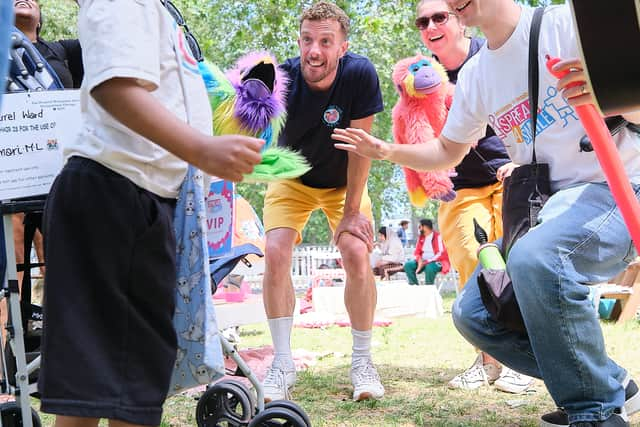
The charity provides in-person and virtual entertainment – including magicians, musicians and therapy dogs – to seriously ill children and their families in NHS hospitals and hospice partners across the UK.
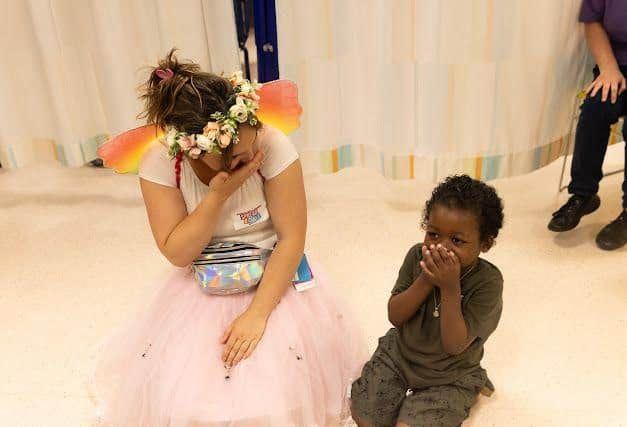
“On the days that you were feeling at your lowest or rubbish, they would come in and put a smile on your child’s face, and even if that smile was just for five minutes, it was literally the world.”
Amari and Sebrina first started getting visits from Spread a Smile in Christmas 2022, after he had been in hospital for around four months, but because Amari was on infection control a lot of the time, the entertainers couldn’t initially come into his room.
“But (they) would always wave to him from the window,” said Sebrina.
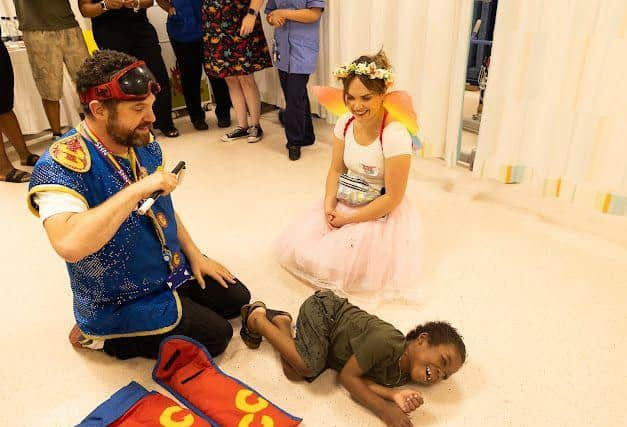
Sebrina says they always went “above and beyond”.
“When the children on the ward had birthdays, they would get special videos from Spread a Smile, and at Christmas, they would get a little box filled with all these little goodies, and it was always personalised.
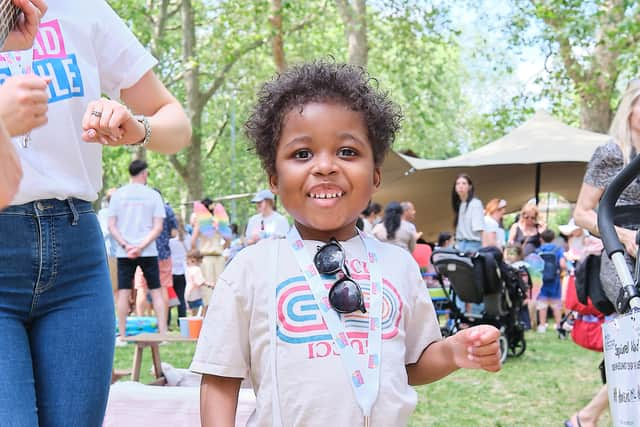
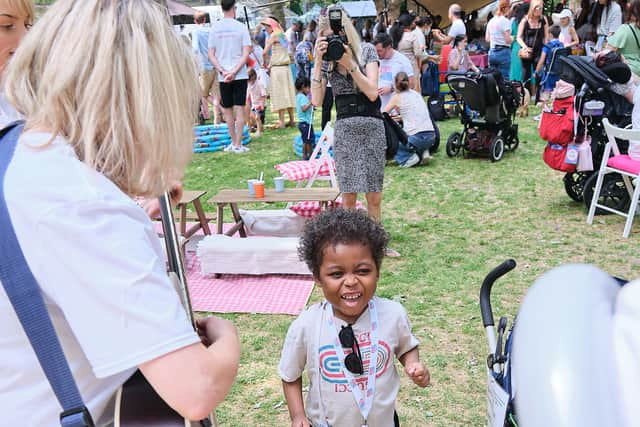
“They also throw amazing summer parties where all the children can enjoy music and magic.”
Amari was discharged on July 1 2024 and Spread a Smile was there to give him a big send off.
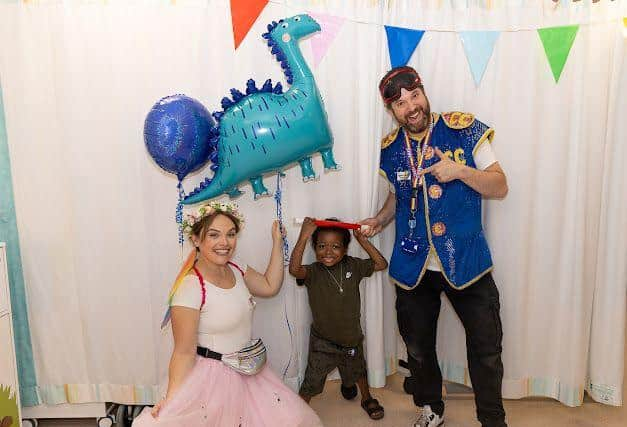
Amari is now seven years old and is at school full-time, and Sebrina says he is back to his bubbly, energetic self.
“We’ve had a few tiny ups and downs, but overall, he’s great,” said Sebrina.
“He no longer has a line, no longer has a gastrostomy and has gone from not wanting to eat anything to eating literally everything in the house.
“We still attend all the Spread a Smile parties and are so grateful for everything that they have done for us.”
To find out more about Spread a Smile and donate to support children like Amari, visit spreadasmile.org.