
‘I was diagnosed with a rare form of leukaemia at 17 and my sister, 11, donated life-saving bone marrow’

This article contains affiliate links. We may earn a small commission on items purchased through this article, but that does not affect our editorial judgement.
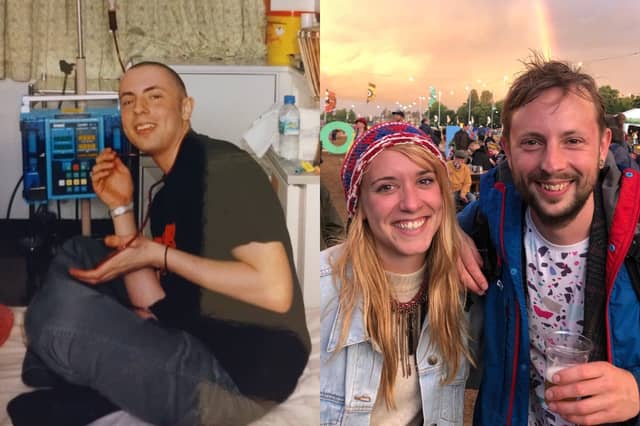
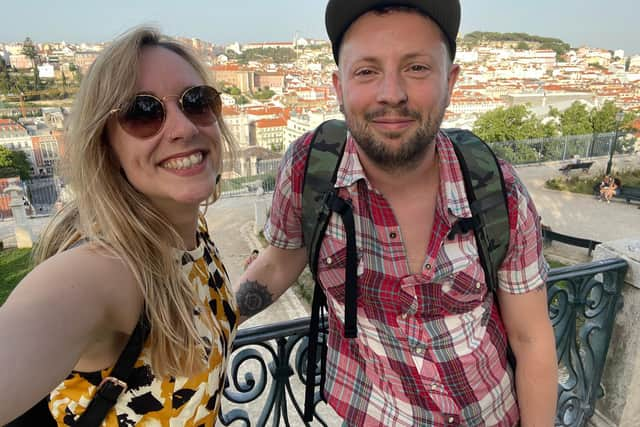
A brother has described what it was like for his 11-year-old sister to give him a life-saving bone marrow transplant after he was diagnosed at 17 with an ultra-rare form of leukaemia that affects roughly one in every million people.
Jody White, now 44, a digital designer living in the Welsh town of Presteigne, was diagnosed with acute undifferentiated leukaemia (AUL) in October 1999, after he said he consistently felt “under the weather” with colds, large rashes and ear infections that were so severe he temporarily lost his hearing.
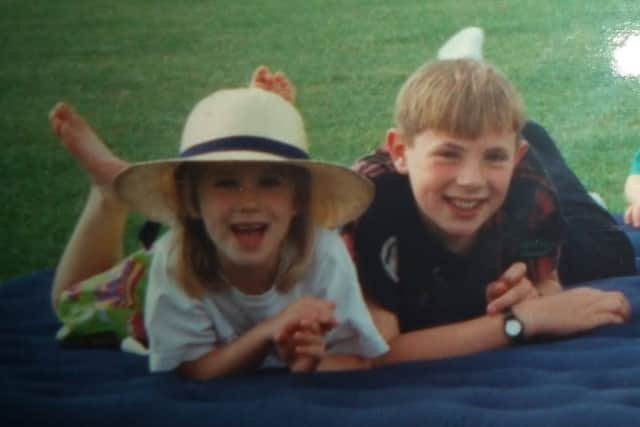
Without treatment, Jody’s parents were told he would only have two weeks to live, so he went through both chemotherapy and radiotherapy before doctors informed him that his best chance for survival was a bone marrow transplant.
After testing Jody’s siblings – Jemma, 14, Jessie, 11, and Josh, eight – it was revealed Jessie was a “perfect” match and she said she was “so ready” to be able to provide life-saving bone marrow.

“It was the consultant, Dr Prem Mahendra, and she said, ‘I’ve got some very good news for you – Jessie is a perfect match’.”
“It’s crazy. Jessie was born with exactly what I needed to survive,” he added.
Jessie, now 37, an owner of a creative agency and living in Mexico City, told PA Real Life: “It’s not very often you get to be someone’s antidote.
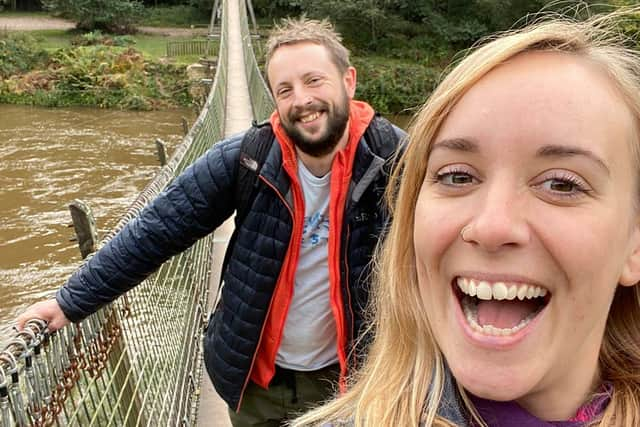
Looking back on their childhood growing up in Bridgnorth in Shropshire, Jessie said they had the “most idyllic family ever” and that she and Jody were “always very close”.
Everything changed in the summer of 1999 when Jody was 17 and was preparing to start his A-levels when he started experiencing “repeated infections”.
“Concurrently, I was getting these large rashes, which would appear for a few days and then go down again and then appear in other parts of the body.
Jody added: “Doctors just couldn’t really understand why I kept getting ill.”
Within two hours, Jody received a phone call to tell him to urgently go to his GP, which he described as “scary” and said that he intuitively knew something was wrong.
Describing this GP visit, he said: “The GP looked very ashen and glum, and then he basically just said, ‘I’m really sorry, but you’ve got leukaemia’.”
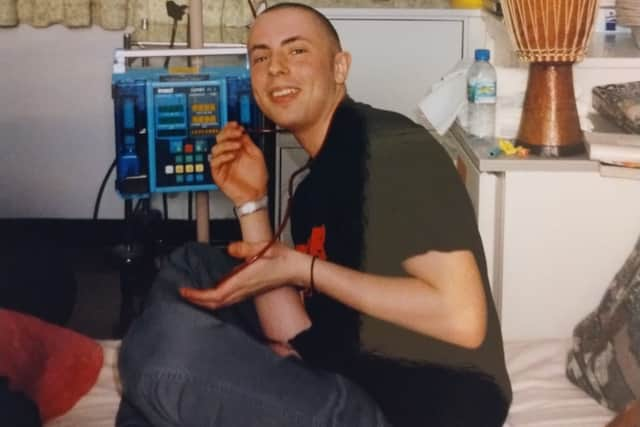
He went to the Royal Shrewsbury Hospital to speak to a consultant for more information, which is when his parents were told he would only have two weeks to live without treatment – something Jody said was “wisely” kept from him at the time.
He began chemotherapy “the very next day” due to the severity of his condition, which resulted in all-over hair loss and shedding “loads of weight”.
Jessie remembered her brother’s side effects were “brutal” to the point she would “wake up hearing him yelling in pain”.
“I remember the consultant at the time being almost proud of the fact that he had a patient with this rare diagnosis,” he said.
“It was almost something of a celebrity status.”
“I was very close to death,” he said.
Jessie’s father sat her and the rest of her siblings down the next morning.
“It’s one of only two times in my life that I’ve seen my dad cry – the other was when his mum died,” she said.

Jody pulled through and found out in December that he was in remission, but doctors told him the best chance for his survival and to eliminate the “lingering possibility” that the cancer might return was to receive a bone marrow transplant.
Everyone inherits HLA (human leukocyte antigen) markers from their parents, meaning siblings have a higher chance (25%) of being a perfect match, according to Cancer Research UK.
So, Jody’s siblings – Jemma, Jessie, and Josh – were all tested and it was revealed that Jessie was the only one who had a match for five out of five markers.
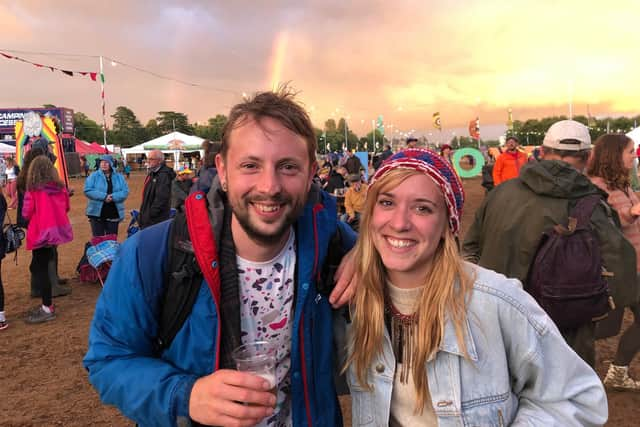
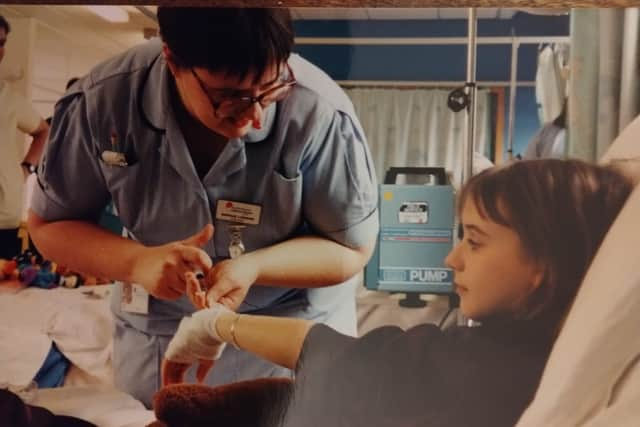
Jessie described doctors giving her general anaesthetic and drilling into her hips to retrieve her bone marrow, before it was transported to Jody and administered into his body through an IV in February 2000.
“I remember coming round and just being so excited,” Jessie said.
“Once I’d got over the drowsiness after a couple of hours, they shuffled me over to a phone that they were able to hold up to Jody’s ear because he was in a separate sterile room.
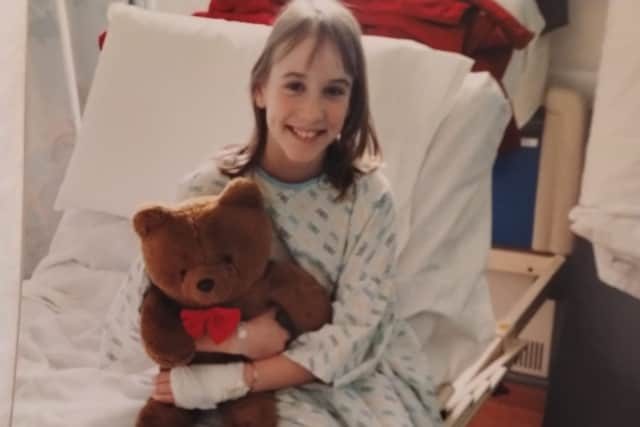
She added: “I just remember being so excited that he was already getting it and knowing that this was make or break.”
Jody said his recovery was “very long” and he had to be in hospital isolation for up to three weeks to avoid picking up infections, as well as taking anti-rejection drugs.
In April, Jody’s doctors told him: “Everything’s looking really good.”
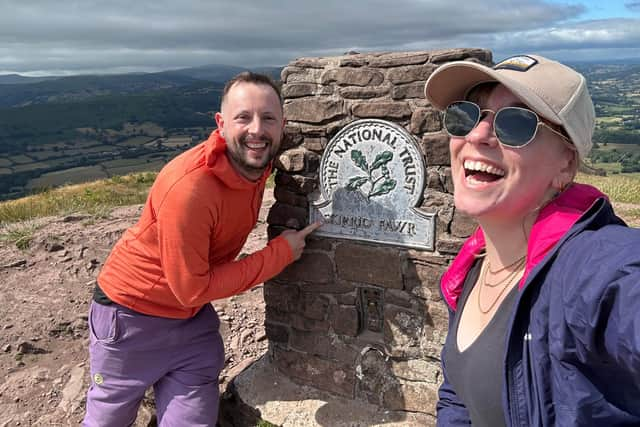
In the aftermath of his treatment, he had regular weekly checks, which turned into months and then years.
At the 10-year mark, Jody’s consultant told him: “I don’t think we need to see you anymore – you’re as good as cured.”
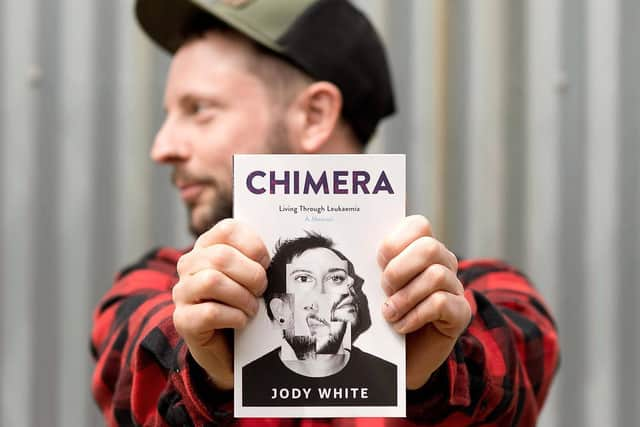
Jessie found it magical in her own way, too.
“When you think about the odds of Jody getting that particular disease and then for me to have the very specific matching, it helps you to see the world as not a chaotic place,” she said.
“I think hope is so important, and it’s often so hard to find hope in times like these,” Jody added.
“I feel incredibly lucky to still be here.”
To find out more about Leukaemia UK and how research can help stop leukaemia devastating lives, visit: www.leukaemiauk.org.uk. You can read more about Jody’s story in his book, Chimera: Living Through Leukaemia, A Memoir, available on Amazon: https://www.amazon.co.uk/Chimera-Living-Through-Leukaemia-Memoir/dp/173996120X