
‘I was diagnosed with MND and given six months to live – I’m alive eight years on and want to break taboo around death’


A father-of-three diagnosed with motor neurone disease (MND) and initially given as little as six months to live is alive and still “smiling” eight years later and wants to break the taboo around death.
When Paul Jameson, 65, an entrepreneur from Godalming in Surrey, was diagnosed with a type of MND called Progressive Bulbar Palsy (PBP), which mainly affects the muscles of the face, throat and tongue, he said his “whole world fell in”.
Paul’s main symptom was slurred speech and he soon lost the ability to speak – and, due to muscle tightness, known as spasticity, in his legs and arms, he is no longer able to walk and requires the use of a wheelchair.
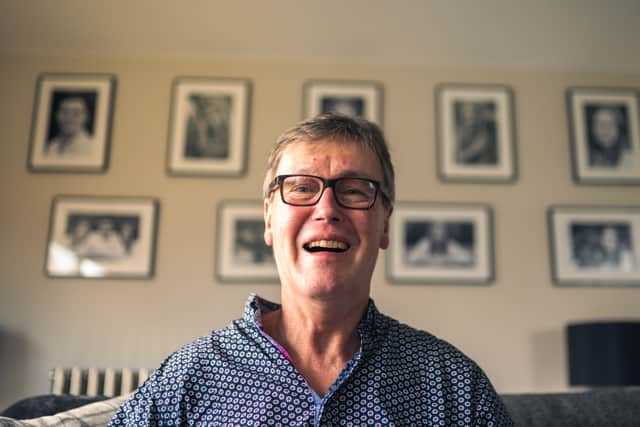
After discussing Paul’s “legacy” and end-of-life wishes, he and his son David Jameson, 32, decided to launch a funeral provider company called Aura in 2019, with the aim of helping to give people “the chance to face death with clarity, dignity and control”.
Speaking to PA Real Life through typing, as Paul has been unable to speak for the past five years, he wrote: “I feel very blessed and lucky. I make the most of every day.
“Most people’s funerals don’t reflect how they spent their life.
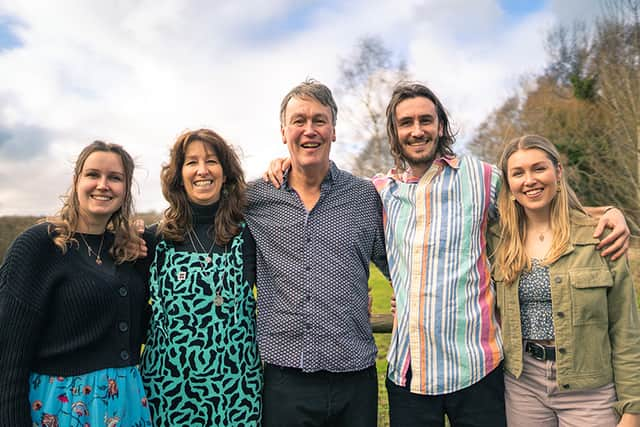
Up until his diagnosis, Paul said he lived an “unremarkable life”, but he enjoyed sports and was “reasonably successful in business”.
When he received his MND diagnosis on June 12 2017, which is classed as a terminal illness, he said his life became “more remarkable” and it “accelerated (his) living”.
His symptoms first started with slurred speech in the autumn of 2016, with his wife Jess, a GP, urging him to seek further medical advice.
After an MRI scan and an electromyography (EMG), which measures the electrical activity in the muscles, along with other tests, Paul said he was “devastated” to learn he had MND.
“I immediately started crying,” Paul writes in his first book, Very Much Alive.
Hearing about his father’s diagnosis, David told PA Real Life: “It was a real whirlwind of emotions.
“No family is perfect, but I’d say we were a very lucky family, and it turned everything upside down.”
MND causes muscle weakness which progressively worsens over time – it is usually life-shortening and there is currently no cure, but treatment can help to manage the symptoms.
He writes in his book: “I now cannot talk, as my tongue and lips can no longer move. I also have difficulty swallowing and eating.”
But after an initial period of shock and denial following his diagnosis, Paul remembered what his consultant told him: “Have a purpose and find a meaning in life.”
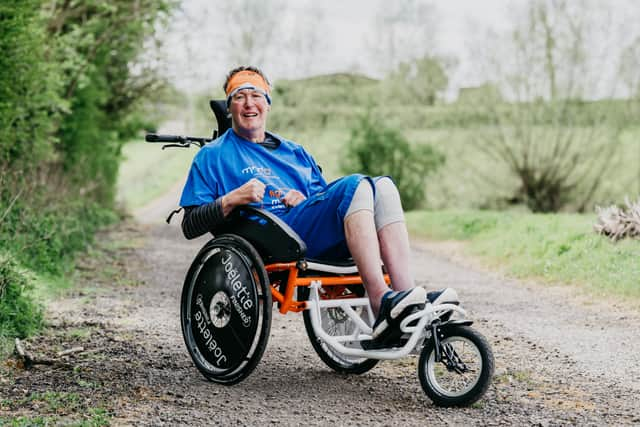
David said: “We all got together, cried, learned about the ramifications, what it was going to mean, but it didn’t take long for us to all pull together.
“We had a few drinks, to say the least, we were dancing on the table and making promises to each other.
“I remember dad said he wanted this to be the start of his life, not the end of his life – and he really embodied and lived that.”
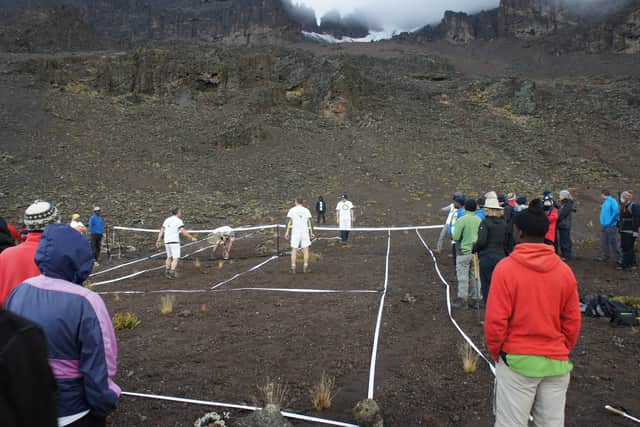
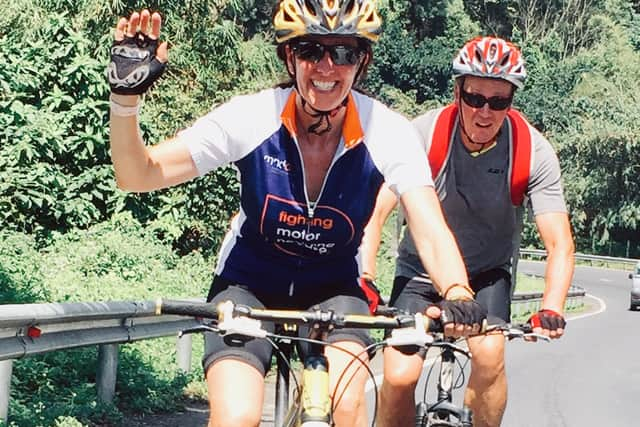
He travelled to Japan and Russia to watch England in the rugby and football world cups, and he climbed the Matterhorn and Mont Blanc, where he nearly had a fatal accident.
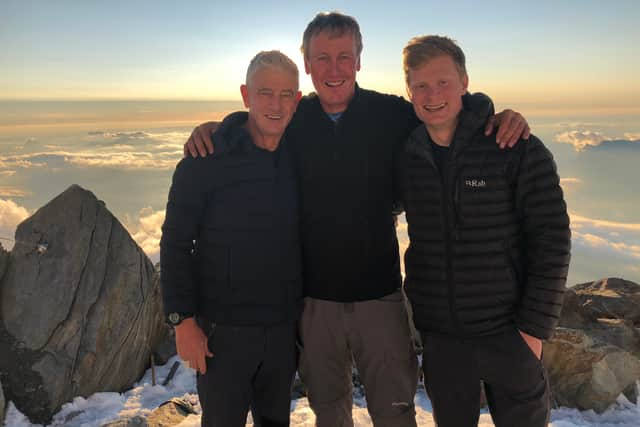
He writes: “Mike was in front, me in the middle and Jack at the back, all roped together.
“Suddenly, Mike lost his footing somehow. He fell backward and hurtled off the ridge down the steep snow-covered ravine bank, taking me with him.
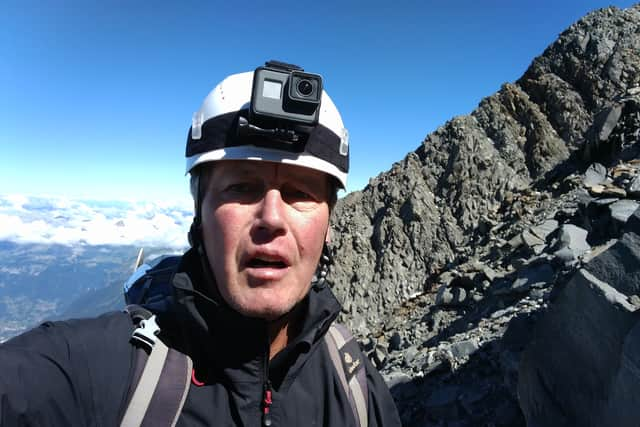
Thankfully, fellow climber Jack helped to save the two – and despite the scary moment, Paul said he “loved every minute of it, bar a second or two”.
Since his diagnosis, Paul has lost his ability to speak, along with the ability to walk and use his arms, but he receives “a lot of support managing (his) symptoms” and sees a personal trainer twice a week.
“In the weeks and months after my diagnosis, I thought about what I could do for my family as we learned to adapt our lives to MND and the future we had in store,” Paul said.
“The biggest thing was my funeral wishes.
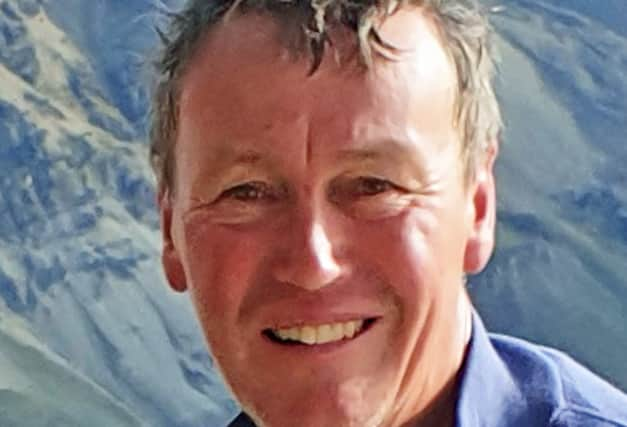
Realising that many people avoid planning for end of life, Paul and David founded Aura – a pioneering platform which provides direct cremations and funeral plans and supports individuals in making their final wishes known – in 2019.
David explained that death touches every family, yet most people “meet it alone, confused and over-charged”, and Aura was created to change that story.
Paul said: “As my speech started to fail me, the most important thing for me was to be able to communicate with my family about what I wanted, and how much I wanted to save them from any unnecessary stress after I’d died.
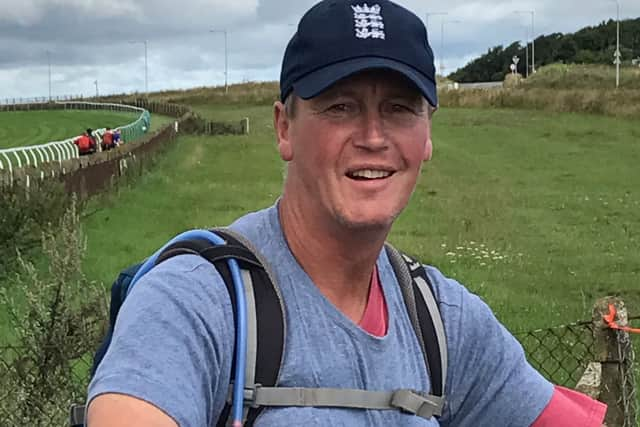
Paul and David said they appreciate that talking about death is an “awkward” and uncomfortable topic, but they hope that by encouraging more open conversations, people will be able to process it “more healthily”.
Having now surpassed the eight-year mark since his diagnosis, Paul said he is still planning “huge and bonkers” challenges, and he is preparing to release his second book.
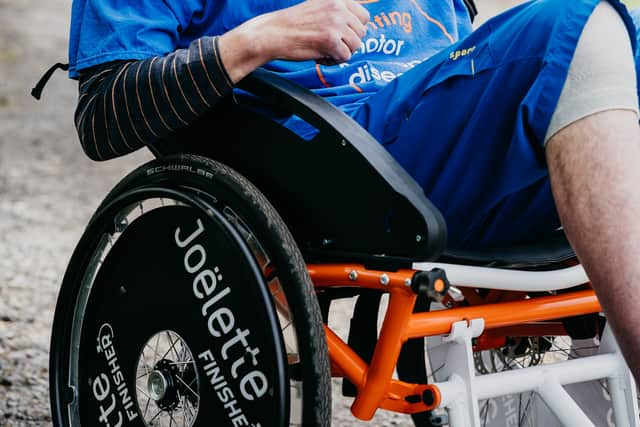
Although he faces many unknowns, Paul’s mindset and words of advice remain positive and uplifting.
He wrote: “Where there’s life, there’s hope.
“Never give up living … and keep smiling.”
To find out more about Paul’s company, Aura, visit: aura.life.