
I would be dead, in prison or on the streets if I did not seek help – veteran
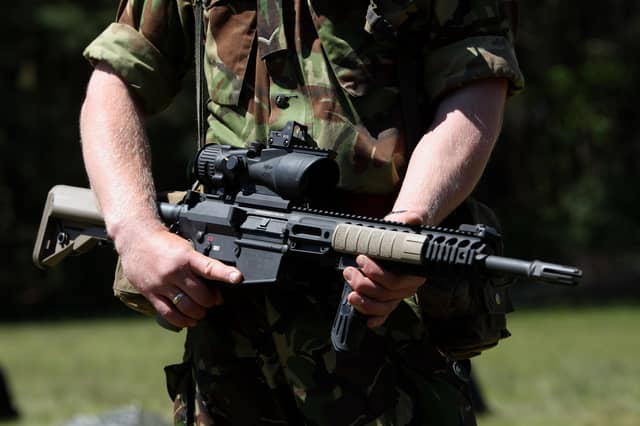

A veteran has told how he fears he would be dead, in prison or on the streets if he did not seek support for his mental health.
Rab, who asked to only use his first name, said therapy offered by the charity Combat Stress had turned his life around.
The former Marine of 24 years suffers from frequent trauma-related nightmares, PTSD and had trouble regulating his emotions.
He was medically discharged from the army in 2014 with physical and mental health issues, but it took him a decade before receiving treatment.
Rab spoke to the Press Association as veterans minister Graeme Dey announced £645,000 in funding for Combat Stress to provide mental health support to veterans.
Rab, who is nearing the end of his treatment with the charity, encouraged fellow veterans to seek support that he said changed his life for the better after just a year.
“I don’t want to think where I’d be now,” he said when asked about his life if he did not seek support.
“But, yeah, I could be in prison or dead, I think, spiralling that bad, or on the streets.”
Rab said that after leaving the army more than a decade ago he began to “spiral downwards” but decided to take action last year.
He said: “I could feel myself getting steadily worse. But I didn’t self-refer because I thought a lot of people were a lot worse than myself who needed the help more than I did.
“Things got on top of me and I eventually ended up having a breakdown in November 2024.
“At that point I just couldn’t really do anything for myself and was referred to Combat Stress for treatment, and they did a clinical assessment and I was ticking all the boxes for PTSD.”
Rab said before seeking support he suffered frequent nightmares and struggled to sleep as he felt overwhelmed with daily life.
But he said one-to-one treatment helped him rebuild his life and cope with past traumas.

In a message to other veterans, Rab said: “Don’t be afraid. Seek help and don’t leave it too late. You don’t have to be at rock bottom where I was to seek help.
“If you feel there’s something wrong, put your hand up and reach out and go to the experts.”
During the veterans minister’s visit to Combat Support in Glasgow, the charity said more than two-thirds of those who receive support from them see their PTSD symptoms improve significantly.
Charlotte Ogilvie, a therapist at Combat Stress, said it takes the average veteran around 13 years to seek help from Combat Stress, all while coping with conditions such as PTSD.
“The evidence tells us the sooner we do trauma therapy with somebody the better things get much quicker,” she said.
“If you’ve been struggling with complex PTSD for 20 years, it takes longer for you to rebuild your life. So the sooner some we can get in and do the work, the better.
“We have a 24-hour helpline and if we can’t help you, find someone who can.”
Mr Dey, the veterans minister, said: “This funding is hugely important. We have a duty of care to veterans communities and their families who are impacted very often by what they’re experiencing.
“The Combat Stress activity we are supporting today is filling a gap we have in Scotland until we can get our new set-up running in the course of 2026.
“It’s been really moving to hear the experience of the veteran I was chatting to and to hear about his journey and how he is benefiting from the offer that Combat Stress is providing.
“It’s reassuring to hear that he is making progress but also concerning that too many service men and women are leaving the military inadequately supported to get back into civilian life.”