
Iran launches new attacks, saying US will ‘bitterly regret’ sinking warship
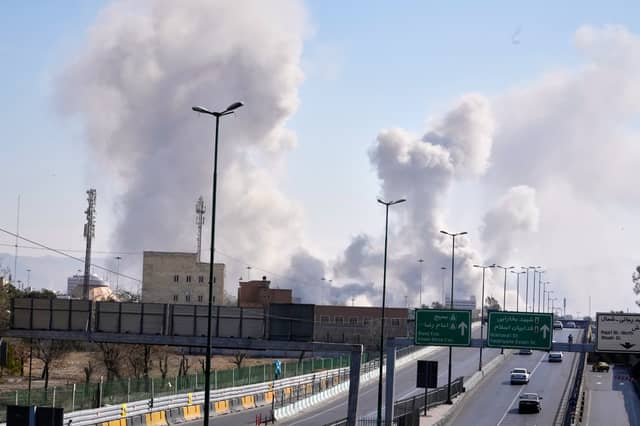

Iran launched a new wave of attacks at Israeli and American bases on Thursday and threatened that the US would “bitterly regret” torpedoing an Iranian warship in the Indian Ocean.
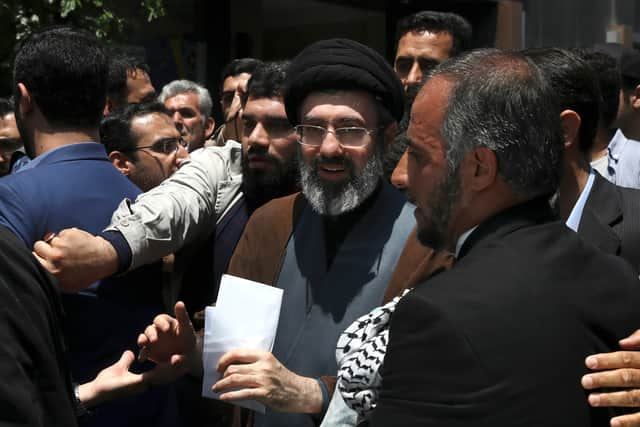
Elsewhere, a religious leader called for “Trump’s blood”, while Israel said it had begun a “large-scale” attack on Tehran.
Israel announced multiple incoming missile attacks and air sirens sounded in Tel Aviv and Jerusalem.
Iranian state television said additional strikes also targeted US bases.
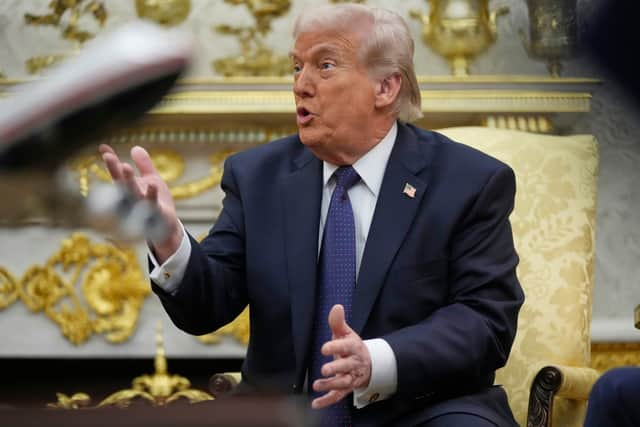
Later on Thursday, US President Donald Trump told news website Axios said he wants to be involved in selecting Iran’s next leader and called Ayatollah Ali Khamenei’s son an “unacceptable” potential pick.
“Khamenei’s son is unacceptable to me,” Mr Trump said of Mojtaba Khamenei, the 56-year-old son of the supreme leader killed on the first day of the war. Mr Trump added: “We want someone that will bring harmony and peace to Iran.”
The president also derided him as “a lightweight”.
“I have to be involved in the appointment, like with Delcy in Venezuela,” said Mr Trump, referring to the acting president in the South American country. Delcy Rodriguez took power in January after Mr Trump ordered a US military operation to capture then-president Nicolas Maduro to face US drug conspiracy charges.
Iran launched its large Khorramshahr-4 missiles in an attack on Thursday targeting Israel, the country’s paramilitary Revolutionary Guard said.
The Guard said the missiles had a one-ton warhead. The missiles can also be multiple warhead. Israel has said Iran used cluster munitions in attacks.
The Guard claimed attacks in Bahrain, Kuwait and the United Arab Emirates as well.
The US State Department announced on Thursday it was closing its embassy in Kuwait, which activated its air defence systems after missiles were shot towards it.
Bahrain said an Iranian missile hit a state-run oil refinery. It said the fire on Thursday night was extinguished and the refinery was still working. There were no reports of casualties.
The Israeli military said it launched targeted attacks in Lebanon at the Iranian-backed Hezbollah militant group and a “large-scale wave of strikes against infrastructure” in Iran’s capital, without elaborating.
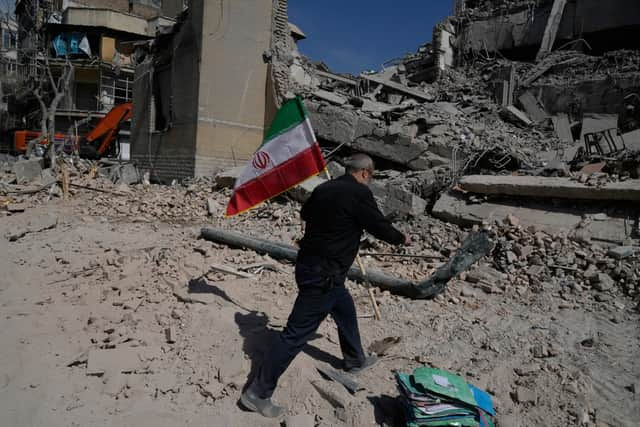
The Israeli military issued an evacuation notice on Thursday calling for all residents of Beirut’s southern suburbs to “save your lives and evacuate your homes immediately”, apparently signalling plans for heavy bombardment of the area.
Israel’s finance minister Bezalel Smotrich warned the southern suburbs of Beirut where Hezbollah has a strong presence will look like Khan Younis, a city in Gaza that Israel has destroyed during the two-year war in Gaza.
“You wanted to bring hell on us, we are bringing hell on you,” Mr Smotrich said as he toured towns on Israel’s border with Lebanon. “Dahiyeh will look like Khan Younis, and our citizens of the north will live in peace and quiet.”
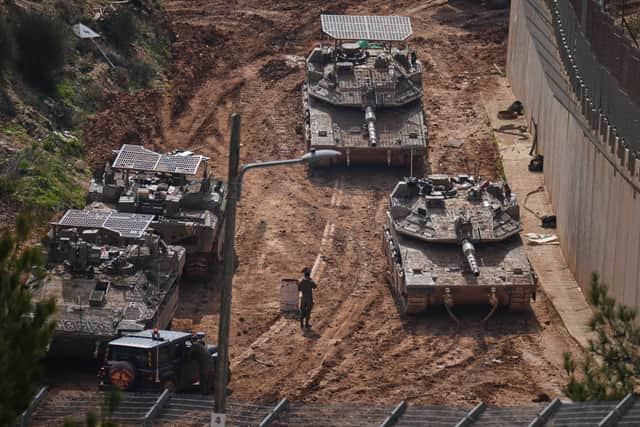
“Ground combat was observed west of Kfar Kila,” a village near the border with Israel, overnight, which included “firing of shots”, said Tilak Pokharel, spokesperson for UN peacekeeping operation Unifil.
The US navy sank an Iranian warship on Tuesday night in the Indian Ocean, killing at least 87 Iranian sailors, which Iranian foreign minister Abbas Araghchi decried as “an atrocity at sea”.
“Frigate Dena, a guest of India’s navy carrying almost 130 sailors, was struck in international waters without warning,” he wrote on social media. “Mark my words: The US will come to bitterly regret (the) precedent it has set.”
Officials in New Delhi said the Iranian warship had participated in naval exercises hosted by India before heading out into international waters in the Indian Ocean on its way home.
India’s navy and defence ministry said the Iranian warship had participated in the International Fleet Review and the multilateral naval exercise MILAN 2026, organised by the Indian navy in the port of Visakhapatnam from February 15 to February 25. The ministry said 74 countries had joined the events.
Mr Araghchi stressed that the frigate had been “a guest” of India’s navy. The Indian government has not yet publicly commented on the incident.
Sri Lanka’s media minister and government spokesman, Nalinda Jayatissa, told its parliament on Thursday that another Iranian ship had arrived in its exclusive economic zone, an area beyond its immediate territorial waters where it has rights over natural resources.
Later, Sri Lanka evacuated more than 200 sailors from the IRIS Bushehr after authorities were informed that one of the ship’s engines suffered a failure, the country’s president said on Thursday.
Anura Kumara Dissanayake said his government held discussions with Iranian officials and the captain of the ship.
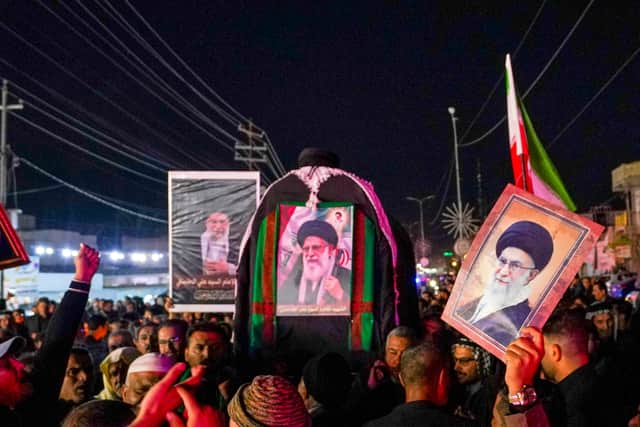
“Fight the oppressive America, his blood is on my shoulders,” he said in a rare call for violence from an ayatollah, one of the highest ranks within the clergy of Shiite Islam.
The US and Israel launched the war on Saturday, targeting Iran’s leadership, missile arsenal and nuclear programme while suggesting that toppling the government is a goal. But the exact aims and timelines have repeatedly shifted, signalling an open-ended conflict.
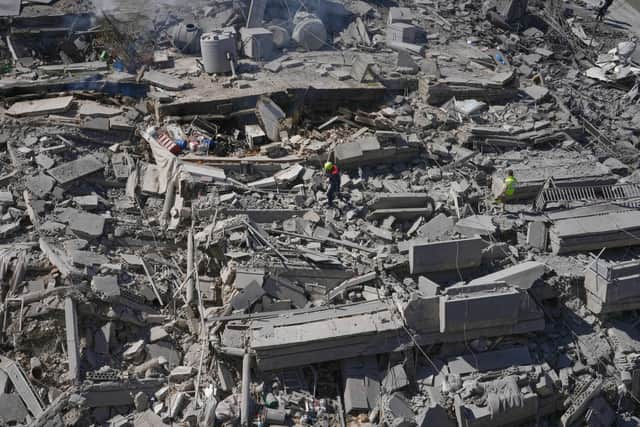
The war has killed more than 1,230 people in Iran, more than 100 in Lebanon and around a dozen in Israel, according to officials in those countries.
It has disrupted the supply of the world’s oil and gas, snarled international shipping and stranded hundreds of thousands of travellers in the Middle East.
A drone crashed on Thursday near the airport in Nakhchivan, an Azerbaijan exclave that borders the north of Iran and is separated from the rest of the country by Armenia, injuring four airport workers. Another drone fell near a school and two people were injured, Azerbaijan’s foreign ministry said.
Iran’s general staff of the armed forces denied on Thursday that it had launched a drone toward Azerbaijan. The denial comes, however, as Iran has repeatedly denied targeting oil infrastructure and other civilian targets during the war, despite its drone and missile fire hitting those sites.
Qatar evacuated residents near the US embassy in Doha as a temporary precaution and fighter jets could be heard overhead early in the United Arab Emirates city of Dubai.
Later on Thursday the Gulf nation’s defence ministry said 14 ballistic missiles and four drones were fired at the county. It said air defences intercepted all the drones and 13 of the missiles, while the 14th fell in the sea off Qatar.
An explosion rocked the area early on Thursday, according to the United Kingdom Maritime Trade Operations Centre run by the British military. It said a tanker apparently came under attack, but the agency did not offer a cause. Iran has attacked ships by attaching limpet mines to them in the past.
A security official with Iraq’s navy said an oil tanker flying the Bahamas flag was hit by an explosion on Thursday while docked near Khor al-Zubair port in southern Iraq.
The official, speaking on condition of anonymity, said a small, unidentified boat approached the tanker at 1.20am local time, shortly before an explosion was heard near the vessel’s left side. The cause of the explosion and the extent of the damage were not immediately clear.
Also on Thursday, Iraq’s state-run Iraqi News Agency reported that an attempt to launch missiles from an area in Basra province in southern Iraq “intended to target a neighbouring country”, was thwarted and that security forces seized a mobile launch platform carrying two missiles that were ready to be fired.
The United Arab Emirates’ Defence Ministry said one ballistic missile and six drones hit the country’s territory. The ministry added that it repelled six missiles and 131 drones on Thursday, and hundreds since the start of the war.
Earlier this week, shrapnel from the interception of cruise missiles killed three residents, and falling shrapnel in past days has wounded 94, it said.
The war has blocked access to major ports in the Gulf region, affecting the supply of food to more than 50 million people in a region highly dependent on agricultural imports, a ship-spotting platform said on Thursday.
MarineTraffic.com said container vessels heading to ports in the United Arab Emirates, Qatar, Saudi Arabia, Bahrain and Kuwait are now stranded. This has impacted agricultural supplies to more than 50 million people in the Gulf, a region that imports over 90% of its food, it said.
France, Italy and Greece have agreed to co-ordinate the deployment of military assets to Cyprus and Eastern Mediterranean.
The three countries will work together to ensure freedom of navigation in the Red Sea, according to a French diplomat.
The decision was announced on Thursday after French President Emmanuel Macron called Italian Prime Minister Giorgia Meloni and Greek Prime Minister Kyriakos Mitsotakis.
Israel’s ambassador to the United Nations said on Thursday it is too soon for diplomacy, as calls grow to end the widening war with Iran.
Danny Danon told reporters Israel must first eliminate Iran’s nuclear programme, ballistic missiles, regional proxies and naval threats.
“I think diplomacy will come into action – not yet, not yet,” Mr Danon said. “We have to finish the job.”
He said Israel must continue “to hammer, to dismantle” Iran’s capabilities before turning to diplomacy, adding that he expects the war to last days or weeks, not months.