
Iran says it conducted successful space launch in programme criticised by West
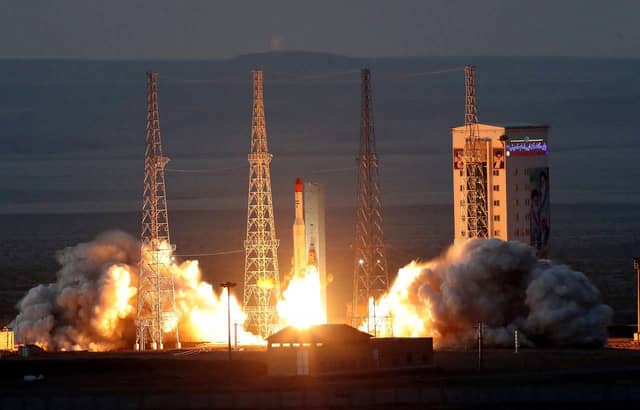

Iran said on Friday it conducted a successful space launch, the latest for its programme the West alleges improves Tehran’s ballistic missile plans.
Iran conducted the launch using its Simorgh programme, a satellite-carrying rocket that had had a series of failed launches, at Iran’s Imam Khomeini Spaceport in rural Semnan province. That is the site of Iran’s civilian space programme.
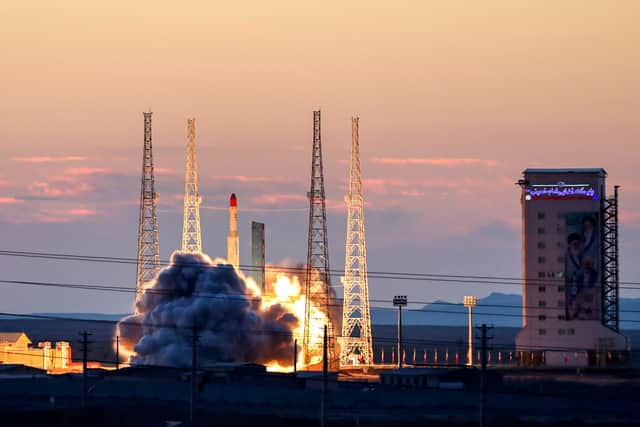
Iran also put the payload of the Simorgh at 300 kilogrammes (660 pounds), heavier than its previous successful launches.
There was no immediate independent confirmation the launch was successful. The US military did not immediately respond to a request for comment.
The announcement comes as heightened tensions grip the wider Middle East over Israel’s continued war on Hamas in the Gaza Strip and as an uneasy ceasefire holds in Lebanon.
The United States has previously said Iran’s satellite launches defy a UN Security Council resolution and called on Tehran to undertake no activity involving ballistic missiles capable of delivering nuclear weapons. UN sanctions related to Iran’s ballistic missile programme expired in October 2023.
“Iran’s work on space-launch vehicles — including its Simorgh — probably would shorten the timeline to produce an intercontinental ballistic missile, if it decided to develop one, because the systems use similar technologies,” a US intelligence community report released in July said.

Iran’s reformist President Masoud Pezeshkian, who has been signalling he wants to negotiate with the West over sanctions, has yet to offer strategy when it comes to Iran’s ambitions in space. The Simorgh launch represented the first for his administration from the country’s civil space programme.
Iran’s paramilitary Revolutionary Guard conducted a successful launch in its parallel programme in September.
Intercontinental ballistic missiles can be used to deliver nuclear weapons. Iran is now producing uranium close to weapons-grade levels after the collapse of its nuclear deal with world powers.
Tehran has enough enriched uranium for “several” nuclear weapons, if it chooses to produce them, the head of the International Atomic Energy Agency has repeatedly warned.
Iran has always denied seeking nuclear weapons and says its space programme, like its nuclear activities, is for purely civilian purposes. However, US intelligence agencies and the IAEA say Iran had an organised military nuclear programme up until 2003.