
Iranian President and foreign minister found dead at helicopter crash site
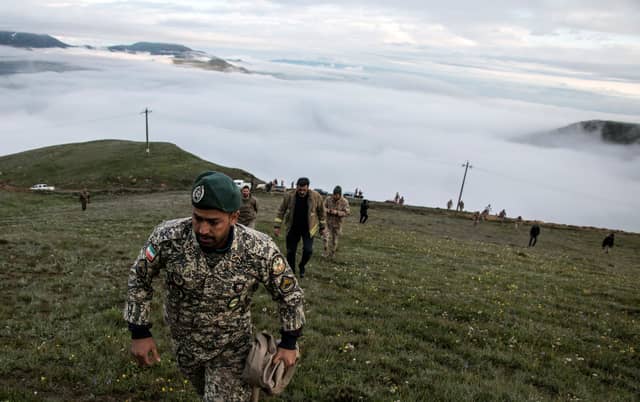

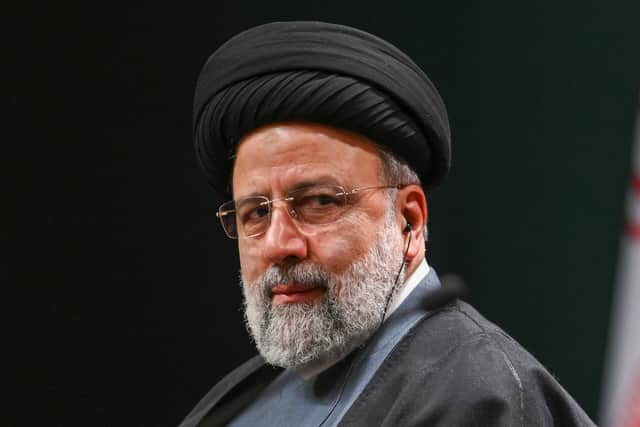
Iranian President Ebrahim Raisi, the country’s foreign minister and several other officials have been found dead, hours after their helicopter crashed in a mountainous region of the country’s north-west, state media reported.
The crash comes as the Middle East remains unsettled by the Israel-Hamas war, during which 63-year-old Mr Raisi, under Supreme Leader Ayatollah Ali Khamenei, launched an unprecedented drone and missile attack on Israel just last month.
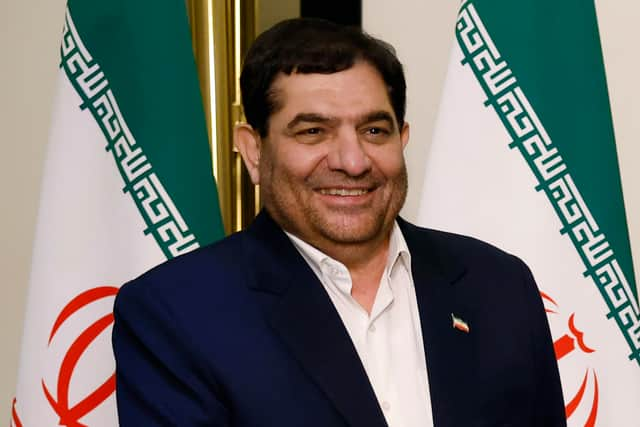
Khamenei has announced that Iran’s first vice president, Mohammad Mokhber, would serve as the country’s acting President until elections are held.
During Mr Raisi’s term in office, Iran enriched uranium closer than ever to weapons-grade levels, further escalating tensions with the West as Tehran also supplied bomb-carrying drones to Russia for its war in Ukraine and armed militia groups across the region.

State TV gave no immediate cause for the crash that occurred in Iran’s East Azerbaijan province amid foggy conditions.
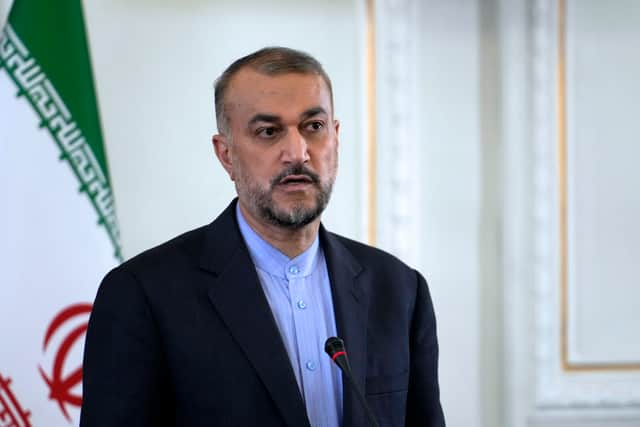
Among the dead was Iranian foreign minister Hossein Amirabdollahian, 60.
IRNA said the crash killed eight people in all, including three crew members on the Bell helicopter, which Iran purchased in the early 2000s.
Aircraft in Iran face a shortage of parts, often flying without safety checks over Western sanctions. Because of that, former Iranian foreign minister Mohammad Javad Zarif sought to blame the United States for the crash in an interview on Monday.
“These will be recorded in the list of US crimes against the Iranian people.”
The US has yet to comment publicly on Mr Raisi’s death.
Early on Monday morning, Turkish authorities released what they described as drone footage showing what appeared to be a fire in the wilderness that they “suspected to be wreckage of helicopter”.

Footage released by the IRNA early on Monday showed what the agency described as the crash site, across a steep valley in a green mountain range. Soldiers speaking in the local Azeri language said: “There it is, we found it.”
Condolences poured in from neighbours and allies after Iran confirmed there were no survivors from the crash.
Leaders of Egypt and Jordan also offered condolences, as did Syrian President Bashar Assad.
Azerbaijan’s President Ilham Aliyev said he and his government were “deeply shocked”. Mr Raisi had been returning on Sunday after traveling to Iran’s border with Azerbaijan to inaugurate a dam with Mr Aliyev when the crash happened.
Turkish President Recep Tayyip Erdogan conveyed his condolences. Russian President Vladimir Putin, in a statement released by the Kremlin, described Mr Raisi “as a true friend of Russia”.

Under the Iranian constitution, Iran’s vice first president takes over if the president dies, with Khamenei’s assent, and a new presidential election would be called within 50 days. Khamenei’s condolence message Monday over Raisi’s death, declared five days of public mourning and acknowledged Mr Mokhber had taken the role of acting president.
Mr Mokhber had already begun receiving calls from officials and foreign governments in Raisi’s absence, state media reported.
An emergency meeting of Iran’s cabinet was held as state media made the announcement on Monday morning.
A hard-liner who formerly led the country’s judiciary, Mr Raisi was viewed as a protege of Khamenei, and some analysts had suggested he could replace the 85-year-old leader after Khamenei’s death or resignation.
Following Mr Raisi’s death, the only other person so far suggested has been Mojtaba Khameini, the 55-year-old son of the Supreme Leader.
However, some have raised concerns over the position being taken only for the third time since 1979 by a family member, particularly after the Islamic Revolution overthrew the hereditary Pahlavi monarchy of the shah.
Mr Raisi won Iran’s 2021 presidential election, a vote that saw the lowest turnout in the Islamic Republic’s history. He was sanctioned by the US in part over his involvement in the mass execution of thousands of political prisoners in 1988 at the end of the bloody Iran-Iraq war.