
Israel’s security cabinet backs plans to take over Gaza City

Israel’s security cabinet has approved a plan to take over Gaza City, Prime Minister Benjamin Netanyahu’s office said early on Friday.
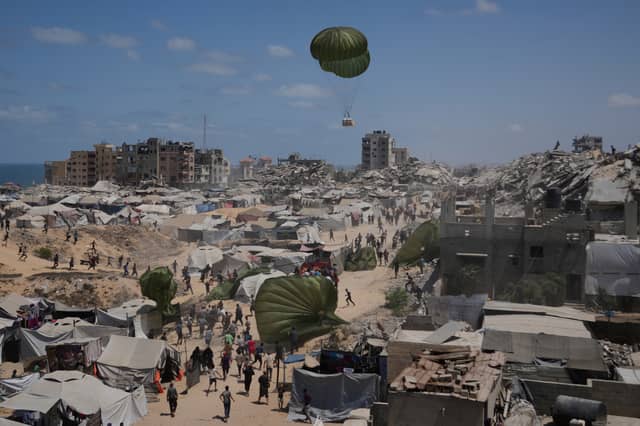
The war, sparked by Hamas’s October 7 attacks on Israel which killed 1,200 with more than 250 people taken hostage, has killed tens of thousands of Palestinians, destroyed much of Gaza and pushed the territory of some two million Palestinians toward famine.
Ahead of the security cabinet meeting, which began on Thursday and ran through the night, Mr Netanyahu said Israel planned to retake control over the entire territory and eventually hand it off to friendly Arab forces opposed to Hamas.
The plans stop short of that, perhaps reflecting the reservations of Israel’s top general, who reportedly warned it would endanger the remaining 20 or so living hostages held by Hamas and further strain Israel’s army after nearly two years of regional wars.
Meanwhile, mediators from Egypt and Qatar are working on a new framework that would include the release of all hostages — dead and alive — in one go in return for an end of the war in Gaza and the withdrawal of Israeli forces from the strip, two Arab officials told the Associated Press.
Many families of hostages are opposed to Israel’s plans, fearing further escalation will doom their loved ones.
The military “will prepare to take control of Gaza City while providing humanitarian aid to the civilian population outside the combat zones,” Mr Netanyahu’s office said in a statement after the meeting.
Israel has repeatedly bombarded Gaza City and carried out numerous raids, only to return to different neighbourhoods again and again as militants regrouped.

A major ground operation there could displace tens of thousands of people and further disrupt efforts to deliver food to the territory.
It is unclear how many people reside in the city, which was Gaza’s largest before the war.
Hundreds of thousands fled Gaza City under evacuation orders in the opening weeks of the war, but many returned during a ceasefire at the start of this year.
Israel already controls around three-quarters of the devastated territory.
Families of hostages held in Gaza fear an escalation could doom their loved ones and some protested outside the security cabinet meeting in Jerusalem.
Former top Israeli security officials have also come out against the plan, warning of a quagmire with little added military benefit.
An Israeli official had earlier said the security cabinet would discuss plans to conquer all or parts of Gaza not yet under Israeli control.
The official, speaking on condition of anonymity pending a formal decision, said that whatever is approved would be implemented gradually to increase pressure on Hamas.
At least 42 Palestinians were killed in Israeli airstrikes and shootings across southern Gaza on Thursday, according to local hospitals.
Asked in an interview with Fox News ahead of the security cabinet meeting if Israel would “take control of all of Gaza”, Mr Netanyahu replied: “We intend to, in order to assure our security, remove Hamas there, enable the population to be free of Gaza.
“We don’t want to keep it. We want to have a security perimeter. We want to hand it over to Arab forces that will govern it properly without threatening us and giving Gazans a good life.”
Israel’s military chief of staff, Lt Gen Eyal Zamir, warned against occupying Gaza, saying it would endanger the hostages and put further strain on the military after nearly two years of war, according to Israeli media reports.
Of the 42 people killed on Thursday, at least 13 were seeking aid in an Israeli military zone in southern Gaza where UN aid convoys are regularly overwhelmed by looters and desperate crowds.
Another two were killed on roads leading to nearby sites run by the Israeli-backed Gaza Humanitarian Foundation (GHF), an American contractor, according to Nasser Hospital, which received the bodies.
GHF said there were no violent incidents at or near its sites on Thursday. Israel’s military said its forces did not fire in the morning and that it knew of no encounters in the area.
The military zone, known as the Morag Corridor, is off limits to independent media.