
‘It’s shaped who I am’ – Woman views life-threatening condition causing sporadic bouts of painful swelling as ‘blessing’
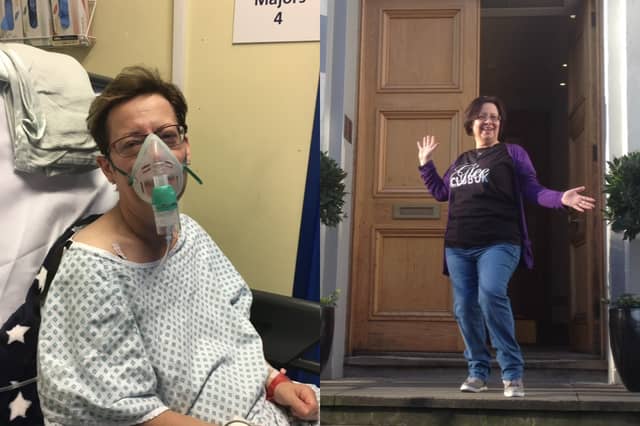

A woman living with a rare and life-threatening condition causing sporadic bouts of painful swelling to her body says she views it as a “blessing” as it has “shaped” who she is.
Karen Owen, 64, who lives in Bracknell, Berkshire, with her partner of four years, Graham Kilby, 55, was diagnosed with hereditary angioedema (HAE) as a teenager after her hands, feet and face would swell up unpredictably throughout her childhood.
Despite its name, Karen, who works in self-management within general wellness, said there is no history of HAE within her family – and her condition has been caused by a “genetic mutation” which is often triggered by stress, hormones, infection and trauma.
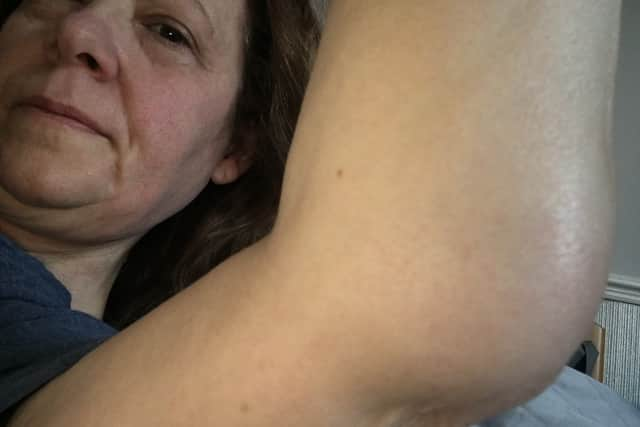
The mother, whose 33-year-old daughter, Louise Maskell, “thankfully doesn’t have HAE”, said the inflammation to her extremities is “painful”, while swelling on her face impacts on her self-esteem and she avoids going out in public “because it’s disfiguring”.

Thankfully, because of advancements in HAE treatment, Karen now has access to emergency medication she can self-administer at home during a swelling attack, and she urged others living with rare conditions to “focus on the glimmers, not the triggers”.
“In my later life, I have started to describe it (HAE) as a blessing, it’s a blessing I wouldn’t have chosen, but it’s certainly shaped who I am,” Karen told PA Real Life.
“I have always tried to live with it, rather than suffer from it, and I think that mindset made a massive difference.”

Hereditary angioedema, or HAE, is classed as a rare and potentially life-threatening type of angioedema that is often inherited from your parents, the NHS says.
It is estimated HAE affects one in 50,000 people have worldwide, according to the NHS, but because of the rarity of the disease, it is often not correctly diagnosed.
Karen, who was officially diagnosed with HAE at the age of 13, said there is no history of the condition in her family, and it is thought to have been caused by a “genetic mutation”.
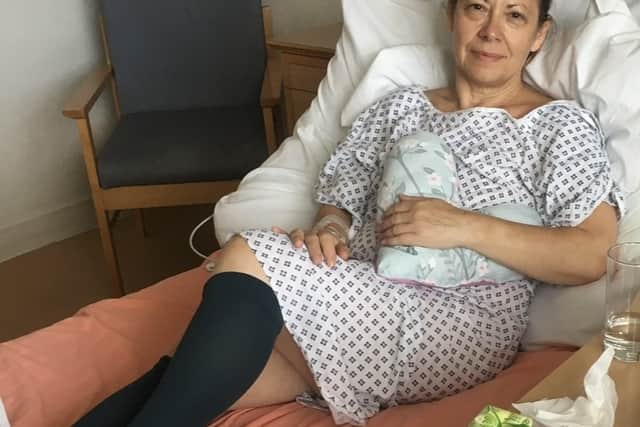
“I was a very, what they thought, colicky baby but it was probably stomach swells,” she said.
“The first external swelling symptoms happened when I was about two years old, so I spent most of my childhood in and out of various allergy clinics across the country.”
Karen said her diagnosis came after a doctor at the Royal Berkshire Hospital suggested she undergo a blood test to measure her levels of C1 esterase, a blood protein that controls swelling in the body.
“The doctor was so surprised she actually phoned my parents and told them the diagnosis, which was unheard of back then in the ’70s,” Karen said.
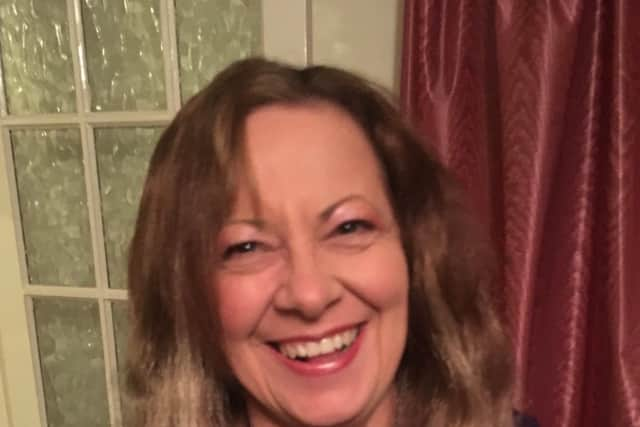
Explaining how the condition presents itself, Karen said she produces “about 25% of the C1 esterase that you need in your body”.
“When I’m ticking along fine, it’s enough to live on, and people are often shocked when I say I’ve got a rare condition” she said.
“But when something takes up that little bit of C1 esterase – so stress, hormones, an infection or trauma – I haven’t got enough reserves to fight it, and that’s when the symptoms start.”

“If it’s a hand swell or a foot swell, it affects my day because I can’t walk without a lot of pain and I can’t use my hands,” she said.
“If it’s a face swell, I don’t want to go out in public because it’s disfiguring – it affects your self esteem and its uncomfortable.”
Karen also said she has been in hospital on “multiple occasions” because of internal swelling.
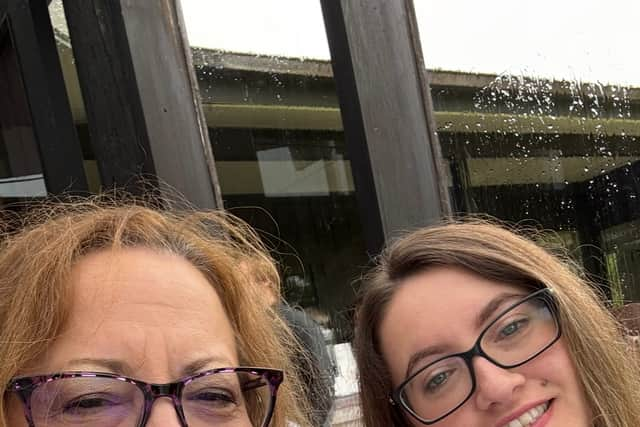
Throughout her life, Karen said the frequency of her attacks “really does vary”.
“I’ve gone whole years without an attack, or I’ve had one every three days – it just depends on what events are happening in my life,” she said.
In September 1991, Karen became pregnant with her now 33-year-old daughter, Louise, after previously having issues with her fertility.
Karen said her mother, Zola Wilkinson, was “delighted” at the news – but the very next day, Zola was diagnosed with stage four bowel cancer.
“It was a really traumatic period, I felt I’d been given the best gift in life at the cost of my mum,” Karen said.
The stress and hormones Karen experienced during this time created “a perfect storm” for HAE, and she spent the rest of her pregnancy in and out of hospital from around 12 weeks.
“I was having attacks every day, every two days,” she said.
“It was definitely very scary and I was well monitored by the clinicians because there were so many unknowns.”
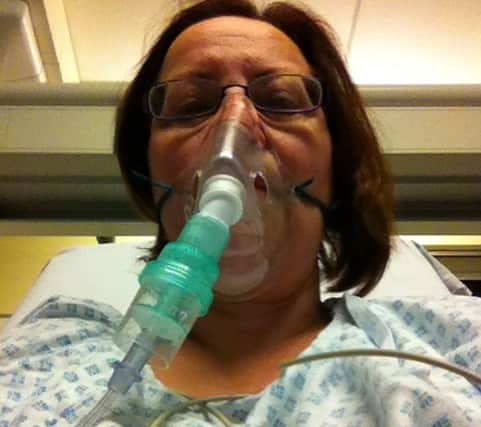
In her 50s, Karen experienced her first throat swelling with HAE – which she “always knew was likely”.
“It was shocking, I could feel my throat slowly tightening,” she said.
“I realised it was happening and thankfully, I got myself to the doctors before going on to the hospital.”
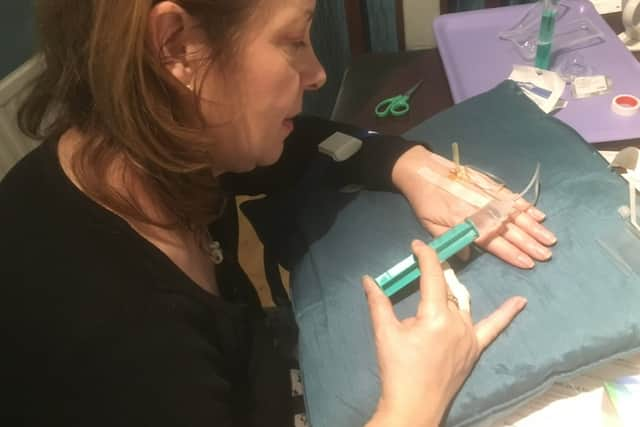
She has also suffered with flare-ups recently, having four attacks in September, and three in October.
With the unpredictable nature of the condition, Karen said she has missed out on social gatherings and events.
“I went through a period where I stopped doing stuff and I wasn’t very good at booking ahead, but now I just roll with it,” she said.

“It’s out of my control, I’ve had to strike a fine balance of being aware of my physical health and trying not to fret over it,” she said.
To treat the condition, Karen initially received fresh frozen plasma from blood donors, which she would receive intravenously, with the aim of boosting her level of C1 esterase to calm her symptoms.
However, after having an anaphylactic shock as a result of the fresh frozen plasma in 1991, she has since received emergency medication in hospital.

Recently, a new preventative treatment for HAE has received final approval from Nice (National Institute for Health and Care Excellence) for use on the NHS, which is able to stop HAE attacks before they begin.
For others who have been diagnosed with rare conditions, Karen highlighted the importance of having a “robust support system”.
“Educate yourself as best you can and find your support system,” she said.
“You have to learn how to live with the situation you’re in.
“You have to focus on the glimmers, not on the triggers.”