
Japanese car makers committed to producing internal-combustion engines
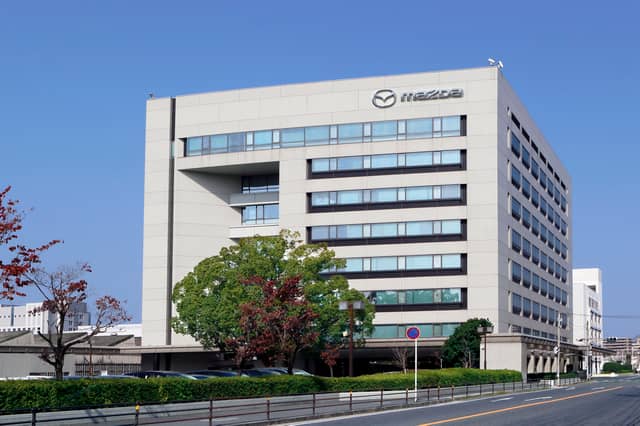

Japanese car manufacturers Mazda, Subaru and Toyota are fully committed to continuing to develop internal-combustion engines in order to reach carbon neutrality.
All three car makers have looked into what the electrification era holds and have found that carbon is the ‘enemy’.
Their future engine technology will therefore consist of improving performance with electric drive units to harness the advantages of both powertrains.
Additionally, the brands say that further engine development with the help of carbon neutral fuels such as e-fuels, biofuels and liquid hydrogen will help with mass adoption in a sustainable and carbon-neutral future.

He added: “Given the rotary engine’s compatibility with electrification and carbon-neutral fuels, Mazda will continue to develop the technology through co-creation and competition to ensure it can contribute broadly to society.”
All three car makers have a shared dedication to go down the multipath route in achieving lower carbon production throughout the electrified era.
Koji Sato, president and CEO of Toyota Motor Corporation said: “In order to provide our customers with diverse options to achieve carbon neutrality, it is necessary to take on the challenge of evolving engines that are in tune with the energy environment of the future.”
The three types of engines the companies hope will drive down carbon emissions and improve on sustainability are Subaru’s Horizontally-Opposed engine – which has pistons that move horizontally, resulting in a low-profile engine with less vibration and a lower centre of gravity. Toyota has an in-line four engine that achieves both high output and high thermal efficiency and Mazda’s rotary engine is compact, lightweight and powerful and can be used for generators.