
Kamila Valieva ordeal leaves champion Anna Shcherbakova with ’emptiness inside’
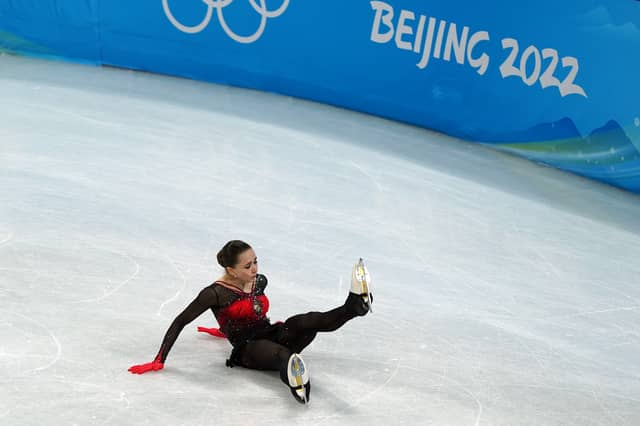

Nine days after being notified of a failed drugs test, 15-year-old Kamila Valieva fell apart in the glare of the watching world on Thursday night to finish outside the medals at the end of a dramatic Olympic women’s free skate.
Valieva, who started with a two-point advantage after Tuesday’s program at the Capital Indoor Arena, fell twice and suffered a series of further errors to plunge to fourth place in the final standings, with her two 17-year-old compatriots soaring into gold and silver.
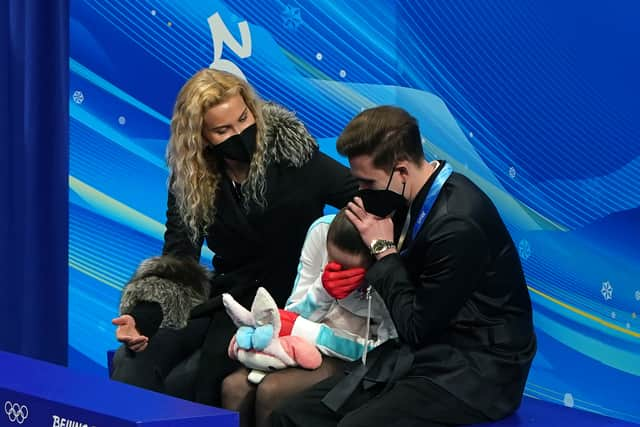
Japan’s Kaori Sakamoto hung on to bronze and in a further twist, Valieva’s drop off the podium meant a flower ceremony – and subsequently Friday’s medal ceremony – could take place, days after the International Olympic Committee said it would be delayed pending the result of the investigation into Valieva’s positive test should she finish in the top three.
Trusova initially refused to return for the ceremony, picked up on a Russian Eurosport microphone telling another of her coaches: “I hate everyone – I’ll never go on the ice again, ever” – although she subsequently shrugged off her rant at the post-event press conference.
In front of massed ranks of media in the arena, Valieva, who had shown only a few signs of pressure during her short program, began to the strains of Ravel’s ‘Bolero’ but it soon became apparent there would be no emulating of Torvill and Dean’s string of perfect sixes 38 years ago almost to the day.
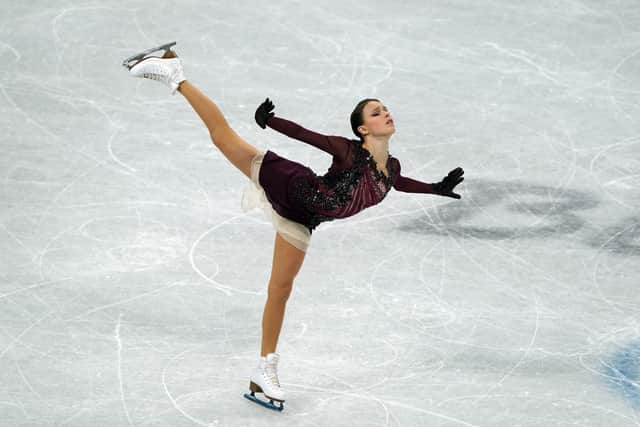
“I saw what a burden this was for Kamila,” said Shcherbakova, the reigning world champion, in a packed post-event press conference. “I understand how this feels as an athlete, and I will tell her what I think about this personally later.”
Valieva had been the focus of extraordinary attention since her positive test was revealed last Tuesday, one day after the conclusion of the team event. Her automatic provisional suspension was lifted by the Russian Anti-Doping Agency, whose decision was effectively upheld by CAS despite an appeal led by the International Testing Agency.
A number of athletes and former athletes, including direct rivals of Valieva, had questioned her right to remain in the competition or the perceived unfairness of allowing her to compete in spite of her positive sample.
That sense of injustice was lent more oxygen following a report in the New York Times on Wednesday that Valieva’s sample contained not only trimetazidine but two other legal heart medications, Hypoxen and L-Carnitine, which the Russian’s team even listed on her doping control form.
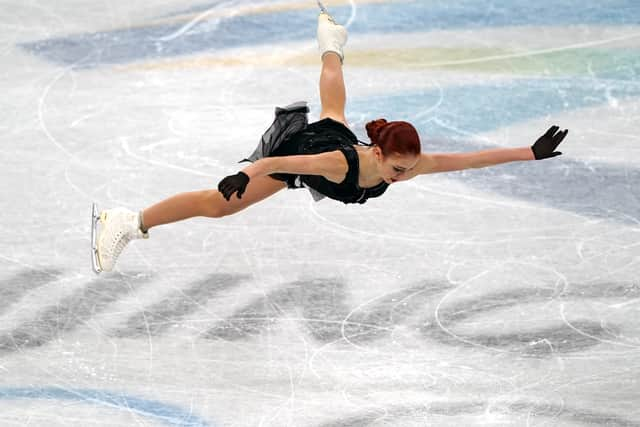
Trusova, ranked fourth after her short program, landed four quads cleanly and one with a small step-out in her routine to the theme from ‘Cruella’ to barge to the top of the medal standings.
“After the short program, my coaches were telling me the (quad) salchow should be out,” revealed Trusova. “My coach said four quadruples, but I said five. I am more than happy that I was able to do five quadruples.”

Ultimately it fell to Shcherbakova to attempt to describe her feelings at having risen above the rancour and controversy to achieve a lifetime ambition and join a list of figure skating greats that since 2014 has included only her compatriots.
“There are mixed feelings,” admitted Shcherbakova. “Pleasure because I was in the right place at the right time and did the right things. I still don’t comprehend what happened. I’m overwhelmed by happiness but I also feel an emptiness inside.”