
Largest deep-sea coral reef to date mapped by scientists off US Atlantic coast
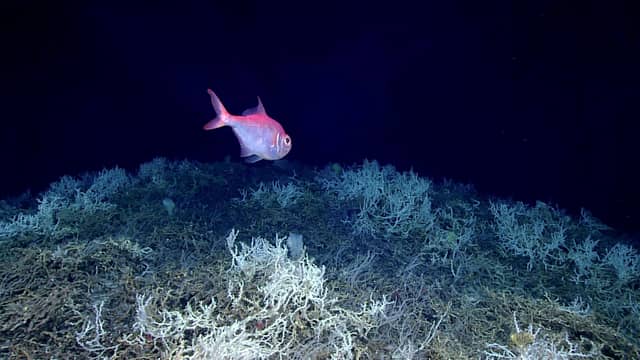

Scientists have mapped the largest coral reef deep in the ocean, stretching hundreds of miles off the US Atlantic coast.
While researchers have known since the 1960s that some coral were present off the Atlantic, the reef’s size remained a mystery until new underwater mapping technology made it possible to construct 3D images of the ocean floor.
The largest yet known deep coral reef “has been right under our noses, waiting to be discovered”, said Derek Sowers, an oceanographer at the non-profit Ocean Exploration Trust.
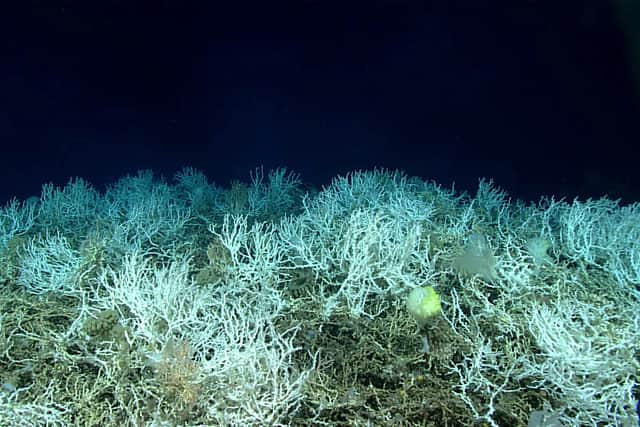
The reef extends for about 310 miles from Florida to South Carolina and at some points reaches 68 miles wide.
The total area is nearly three times the size of Yellowstone National Park.
“It’s eye-opening – it’s breathtaking in scale,” said Stuart Sandin, a marine biologist at the Scripps Institution of Oceanography, who was not involved in the study.
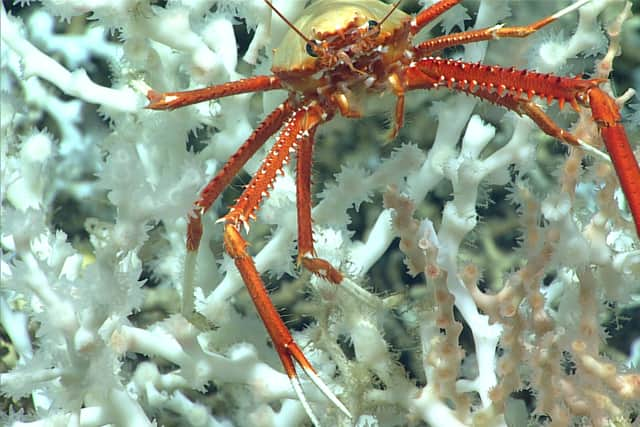
Unlike tropical coral reefs, where photosynthesis is important for growth, coral this far down must filter food particles out of the water for energy.
Deep coral reefs provide habitat for sharks, swordfish, sea stars, octopus, shrimp and many other kinds of fish, the scientists said.
Tropical reefs are better known to scientists – and snorkellers – because they are more accessible.

Mr Sowers said it is possible that larger deep-sea reefs will be discovered in the future since only about 25% of the world’s ocean floor has been mapped in high-resolution.
Only 50% of US offshore waters have been mapped.
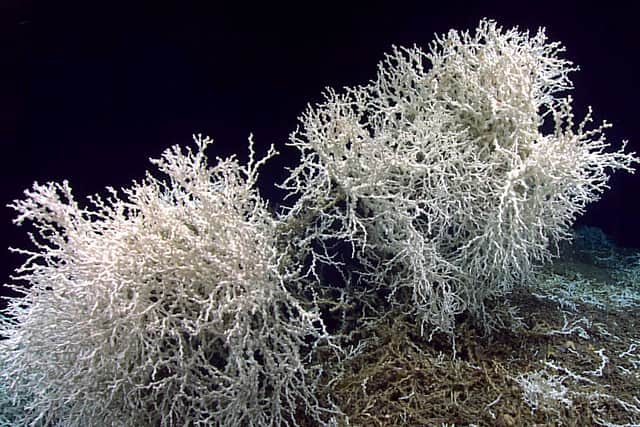
Deep reefs cover more of the ocean floor than tropical reefs.
Both kinds of habitat are susceptible to similar risks, including climate change and disturbance from oil and gas drilling, said Erik Cordes, a marine biologist at Temple University and co-author of the new study.