
Le Pen: Huge gains in French parliament a ‘seismic event’


Far-right leader Marine Le Pen has said her party’s extraordinary surge in the country’s parliamentary election is a “historic victory” and a “seismic event” in French politics.
Many voters in Sunday’s poll opted for far-right or far-left candidates, denying President Emmanuel Macron’s centrist alliance a straight majority in the National Assembly.
Ms Le Pen’s National Rally got 89 seats in the 577-member parliament, up from a previous total of eight.
On the other side of the political spectrum, the leftist Nupes coalition, led by hardliner Jean-Luc Melenchon, won 131 seats to become the main opposition force.
Mr Macron’s centrist alliance Together! won the most seats – 245 – but fell 44 seats short of a straight majority in the National Assembly, France’s most powerful house of parliament.

“Macron is a minority president now. … His retirement reform plan is buried,” a beaming Ms Le Pen declared on Monday in Henin-Beaumont, her stronghold in northern France, where she was re-elected for another five-year term in the parliament.
“It’s a historic victory (…) a seismic event.”
She told reporters: “We are entering the parliament as a very strong group and as such we will claim every post that belongs to us.”
As the biggest single party in the parliament – Mr Macron and Mr Melenchon both lead coalitions – she said National Rally will seek to chair the parliament’s powerful finance committee, one of the eight commissions that oversee the national budget.
Prime minister Elisabeth Borne suggested on Sunday evening that Mr Macron’s alliance will seek to find “good compromises” with legislators from diverse political forces.
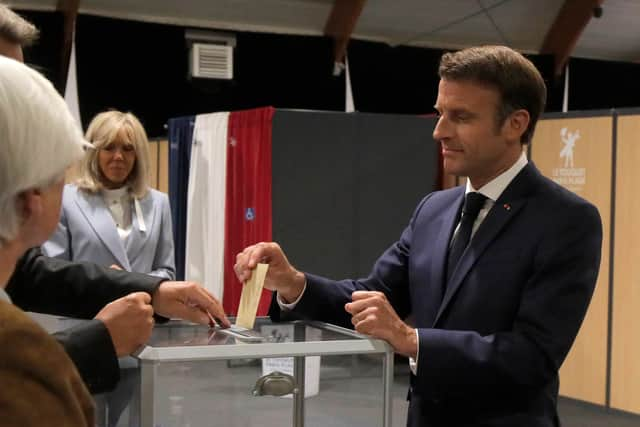
His government will still have the ability to rule, but only by bargaining with legislators.
The centrists could try to negotiate on a case-by-case basis with legislators from the centre-left and from the conservative party – with the goal of preventing opposition legislators from being numerous enough to reject the proposed measures.
The government could also occasionally use a special measure provided by the French constitution to adopt a law without a vote.
A similar situation happened in 1988 under Socialist president Francois Mitterrand, who then had to seek support from the Communists or the centrists to pass laws.