
Leaving Cert reforms to reduce reliance on written exams


Major education reforms for senior students in Irish schools will seek to cut stress levels by reducing reliance on written exams.
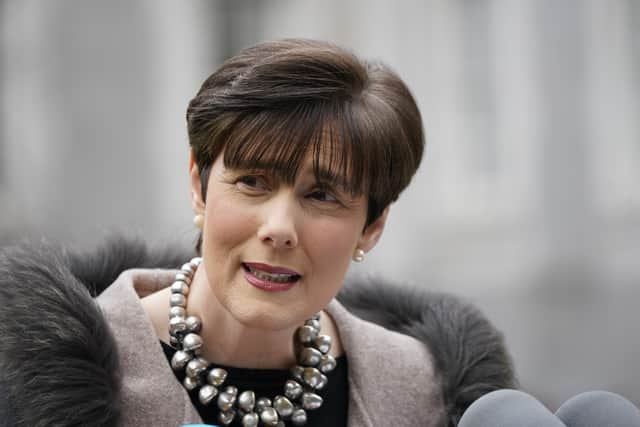
The blueprint for senior cycle students unveiled by Education Minister Norma Foley will place more emphasis on continuous teacher assessments, including practical and oral elements.
The proposals will see a phased updating of the curriculum for all Leaving Certificate subject areas.
The revision will see the introduction of non-exam-based assessment components that will make up 40% of total marks, reducing the written examination to 60%.
Two new subjects – drama, film and theatre studies and climate action and sustainable development – will be introduced, with some fifth year students able to begin these subjects in 2024.
The initial changes will come into effect in September 2024 on a pilot basis in participating “network” schools.
Before then, Leaving Cert students entering senior cycle in September 2023 will sit paper one in English and Irish at the end of fifth year, rather than at the end of sixth year.
The reforms announced by Ms Foley have been informed by a review of the senior cycle by the National Council for Curriculum and Assessment (NCCA), published on Tuesday.
“This is an ambitious programme of reform,” said the minister.
“It will enrich students’ educational experience by increasing their choices to match their interests and enhancing teaching and learning.
“It will reduce the pressure on students that comes from final assessments based primarily on examinations. We will move to a model that uses other forms of assessment, over a less concentrated time period, in line with international best practice.
“The second half of post-primary education, senior cycle, prepares our students to progress to the next stage in their lives. Whether they choose a path of further training, apprenticeship, higher education or employment, it is vital that the education and the opportunities they receive in their school life at second level develops them academically, nurtures them as people and supports them to grow their talents, interests and skills.
“It is then vital that the form of assessment we use both reflects excellence in standards and truly enables all students to showcase their abilities.
“Our current system has many strengths. But we know that it can be improved, to better support our students, to reduce pressure while maintaining standards, to keep pace with the changes in practices internationally and to meet the needs and expectations of our students and of our society in preparing our young people for the world ahead.
“The National Council for Curriculum and Assessment has produced an excellent advisory report on the review of senior cycle. It is based on extensive research, conducted over four years. It captures the views of education partners across every aspect of senior cycle, giving real weight to the student voice and experience, the learnings of educators, the international experience.
“This programme is timely and ambitious – we must not rush, but cannot delay. The timing I have set out will ensure that students will feel the benefits at the earliest possible time, with notice of these in advance.
“It is important to ensure real and meaningful input on each element by subject matter experts. The establishment of network schools will support immediate collaboration and feedback mechanisms and ensure that we can swiftly adapt learnings to support the implementation of these across all of our subjects and schools.
“Over the recent, most challenging period, our students and our school communities have led the way in showing how resilient, how innovative, how creative they can be. There is a national consensus that our young people deserve the best possible education system we can offer. The Programme for Government commits to reforming senior cycle and including the views of experts, students and parents, and is undoubtedly the best way to achieve this.
“I look forward to working closely with our students, school communities, education partners, to co-create subject curricula and to collaborate across the work to bring this vision of enhanced experience, excellence and equity alive for all of our students.”