
Liverpool hit the heights in a season of struggle for others


Of all the outcomes predicted for the first year of Arne Slot’s reign at Anfield, winning the Premier League was well down the list.
Succeeding Jurgen Klopp was viewed as challenge enough and, allowing for the transition, a top-four finish was deemed eminently acceptable as Opta gave them just 5.1 per cent chance of finishing top.
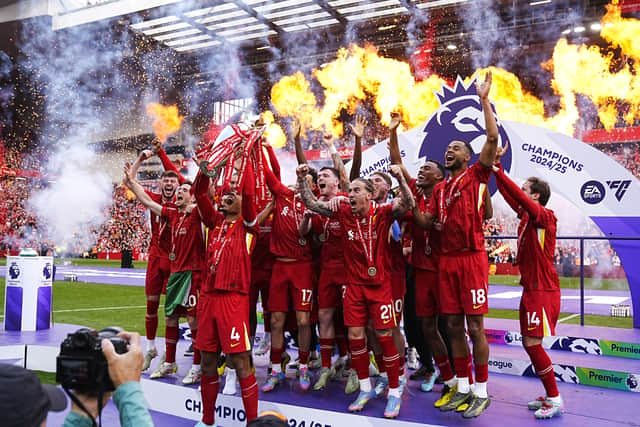
Within just over three months they had established themselves in a position at the top of the table they would never relinquish.
It proved particularly painful for arch-rivals Manchester United, who endured their worst Premier League season on a number of levels: lowest points tally, lowest position, fewest victories, most defeats, for example.
Seeing their north-west neighbours draw level on 20 top-flight titles only rubbed salt into the wounds as they finished 42 points behind the champions, 23 points adrift of European qualification with only Southampton, Leicester, Ipswich, Wolves and Tottenham below them in the table.
Manager Ruben Amorim’s honesty was refreshing – “We are the worst team maybe in the history of Manchester United”, “I don’t have anything to say about the criticism, because we deserve it” and “We know nothing is going to save our season, Europa League will not change anything in our problems” – but only brought more headlines.

By contrast Liverpool were the model of consistency under the level-headed Slot – well, until the moment he blew his top at Goodison Park when Everton scored a Merseyside derby equaliser in the eighth added minute and got sent off.
They barely missed a beat in losing just one league game, at home to Nottingham Forest, before April with their early-season parsimonious defence marshalled by a back-to-his best Virgil van Dijk making way for Mohamed Salah, who found a gear not seen since his first season at the club.
It was around that time defending champions Manchester City, for whom the season-ending knee injury to Rodri was a devastating blow, began to unravel as they had six defeats – significantly including a 2-0 loss at Anfield – in nine matches in which they won just once.
Arsenal and Chelsea were the main chasers but already nine points behind and by December 1 Opta had upgraded Liverpool’s title chances to 80.4 per cent.
Fans and pundits wanted the Gunners, now with injury problems of their own, to sign a striker in the January window but the decision to ignore the clamour came back to haunt them.
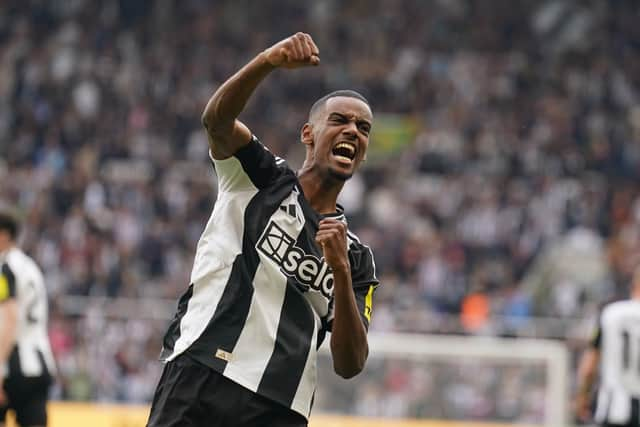
They eventually secured that, ahead of an Alexander Isak-inspired Newcastle, who followed up a 70-year wait for a trophy with the Carabao Cup by booking a return to Europe’s elite club competition.
The other Champions League spot went to Chelsea in a race which went to the end of the season as the relegation of all three promoted Championship teams was confirmed before the end of April.
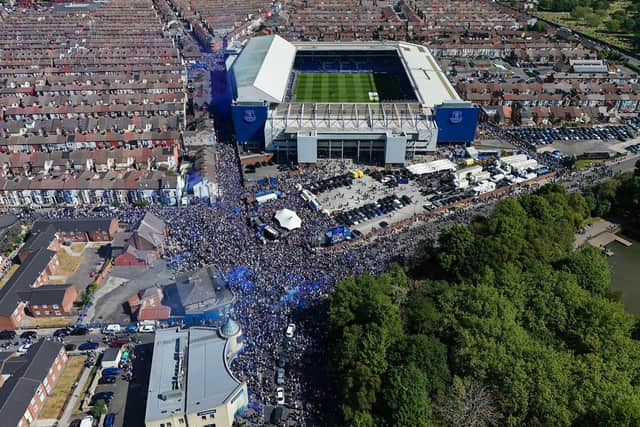
Elsewhere, Everton said hello again to a familiar face in David Moyes, who replaced Sean Dyche to guide them to safety, and farewell to Goodison Park after 133 years with a brave, new era awaiting them on the banks of the River Mersey.
A change of manager, Vitor Pereira replacing Gary O’Neil rejuvenated struggling Wolves, but less so for West Ham, Graham Potter getting back into football after Julen Lopetegui’s departure, and definitely not for Southampton, who sacked both Russell Martin and Ivan Juric.