
Magic moments: Some of Sir David Attenborough’s memorable career highlights
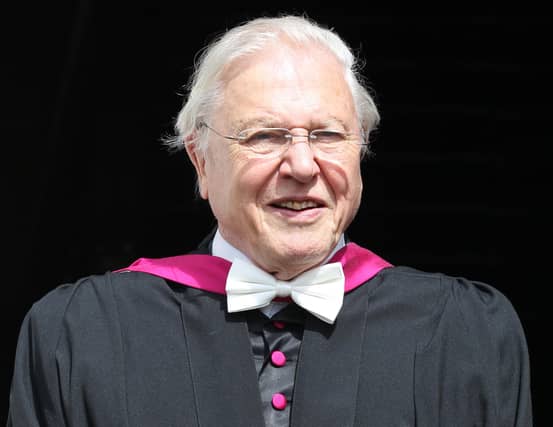

Sir David Attenborough’s accessible and compelling programmes have shown audiences not only the diversity of life on earth but also the changing technologies used to bring that life to television screens.
Here are some of his most memorable moments:
– In the 1979 series Life On Earth, Sir David encountered a family of mountain gorillas in a volcanic forest on the border of Rwanda and Zaire. In a clip that has been voted one of the top TV moments of all time, one young gorilla lies across his body, while just at the edge of the picture you can see the baby gorillas who were busy removing his shoes.
The 13-part series featured footage from 30 countries. More than 500 million people tuned in – 11.4% of the global population.
– In 1984, Sir David became one of the first underwater presenters as he observed the grey reef shark in The Living Planet. Developments in full face plates allowed him not only to be able to deliver his commentary but to be recorded clearly.
– In 1990, he took viewers swimming with dolphins in Trials Of Life, to show us something of the body language and sounds that dolphins use to communicate, strapping on his scuba diving suit to eavesdrop on their conversations.
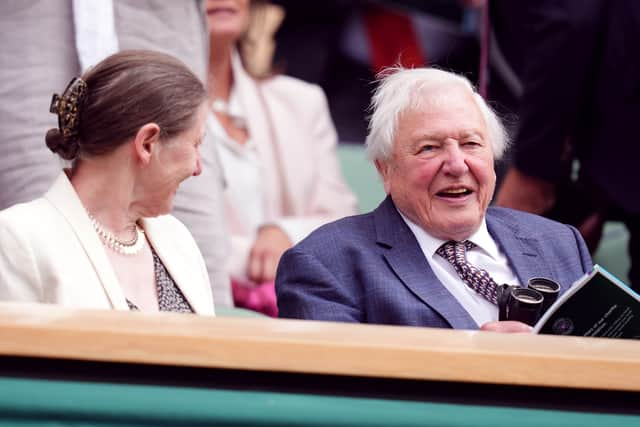
– In The Life Of Birds in 1998, he clutched his binoculars as he walked carefully towards a lyrebird in south Australia and marvelled in delight over its extraordinary impersonation skills. The bird’s camera shutter, car alarm and chainsaw calls were its attempts to outdo rivals and attract a mate.
– In State Of The Planet in 2000, he revealed the microscopic world that is well beyond human perception, using a powerful scanning electron microscope which magnified the image of a pin 10,000 times.
– Sir David’s sheer excitement at the moment a huge blue whale surfaced during 2002’s The Life Of Mammals, was heart-warming to witness. He is shown clinging on to his little boat, which is dwarfed by the 30-metre whale, the largest animal known to have existed.
– Also in The Life Of Mammals, Sir David visited a group of orphaned chimps which were being taught the survival skills needed to live in the wild. As his boat neared the landing point, an enthusiastic chimp jumped straight in to greet him. He later enjoyed a nut-cracking session with a group of dexterous mammals.

– A sequence in Life In Cold Blood in 2008 used slow motion to show the diversity in size, shape and ability of frogs and toads. Sir David lay on the floor of a Madagascan rainforest with a tiny pygmy frog resting on his fingertip to marvel at the “miracle of miniaturisation”.
– In Frozen Planet in 2011 he became the oldest person to visit the North Pole, venturing into high altitude and extreme cold at the age of 84.
– The broadcaster celebrated his 90th birthday in 2016, and sat down with journalist Kirsty Young for the BBC’s Attenborough At 90 documentary to recount the highlights of his life and career.
– Later that year, Planet Earth II was released with Sir David’s soothing narration accompanying scenes including rare snow leopard mating footage and lions attacking a giraffe in a desert.
– Sir David also returned as a presenter for Blue Planet II in 2017, which became the most-watched UK television show of 2017, with a chart-topping 14 million tuning in to the first episode of the wildlife series, which included dramatic footage of walruses fighting to find a home, along with dazzling scenes of surfing dolphins and a sex-changing fish.
The series is also thought to have triggered an increase in public, media and political attention to plastic pollution.
– The debut episode of Dynasties – which focused on the chimpanzee – became the most popular programme of the month when it aired in November 2018. The series, narrated by Sir David, also documented the struggles of baby penguins fighting to avoid an icy death, with the BBC camera crew intervening and coming to the rescue of the stricken birds, breaking a long-held stance of wildlife filming not to get involved.
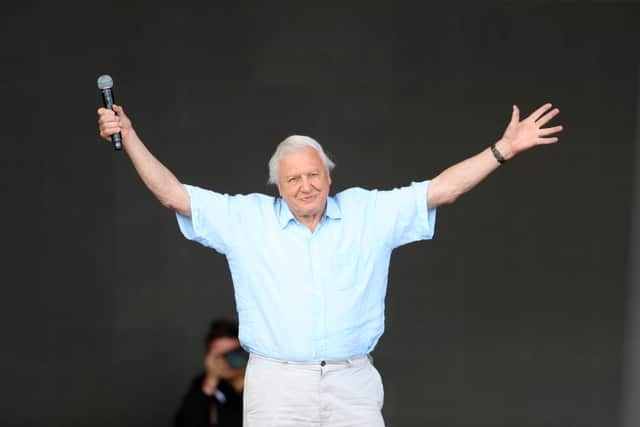
– In 2020, the veteran broadcaster presented A Life On Our Planet, a revealing and powerful first-hand account in which Sir David reflected on both the defining moments of his life as a naturalist and the devastating changes he has witnessed.
– A Life In Colour in 2021 used cutting-edge camera technology highlighting the vivid and vibrant colours of nature, with stunning visuals of creatures such as the peacock spider and paradise kingfisher as it depicted how animals use colour to survive, find mates and defend territory.
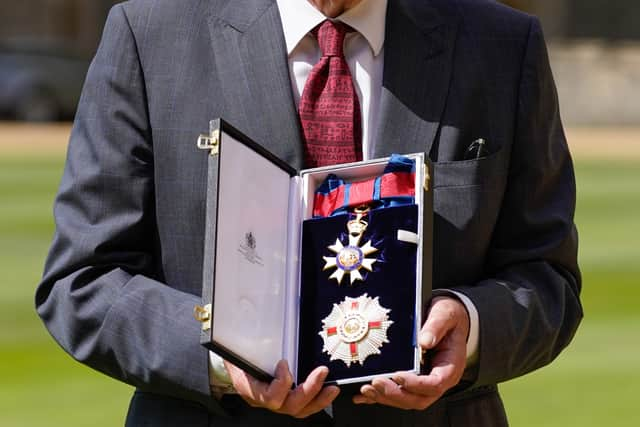
– Sir David Attenborough was awarded one of Britain’s highest honours, the Knight Grand Cross of the Order of St Michael and St George, by fellow avid environmentalist the then Prince of Wales in 2022.
– In 2023, the naturalist described the painstaking efforts of excavating the skull of a sea monster for Attenborough And The Giant Sea Monster, which documented the process of removing the huge skull of a pliosaur, one of the biggest carnivorous creatures the world has ever seen, from the Jurassic coast in Dorset.
– Sir David took viewers to Asia in 2024 with his seven-part series named after the continent, exploring the lives of red pandas, urban elephants and hunting wolves, as well as high-altitude elephants in India, “kiss-chasing” rhinos in Nepal, and glowing squids in the ocean.
He also examined how animals use sound to communicate, thrive and survive in the natural world in Secret World Of Sound, which used the latest in audio technology including specially adapted cameras and laser vibrometers.
– Viewers were immersed in the beauty of the underwater world with Ocean In Concert in 2025, which featured a live orchestra and vocal ensemble performing Steven Price’s original score in synchronisation with the film, turning its powerful visuals and urgent story into a moving experience.
Sir David also broke Dick Van Dyke’s record for the oldest winner of a Daytime Emmy that year, taking home the prize for hosting Netflix’s Secret Lives Of Orangutans.