
Manager with HIV who felt ‘shame’ and had £70,000 of debt after addiction ‘escalated’ says Guide Dogs changed their life
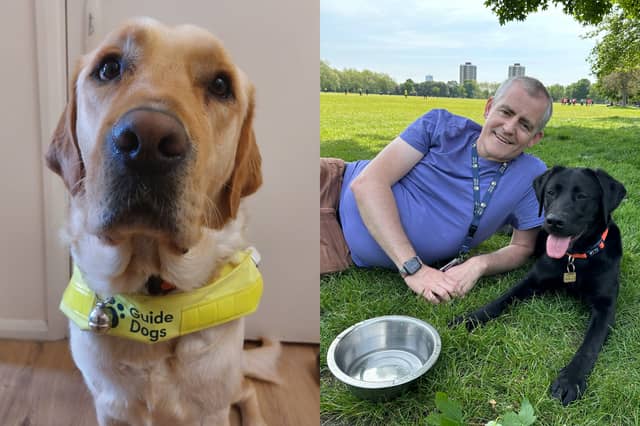

A manager who “carried around a lot of shame and fear” about their HIV diagnosis and became addicted to drugs, racking up debts of £70,000 before going into rehab, has found a new purpose and “sense of pride” in volunteering with Guide Dogs and said they are now nearly five years sober.
Eugene Lynch, 39, who is non-binary and lives in London, said it “felt like the entire world just stopped” when they were diagnosed with HIV in 2013.
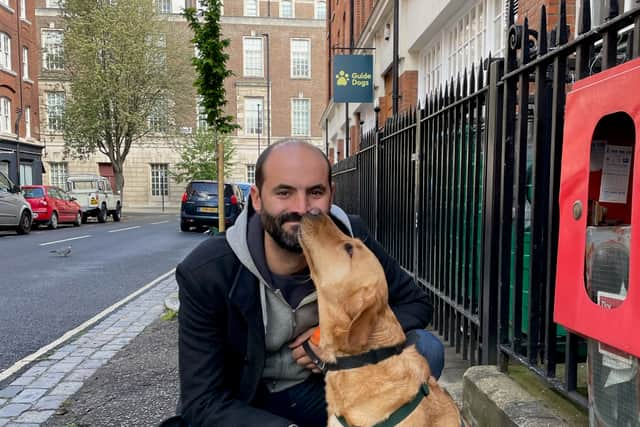
Eugene “tried to keep it all hidden” from their employer and partner Tim, 42, who works for an asset management company – but this only “made the problem worse”.
Working as a manager in consulting at the time, they were then signed off work, as they “couldn’t leave the house without having a panic attack” and had extremely “low self-esteem”.
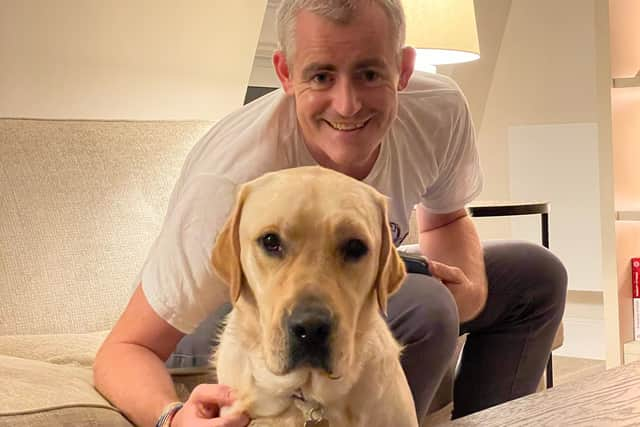
Now, however, after spending time in rehab, receiving therapy and volunteering with Guide Dogs, they are nearly five years sober and feel they are “proud of who (they’re) becoming”.
“That sense that I was working towards a greater goal and giving back was the polar opposite of where I was beforehand,” Eugene told PA Real Life.
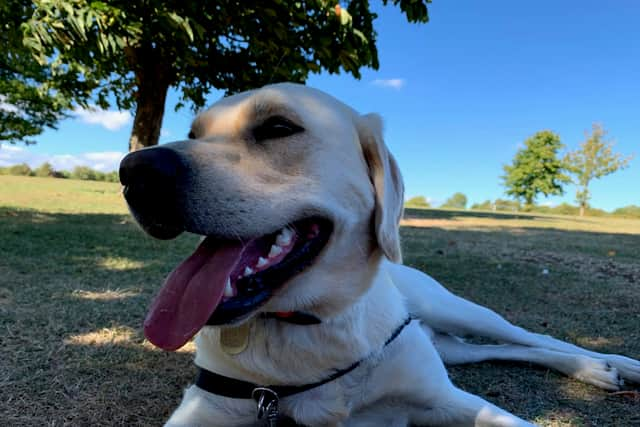
“The volunteer work has been a huge part of me being able to be proud of who I’m becoming.”
HIV is a virus that damages the cells in your immune system and weakens your ability to fight everyday infections and disease, if not treated, and there is currently no cure, the NHS says.
The virus cannot be transmitted through sweat, urine, or saliva, but is most commonly contracted through having anal or vaginal sex without a condom.

They woke up one morning, believing they had cold or flu-like symptoms, but after undergoing tests with their GP, they were told that they were HIV “reactive”.
“At that point, it felt like the entire world just stopped,” they said.
“It was a bit like an out of body experience – I felt like I was floating above the scene, looking at it from above – and I couldn’t really focus on what the doctor was saying.

An appointment at an HIV clinic then confirmed the result was positive, and Eugene “burst into tears” when telling their partner Tim, who also needed to be tested.
Tim’s result was negative, which was a “relief” to Eugene, but they said they “carried a lot of shame” around their diagnosis – and this led to them feeling “increasingly anxious”.
“I was out as gay at work, but I didn’t want people to make assumptions or stereotype me, and I had a lot of shame around my HIV diagnosis, so I didn’t want to share it,” they said.

Eugene would experience panic attacks – where they would become “hot and sweaty and find it difficult to breathe properly” – and could not leave the house or travel on public transport.
They were then signed off work and their addiction progressively worsened, to the point where they were spending £300 a day on cocaine and drinking heavily.
Eugene had acquired around £70,000 in debt, as they used drugs to “suppress” their thoughts and feelings.
When “everything came to a head”, Eugene underwent cognitive behavioural therapy (CBT), had counselling with Terrence Higgins Trust, and received mental health support.

During their first rehab meeting, Eugene said they decided to tell the group “everything” because they had “nothing to lose and had nowhere else to go” at this point.
“I thought, if they know everything about me, they’ll hate me as much as I hate myself, and then they’ll just leave me alone and I won’t have to talk about it anymore,” they said.
Eugene discussed their HIV diagnosis and how they “could not stop taking drugs” – all of the things that they were “really ashamed about” for many years.

“The reaction that I got from people wasn’t the reaction I was expecting,” Eugene said.
“I was expecting them to tell me that it was my fault and that I deserved to get HIV – all the things I’d been telling myself for six years – but they didn’t.
“They responded with compassion and love and kindness, and I didn’t feel so alone.”
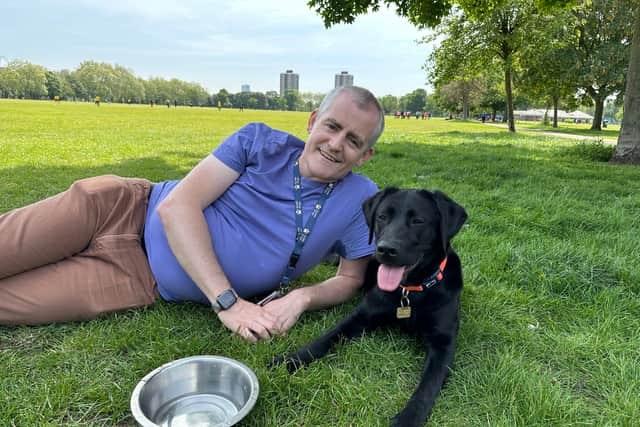
Eugene spent 28 days in rehab and, with additional therapy afterwards, they said they decided to “hold (their) head up high and no longer carry that shame”.
They began volunteering at Terrence Higgins Trust on the helpline in November 2018, where they now work, and they started to learn more about HIV and sexual health.
Months later, in May 2019, Eugene saw an advert to become a fosterer for Guide Dogs.

Eugene had “always wanted a dog”, but they did not believe it would ever be possible.
However, they decided to submit an application – and after undergoing training, they then began fostering their first dog Buckby, a Golden Retriever cross Labrador, in July with Tim.
They are now fostering their ninth dog Rani, a black Labrador, together.

They have learned about dog psychology and how to reinforce certain behaviours, such as stopping at curbs, crossing the road safely, and not pulling on the lead.
“The process is really learning about what kinds of behaviours to look out for, what kinds of behaviours to reward; the system that they use is positive reinforcement,” Eugene explained.
“The feeling that you’ve made a difference and you’ve helped to get a dog to a point where they’re able to go out and do their job and thrive and support a new owner is amazing.”

Moreover, now that Eugene is nearly five years sober, they said they are proud of the person they have become.
“The things that have been most rewarding are discovering who I am – trying to be that person, rather than trying to be something I’m not – but also finding ways to build up my self-esteem and to give back for all the help that I’ve received,” they said.
“I’m not carrying around this huge ball of shame anymore; I’m starting to explore who I am as a person, and that feels very freeing.”
To find out more about becoming a Guide Dog fosterer, visit www.guidedogs.org.uk/fosterer