
Marine Le Pen ‘serene’ as voting begins in France’s presidential election
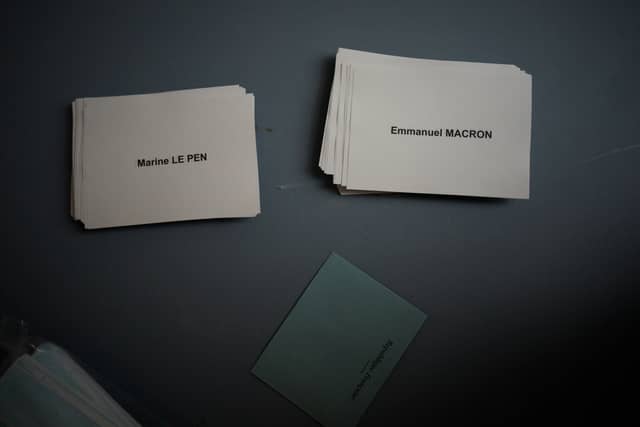

France has started voting in a presidential runoff election with repercussions for Europe’s future, with centrist incumbent Emmanuel Macron the front-runner but fighting a tough challenge from far-right rival Marine Le Pen.
The centrist Macron is asking voters to trust him for a second five-year term despite a presidency troubled by protests, the pandemic and the war in Ukraine. A Macron victory in this vote would make him the first French president in 20 years to win a second term.
The result of voting in France, a nuclear-armed nation with one of the world’s biggest economies, could also impact the conflict in Ukraine, as France has played a key role in diplomatic efforts and support for sanctions against Russia.
Le Pen’s support in France’s electorate has grown during this campaign to her highest level ever, and much will depend on Sunday on how many people turn out to vote. Participation was 26.1% at midday, slightly higher than at the same point in the first-round vote on April 10.
Many of those expected to choose Macron are doing so to keep out Le Pen and ideas seen as too extreme and anti-democratic, such as her plan to ban the Muslim headscarf in public, or her ties to Russia.
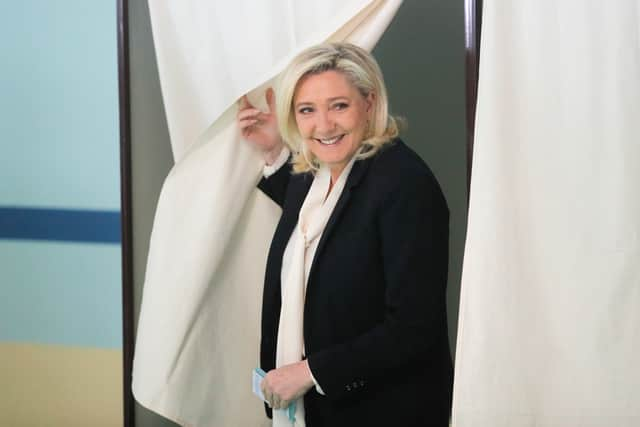
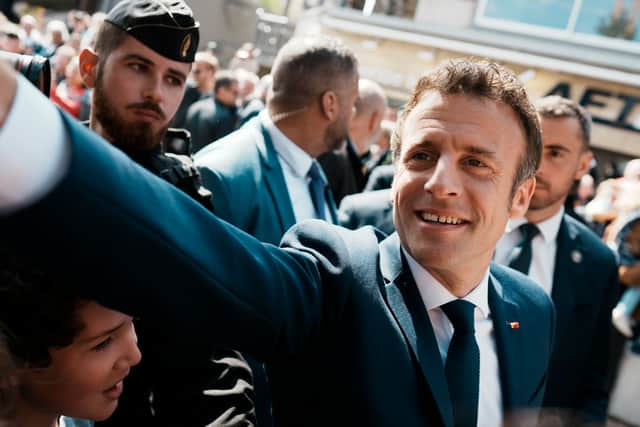
“I am serene,” she said as she cast her ballot in the northern town of Henin-Beaumont. “I have confidence in the French.” She took selfies with fans, as Macron greeted crowds with handshakes and embraces in the English Channel coastal town of Le Touquet.
Both candidates are trying to court the 7.7 million votes of leftist candidate Jean-Luc Melenchon, who was defeated in the first round on April 10.
Voting west of Paris in the suburb of Le Pecq, Stephanie David cast her ballot for Macron “without much joy”. She had voted for the Communist Party candidate in round one.
“It was the least worst choice,” said the transport logistics worker. Le Pen was anathema to her: “Even if she tries to soften her rhetoric, I can’t stomach it.”
All opinion polls in recent days converge toward a win for the 44-year-old pro-European Macron — yet the margin over his 53-year-old far-right rival varies broadly. Polls also forecast a possibly record-high number of people who will either cast a blank vote or not vote at all.
“I am not against his ideas but I cannot stand the person,” he said.
Le Pen has sought to appeal to working class voters struggling with surging prices amid the fallout of Russia’s war in Ukraine – an approach that even Macron acknowledged has found resonance in the wider public. She said bringing down the cost of living would be her priority if elected as France’s first woman president, and she portrayed herself as the candidate for voters unable to make ends meet.
She says that Macron’s presidency has left the country deeply divided. She has repeatedly referenced the so-called yellow vest protest movement that rocked his government before the Covid-19 pandemic, with months of violent demonstrations against his economic policies that some thought hurt the poorest.
France’s presidential campaign has been especially challenging for voters of immigrant heritage and religious minorities, notably because of Le Pen’s proposed policies targeting Muslims.
Macron has also touted his environmental and climate accomplishments in a bid to draw in young voters popular with far left candidates. Citizens and especially millennials voted in droves for Melenchon. Many young voters are particularly engaged with climate issues.
Although Macron was associated with the slogan “Make The Planet Great Again”, in his first five-year term, he capitulated to angry yellow vest protesters by scrapping a tax hike on fuel prices.
Macron has said his next prime minister would be placed in charge of environmental planning as France seeks to become carbon neutral by 2050.
Le Pen, once considered a climate-change sceptic, wants to scrap subsidies for renewable energies. She vowed to dismantle windfarms and invest in nuclear and hydro energy.