
Minister rules out public inquiry into screening failures after review published
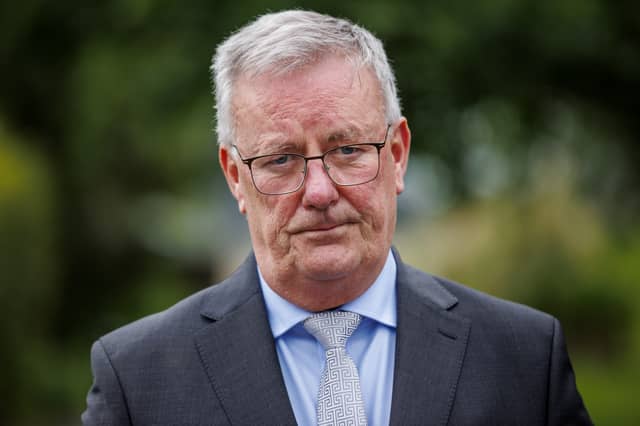

Stormont’s Health minister has ruled out a public inquiry into cervical screening failures at a Northern Ireland health trust following the publication of an expert review.
Mike Nesbitt endorsed the opinion of the review’s author Professor Sir Frank Atherton, who concluded that a statutory public inquiry was unlikely to bring further clarity around screening failings within the Southern Health Trust.
Campaign group Ladies with Letters has criticised the announcement and has vowed to keeping pressing for an inquiry.
The group’s solicitor Enda McGarrity said a potential legal challenge against Mr Nesbitt’s decision would now be considered.
Tracey Bell from Ladies With Letters said the refusal to order a public inquiry was an “insult” to those women whose tests were misread and to bereaved families.
Around 17,500 women in the trust area who were screened between 2008 and 2021 had to have their results rechecked after concerns were first raised in a report commissioned by the Royal College of Pathologists.
A trust review showed eight women went on to develop cancer after their smears were misread.
Last year, Mr Nesbitt asked Sir Frank, the former chief medical officer in Wales, to review the various reports that had been published on the screening issues.
In his review, Sir Frank noted that “false negatives” were an “inherent” risk in all such screening programmes.
However, in regard to the programme run by the Southern Trust, he found there had been “clear management and governance failings” within both the trust and the Public Health Agency.
In respect of individual responsibility for screening failings, Sir Frank made clear that no-one had deliberately set out to cause harm or deliver a poor service.
But he added: “Any under-performance by the screeners within the SHSCT should have been properly identified and corrected.
“That this did not happen is a recurrent theme in the documents I have reviewed and in the discussions with programme managers and leaders. Some sanctions are already in place; I understand that individual screeners who are deemed to have under-performed have been removed from the programme and either left the NHS service or been reassigned to other duties.
“However, within the context of a screening programme I believe that it would be inappropriate to seek further sanction against individual screeners.”
Sir Frank noted that significant improvements had been made to the current cervical screening services in Northern Ireland, including a move from testing based on cervical cytology to primary HPV tests.
He said the reconfiguration of laboratory services into a centralised Belfast operation had also improved oversight.
On the issue of a public inquiry, Sir Frank acknowledged he had been given a “very clear message” from women affected by the failings that they wanted the issues examined by a public inquiry.
He said he also heard the case, put mainly by officials, that a public inquiry would be “time consuming, risk re-traumatisation, further delay resolution, involve significant expense, and potentially fail to deliver any greater clarity on the nature and extent of programme failures which are documented in the commissioned reports and summarised here”.
In conclusion, he added: “I believe that it is highly unlikely that a statutory inquiry would be able to make further progress on unravelling the technical aspects of the programme failure which I have summarised.”
Responding to the review’s publication, Mr Nesbitt said he acknowledged it had been a “particularly difficult and challenging time for the women and their families who have been impacted by cervical cancer”.
“I want to pay tribute to their determination and acknowledge the profound effect these events have had on their lives,” he said.
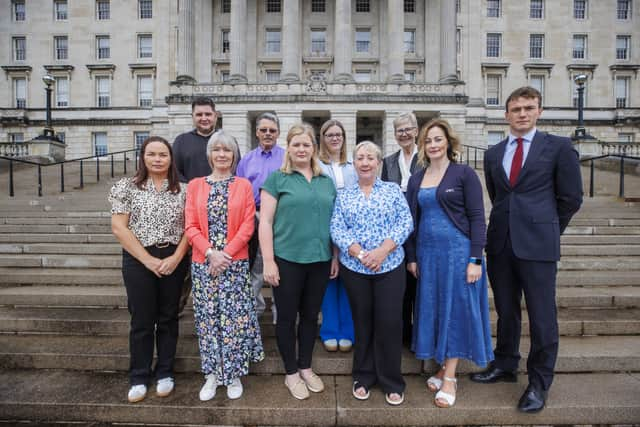
The minister added: “I asked Sir Frank to consider whether a statutory public inquiry might provide additional significant insight and assessment to the findings already made in relation to questions of responsibility and to the future safety of this important population screening programme.
“Sir Frank concluded that while there have been significant failings, a statutory public inquiry is highly unlikely to provide any further clarity.
“I accept these findings and advice from Sir Frank. A Statutory Public Inquiry is a means to an end, that end being answering key questions.
“I believe those answers have been addressed as far as that is possible. We know what happened, why it happened, who was responsible and what has been done to try to ensure it never happens again.
“I recognise that this decision will be disappointing for many. I want to reassure them that lessons have been learnt and we will continue to make developments to improve our Cervical Screening Programme in Northern Ireland.”
Mr Nesbitt continued: “All recommendations to strengthen accountability and quality assurance arrangements have either already been fully implemented or are in the process of being implemented. I have tasked my officials to ensure that all recommendations made by Sir Frank, and from previous reports, are fully implemented.
“Screening programmes are complex by nature, which is apparent in all reports commissioned and published to date. It is also important to state that screening is not the same as a diagnostic assessment.
“Screening inherently is more open to false negative conclusions. Moving to HPV screening is fundamentally different to the one delivered during the period in question and designed to decrease the number of false negatives.
“I would encourage all those eligible to take up the offer of cervical screening when invited to do so. It is an extremely important screening programme which has been proven to save lives.”
Speaking on behalf of the Ladies With Letters group, Ms Bell criticised the minister’s decision.
“We as ladies of letters are really disappointed with the minister’s decision not to initiate a public inquiry but, unfortunately, we’re not surprised, and the sequence of reviews and reports into reports has been carefully orchestrated, sort of to give the impression that no stone has been left unturned by the Department of Health and the trust’s investigations into these events,” she said.
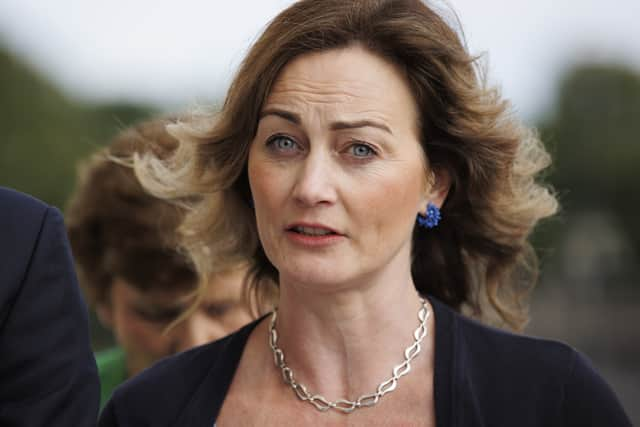
She added: “We’ve only had a very short while to look at this report and over the coming days we will be scrutinising it fully, but we will say this, this is far from over and will not be swept under the mat. We will continue to work to help establish the truth for those who have been affected.
“The minister had the opportunity to try and assist us with this by establishing a public inquiry but, instead, the effect of his refusal is to place the burden of truth recovery onto the victims of this scandal which is just disgusting. It’s not right.
“The department has a responsibility to investigate properly, and that has not been done. So, today, we stand here and we believe and agree that the minister has abdicated his responsibility, not only to our members, but to all women and girls in Northern Ireland today.”
Responding to the review report, Dr Stephen Austin, the Southern Trust’s medical director, said: “We apologise again to the women and families affected for past shortcomings in our cervical screening services and for the anxiety and distress this has caused.
“This report identifies clear failings in management, governance and quality assurance within the trust. We fully accept that those failings should not have happened.
“We have examined the findings of all reports to date and have implemented all recommendations identified for the Trust to address past failings. Whilst the report published today provides important reassurance, we will carefully review its findings and ensure that any further recommendations are fully implemented, that oversight is strengthened and, that women can be confident in the cervical screening programme.”
The PHA also welcomes the publication.
“The report notes that there were a number of past failings in elements of the operation, governance and quality assurance of the cervical screening system,” the PHA said in a statement.
“The PHA is sorry for its part in this and apologises to people who have been affected.”