
Mother of boy, 10, with rare genetic disorder known to affect 200 people told he is ‘unlikely to survive past his teens’
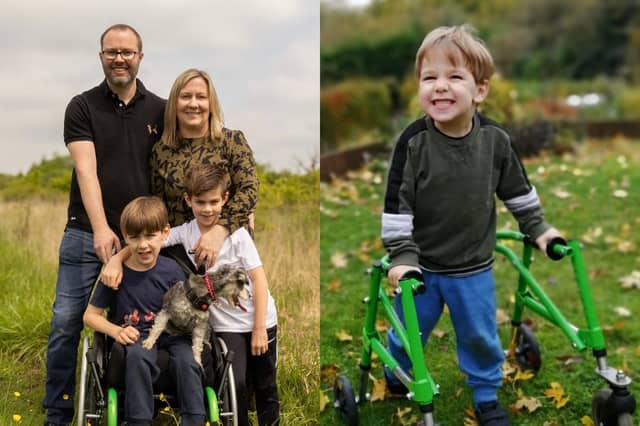

The mother of a boy with a rare genetic disorder, known to affect around 200 people worldwide, has said doctors told her “nothing can be done” and he is “unlikely to survive past his teens”.
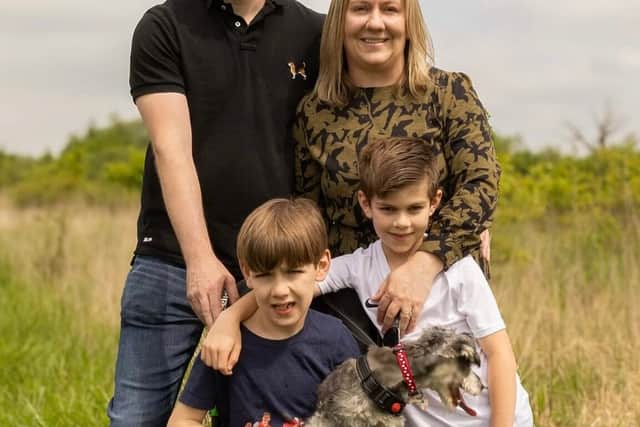
Amy Sheridan-Hill, 46, a former teacher living in Ware, Hertfordshire, said she was “shocked” for her son Frankie to be diagnosed with H-ABC, a rare genetic disorder which affects certain parts of the brain, in 2021, aged five.
As Frankie was her first child, Amy said she was “quite unaware of the proper development stages”, so when her son could not sit up like other children she saw around her, she initially thought it was “nothing to worry about”.
But by the age of two, Amy said Frankie was not walking independently, which most toddlers learn to do by 18 months, so she took him to a doctor who made a referral to a physiotherapist.
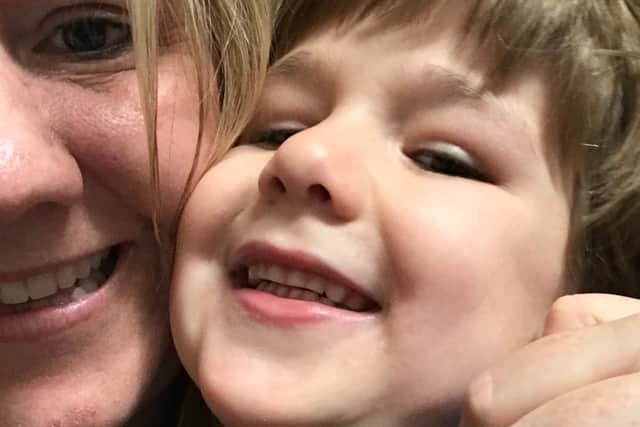
Amy said Frankie had an MRI and then genetic testing to get his diagnosis of H-ABC – a very rare form of leukodystrophy, which is a group of genetic disorders that affect the white matter of the brain – at five years old, which came as a “massive shock” and turned their world “upside down completely”.
According to H-ABC Foundation UK, as of 2019, fewer than 200 documented cases of H-ABC have been identified, the majority of which are children, but that number is on the rise as patients have access to better clinical diagnoses.
“When you go to a doctor, you expect to be told what can be done,” Amy told PA Real Life.
“So I think to be told ‘nothing can be done’ is quite a shock.
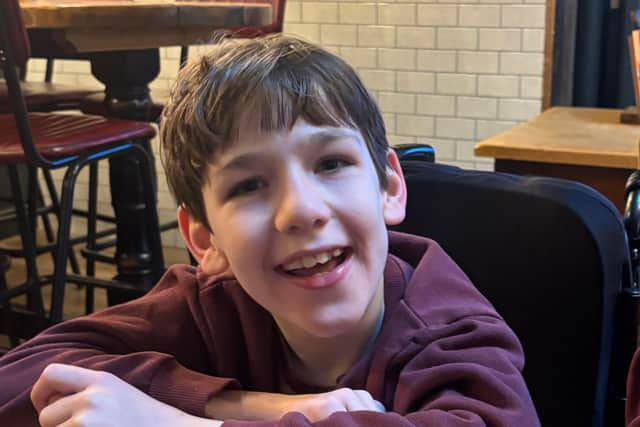
“When you google leukodystrophy, it just gives you the worst-case scenario. With some types of leukodystrophy, kids die within two years, so it is not a word you want to google if you’ve just been given that diagnosis.”
In the aftermath of Frankie’s diagnosis, Amy said she was “googling everything” and came across a Facebook group for H-ABC that had “less than 100 worldwide members”, so she joined it.
“I think having mums who are going through what you’re going through is just really helpful,” Amy said.
“We don’t see each other that often, but we text constantly.
“I was talking to Ali this morning about the mum guilt of when you don’t put your child in his stander every day – because he should and it’s good for him – but actually getting him in the stander is really difficult.
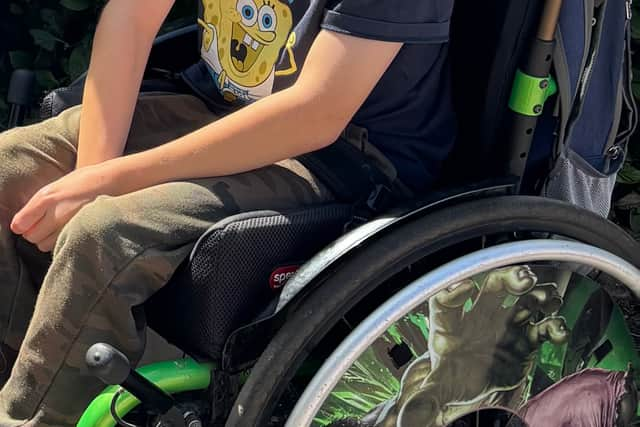
Through fundraising initiatives such as marathons and school bake sales, Amy said the charity has helped fund research into the disease and supported in buying other families affected by the condition wheelchairs or iPads, which can help children without speech to communicate.
Alongside this, Michelle is the co-founder of an Oxford-based company called SynaptixBio, which has recently chosen its candidate drug to take forward into clinical trials to treat H-ABC.
Amy said the timeline for these trials could be within the next year or two and it would not completely cure Frankie, but it could potentially “hold the disease to stop children losing any more skills”.
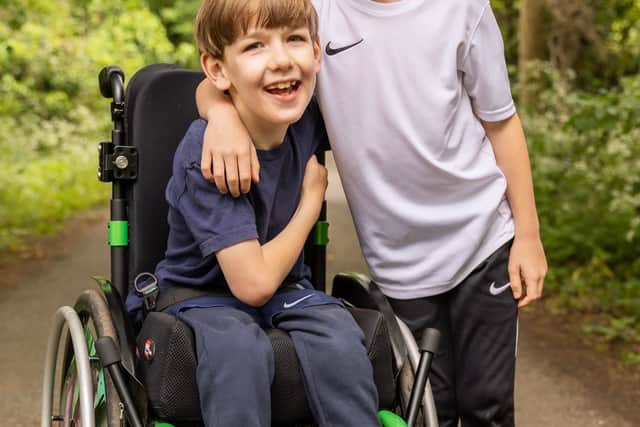
In the meantime, Amy said her family’s goal is to keep Frankie “as strong as possible” so that there is a “better starting point” if he is selected for the trial.
To do this, Amy said Frankie regularly has physio and occupational therapy and Botox to relax the muscles in his legs.
He uses leg splints, Lycra shorts, a stander and a walker, and will need to have X-rays and surgeries in the future because his spine will start curving.
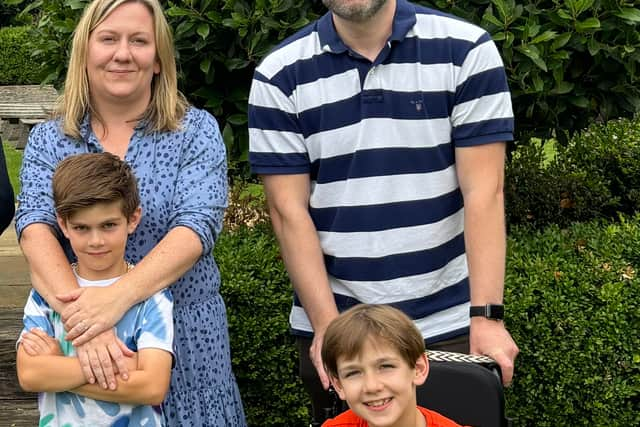
For now, Amy said Frankie loves playing with his “protective” and “kind” younger brother Rory, eight, and he “loves” being in a mainstream school, where she commended his “amazing teachers” and the whole class who “just really look after him”.
“It’s really sweet to see,” Amy said.
“When they do assemblies, they make Frankie the centre of things and they always make sure he’s really involved in everything.
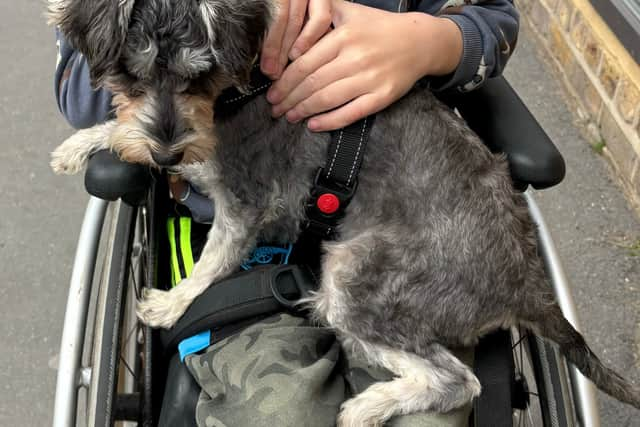
She added: “Frankie is a very happy child. He can read, he loves to play PlayStation, and he can use his iPad.
“If we could keep the disease static and he doesn’t decline, he’d have a great life.
“If we could get some form of treatment in the next two or three years, I think Frankie’s path would be quite different.
Ultimately, Amy said she wants to raise awareness of the disease because “there’s probably more cases out there”.
She said people need to know that there are charities like H-ABC Foundation UK “that have been set up to support families and there are doctors and scientists working on treatments”.
To find out more about H-ABC Foundation UK, visit its website: www.h-abcfoundation.org.