
Mother of man, 24, who had 10 surgeries after brain tumour found says it is unknown ‘how much of life he will get back’
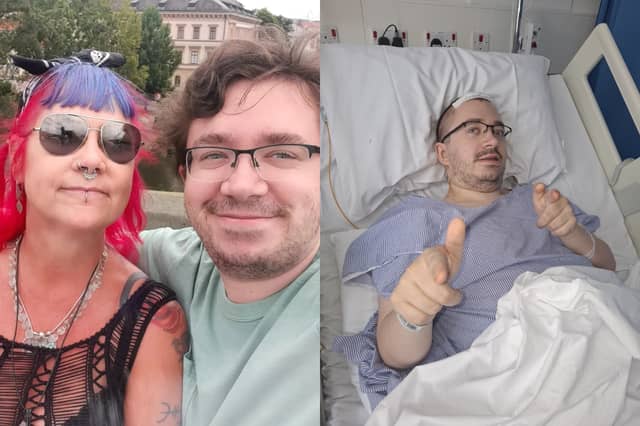

The mother of a 24-year-old who had 10 surgeries on his brain after a benign tumour was found says it is unknown “how much of his life” he will regain as he faces memory loss and sight problems.
Rachel Wilson-Glover, 56, from Bedhampton, Hampshire, said her son, Flynn Brooks, started feeling unwell in July this year and after he had a headache for two weeks, along with blurry vision, she urged him to seek medical help.
After being referred for a CT scan, Flynn, who studied games programming at university and worked in data entry, was found to have a mass in his brain which was later diagnosed as a non-cancerous tumour – and he was scheduled for surgery to remove it in August.
Rachel, a team manager of a day service for adults with learning disabilities and autism, said a host of complications followed the operation, including a build-up of fluid on her son’s brain, pain, confusion and vomiting – and Flynn “crashed” twice and had to be placed on life support.

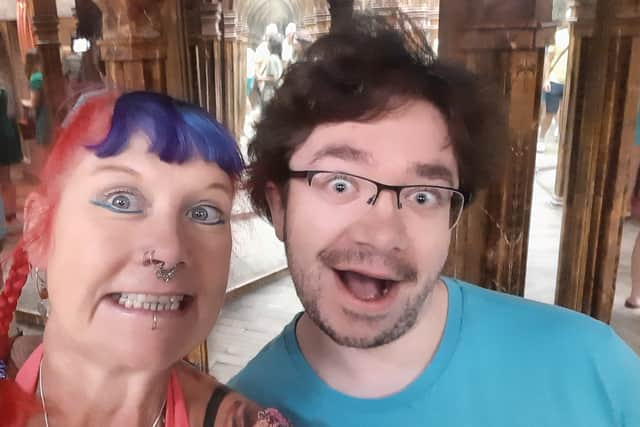
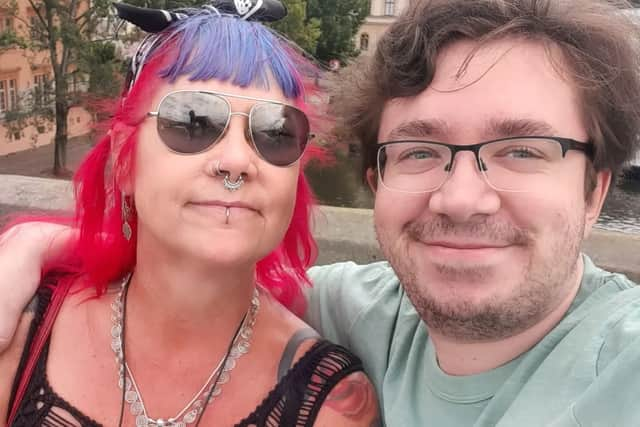
“He’s still my Flynn, he’s still my boy, he’s still got a sense of humour – he’s just got to adapt to a different way of life now,” Rachel told PA Real Life.
“We don’t know if his eyesight is going to come back properly, we don’t know if his memory is going to return.
“We don’t know how much of his life he is going to get back or what he’ll need in the future – those are the scary things and that’s all unknown at the moment.
“Flynn didn’t drink, he didn’t smoke, he’s polite.
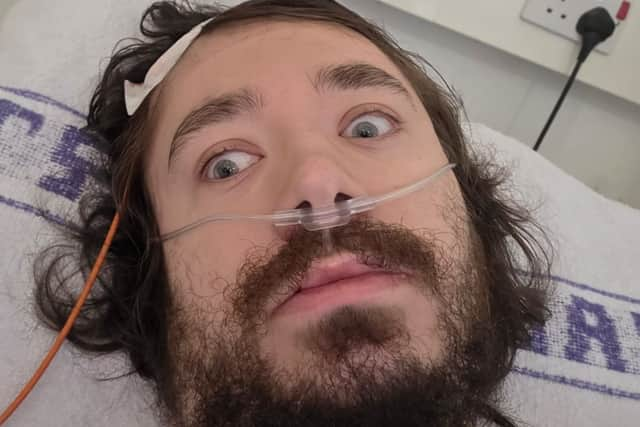
Rachel said Flynn felt unwell in July this year, which he initially put down to a virus.
After he suffered a headache for two weeks, Rachel said she encouraged him to seek medical help, and he went to A&E where it was thought he had a migraine.
When Flynn’s symptoms did not reduce, and when his vision started to become blurry, Rachel said she urged him to visit his GP.
Flynn then received a referral for a CT scan on July 24 at the Queen Alexandra Hospital in Portsmouth, where a mass was discovered in his brain.
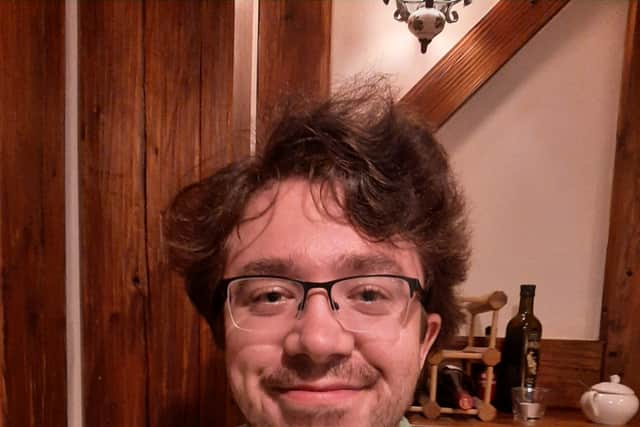
She said the two were then transferred to University Hospital Southampton in an ambulance.
There, after having further tests and an MRI scan, it was discovered on July 26 that Flynn had a non-cancerous brain tumour.
He was scheduled for surgery to have the tumour removed, but the procedure was brought forward as he was in “endless pain”.
“He was suffering so much – he came to live with me because he was so unwell at that point,” Rachel said.
Rachel said she and Flynn were asked to return to the hospital on August 4 – Flynn’s 24th birthday – and he received a craniotomy to remove the tumour on August 5.
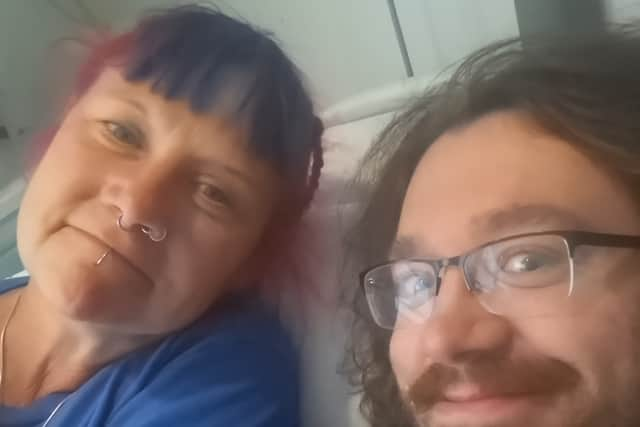
Following the operation, Rachel said Flynn started to experience several complications which pointed towards hydrocephalus, a build-up of fluid in the brain, as well as pain, confusion and vomiting.
To rectify the problem, Rachel said Flynn has undergone a further nine surgical procedures.
These included eight operations to install and replace the drains in Flynn’s head after they became blocked, and one to fit two internal brain shunts – a thin tube which allows excess fluid to flow to another part of the body, usually the stomach.
“Things just kept going wrong,” Rachel said.
Flynn suffered with an infection on his brain, Rachel said, which further added to the complications.
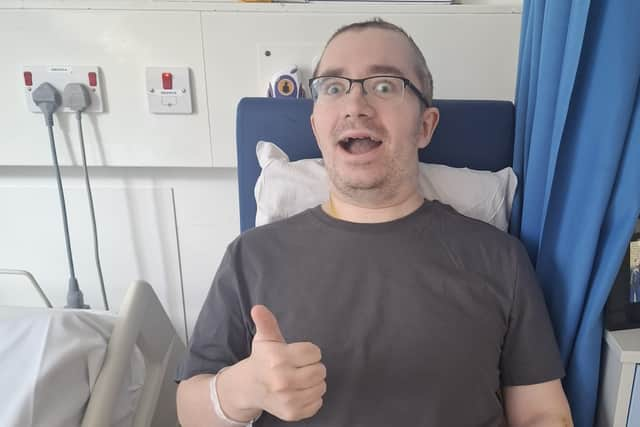
“They were the most horrendous moments of my life, every day I prayed I would get him back,” Rachel said.
“He survived and pulled through both crashes, which was incredible.”
She added: “Ultimately, Flynn is still here because of the hospital, but I initially felt as though people weren’t listening when I kept saying ‘he’s not right’ and he seemed to be getting worse.
“No one expected all of these complications though and it’s very unusual, he’s a very unusual case.”
Rachel said she eventually contacted University Hospital Southampton through their Call for Concern service, established in line with Martha’s Rule, to highlight her concerns around her son’s unstable condition.
They may notice small changes that could be early warning signs of deterioration before they show up in routine measurements.
If, after speaking to the care team, they remain worried and feel their concerns are not being addressed, they can call a dedicated number for a rapid review from a different team, the NHS says.
“It’s there for a reason,” Rachel said.
“Flynn remained brave throughout, he never complained and he went with everything they said.
“I was his advocate because he’s such a mild-mannered, polite young man, and I’m a very strong woman.”
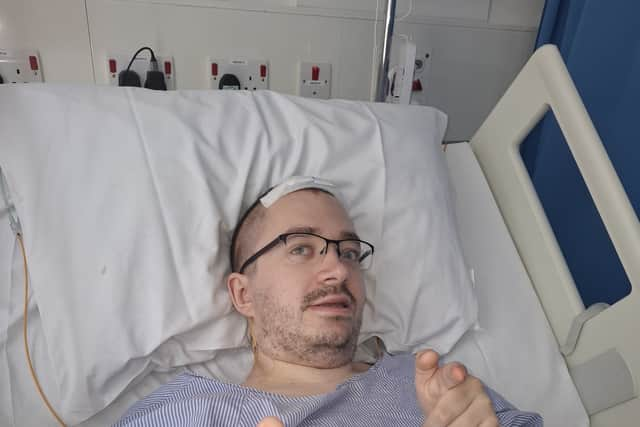
“He gets confused but he still knows a lot of things, his long-term memories are there, he knows who people are and he can identify things,” Rachel explained.
“For his short-term memory, he’ll do something and he can’t remember what’s just happened.”
Rachel said Flynn is “up and walking”, but she feels his vision is causing him to be “unsteady on his feet”.
“His last surgery was on October 1, so it’s still quite early and his body is still recovering,” she said.
Flynn is now recovering at Queen Alexandra Hospital in Portsmouth, where he is awaiting a referral for a rehabilitation programme with the aim of improving his cognitive and motor skills.
A spokesperson for University Hospital Southampton said: “We are always sorry to hear that a patient or their family feel dissatisfied with any element of care they have received in our hospital.
“We want our patients and their relatives to feel heard and actively encourage people to raise concerns so that we can address any issues.
“We have a dedicated Patient Advice and Liaison Service (Pals) to help resolve matters.
“However, where complaints are made by, or on behalf of, an inpatient we always recommend that conversations are had directly with the medical teams involved in the first instance, to help resolve matters swiftly.
“Our trust was among the first to implement Call for Concern, incorporating Martha’s Rule – a system that enables patients and their families or carers who are worried about a patient’s condition deteriorating, to seek an urgent review from a different clinical team.
“While we never comment on individual cases in order to protect patient confidentiality, the trust is committed to working with any patient, their family or carer who has worries and concerns they feel remain unresolved.”
To find out more, visit the fundraiser for Flynn here: gofundme.com/f/help-my-recovery-for-flynn-brooks