
Mother ‘shattered’ to learn daughter will never speak and may need lifelong care because of rare genetic condition
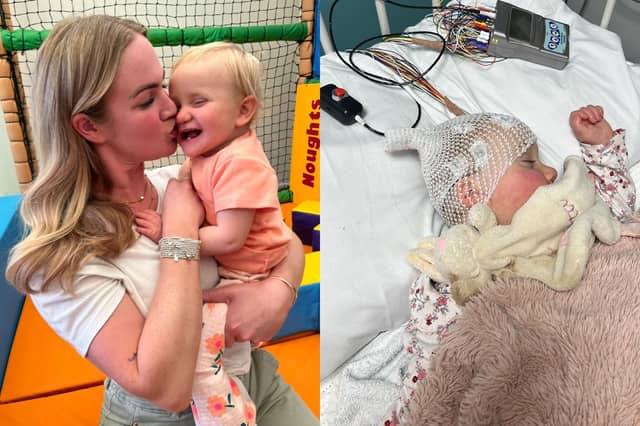

A mother was “shattered” to learn her young daughter has a rare genetic condition impacting her brain which means she will never talk, will struggle to walk and may need lifelong care.
Leigh Grant, 34, from Sutton-on-the-Hill, Derbyshire, and her 29-year-old fiance, Elliot Oxley, welcomed their second daughter Etta, aged one, in October 2022 – but they noticed something was wrong with her development when they compared her early months with those of their first child, Florence, aged five.
Leigh, who owns a hair extension business, said Etta was not “meeting the usual milestones” such as crawling and talking, and, after turning one, she began to suffer with episodes of eye-rolls, seizures and “projectile vomiting”, which resulted in her being taken to hospital via ambulance on three separate occasions.
After her vitals repeatedly came back as normal, Leigh and Elliot pushed for further answers and decided to take their care private, before being told by a neurologist in July this year that Etta has Rett syndrome – a rare genetic neurological and developmental disorder that affects the way the brain grows.
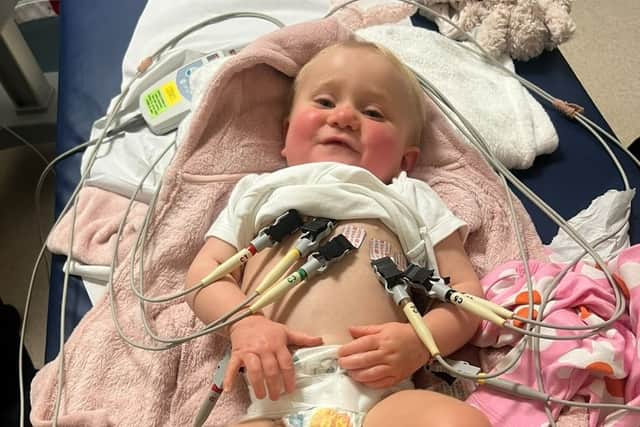
The family are now hoping gene therapy in America will be able to replace the faulty gene causing Etta’s condition although the process will be lengthy and cost “a lot of money”, prompting a family friend to set up a GoFundMe page to help support them.
“We were shattered and we don’t know why this has happened to us,” Leigh told PA Real Life.
“How have we got one healthy daughter and then this has happened?
Rett syndrome is a genetic disorder that typically becomes apparent after six to 18 months of age and occurs almost exclusively in girls.
Symptoms for the condition include impairments in language and co-ordination, repetitive movements and those affected often have slower growth, difficulty walking and a smaller head size.
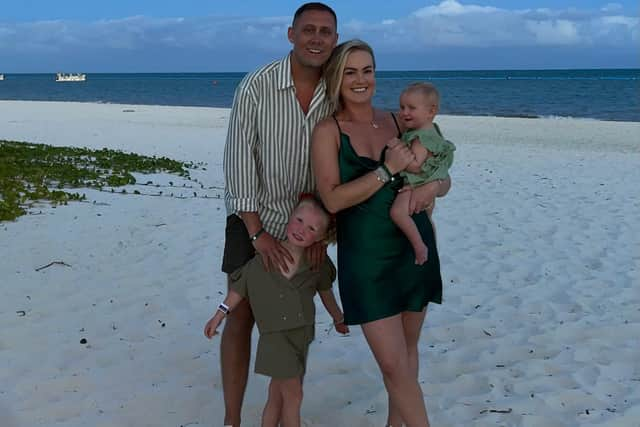
The mother said “everything was fine” after Etta’s delivery and the couple took their new baby home, although Leigh said her daughter was “a little bit poorly to start with”.
“Because of the C-section, she had quite a lot of mucus on her chest so she suffered with a cough, a cold and her immune system seemed to be really, really weak,” she said.
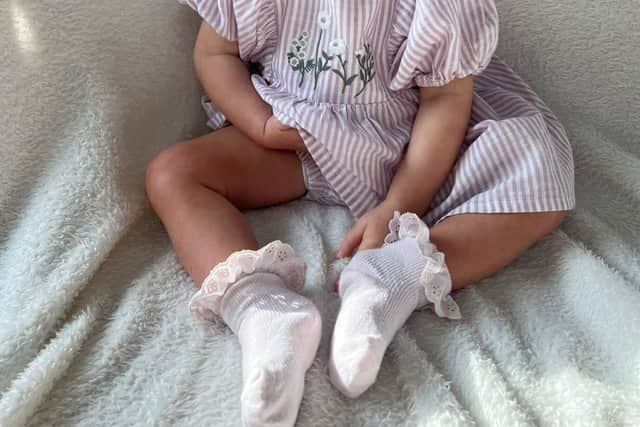
“She could sit but if she fell, she couldn’t get back up,” Leigh said.
“She wasn’t trying to crawl and she was babbling but she wasn’t grasping any of the words.”

“Every time she would go to bed at night, she would be fine for about half an hour but then she’d cough, she’d projectile vomit and then these seizures would start,” she said.
“As a mum, you know it’s not normal – I’ve had a daughter before and I knew these things weren’t normal.”
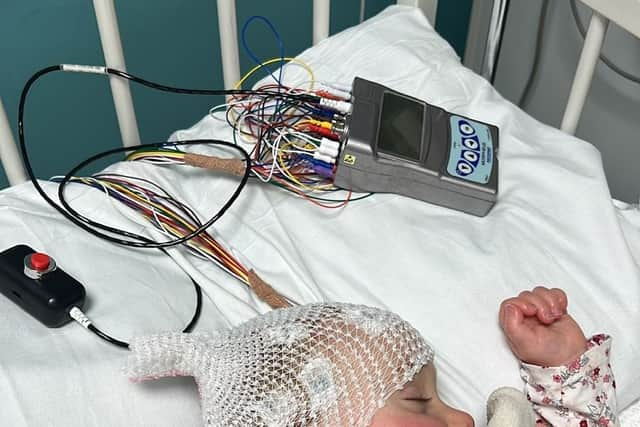
Soon after, Leigh said they took Etta to a private paediatric consultant who admitted Etta into their care where she spent 10 days having “every test going” – but frustratingly, no cause for her symptoms could be found.
Leigh said their private consultant suggested she and Elliot undertake genetic blood testing, which took around six months to complete, before they were informed Etta has a mutation on her MECP2 gene – which causes Rett syndrome.
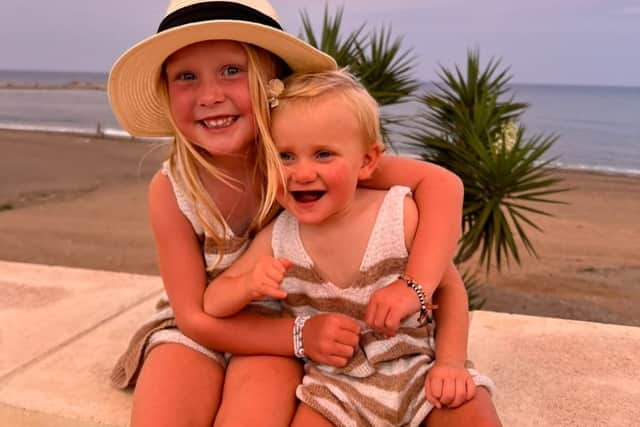
“We don’t carry the gene, which is crazy, so it’s even more rare because it’s happened in the womb,” Leigh said.
“There’s nothing to say she won’t be able to walk, it will be a long way to get there, but one thing we know for a fact is that she will never talk – it’s one thing we can guarantee with Rett’s as they lose their ability to speak.
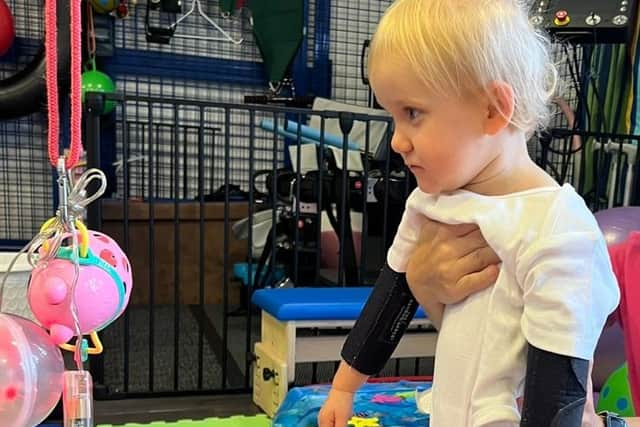
Leigh said the family are still waiting to speak to a genetic specialist regarding Etta’s future but she said it is difficult to tell as “no case is the same”.
“She has days where she’s stronger than others and you can tell she gets frustrated as she wants to move but she’s not got the strength,” Leigh said, adding Etta has been undergoing physiotherapy sessions to help her development.
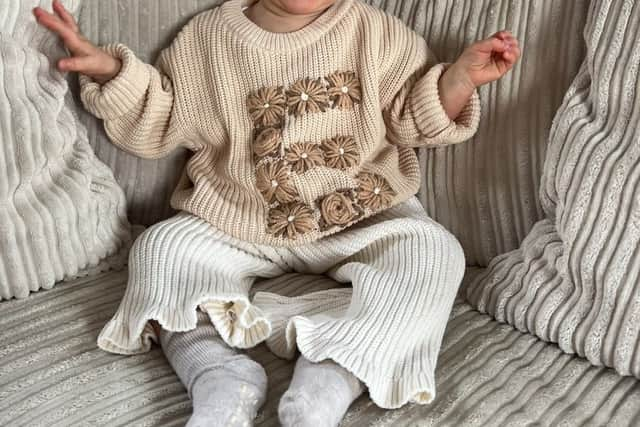
“She will have to go to a special school, getting a job I would imagine is highly unlikely but we don’t know until we get there.
“The future is very vague at this point.”
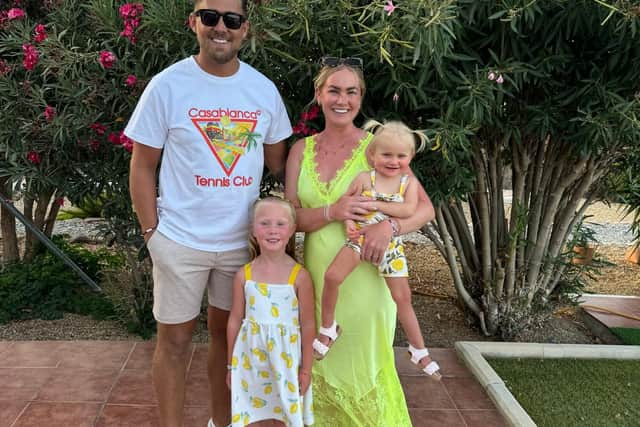
“You do have days where you sit and cry, that’s completely normal, and I think as a family, we’ve done really well,” she said.
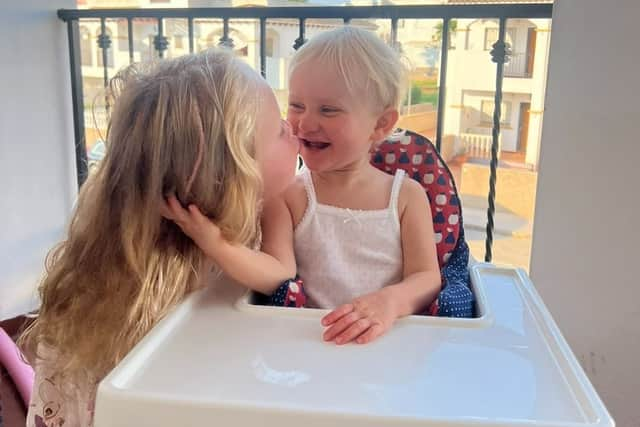
“Florence and Etta have a very, very close bond and she’s a really good help but she doesn’t know any different.”
The family are also considering gene therapy in America, which would involve brain surgery to replace the faulty gene causing Etta’s condition.
Leigh said it is “not a cure” but it is thought to minimise the symptoms to give those “the best life they can have”.
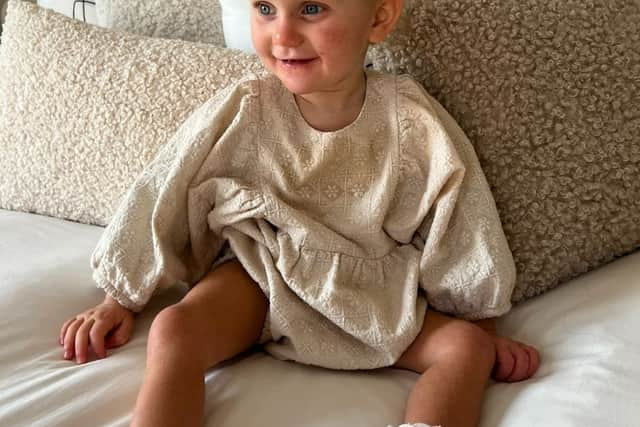
A family friend has set up a GoFundMe page to help support them, raising more than £10,000 so far.
“It’s so nice people are wanting to help out,” Leigh said.
“It’s touched our hearts that people are going over and above for our daughter.”
To find out more, visit the family’s GoFundMe page here: gofundme.com/f/27k62-help-for-etta