
Mum who diagnosed her own daughter with an incurable genetic disorder is developing a new treatment to save her life
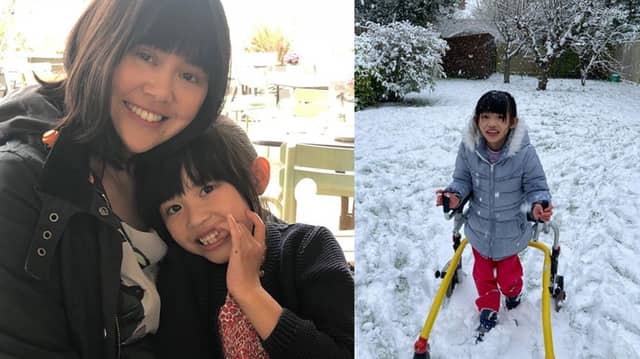

A scientist who diagnosed her own daughter with an incurable genetic disorder has set up a foundation to raise funds for research towards clinical trials and started a biotech company to develop a new treatment in a bid to save her life.
Dr Michelle Teng, a medical scientist and geneticist, founded the H-ABC Foundation after diagnosing her daughter, Sofia, 11, with a genetic disease that affects the nervous system, in 2016.
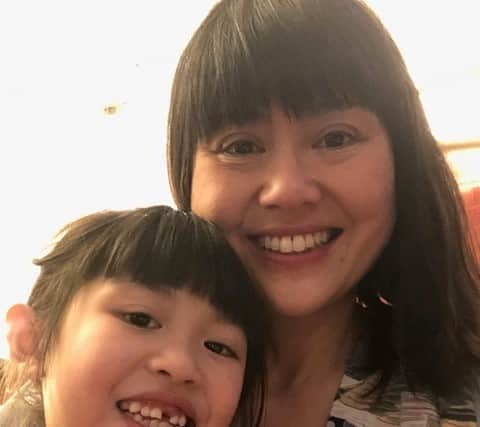
Michelle, who lives in Caversham, Berkshire, with her husband, Alan, 44, a managing director, and their three children, Sofia, Olivia, three, and Lyra, three, hopes human clinical trials which are set to start in 2024 will halt the progression of her daughter’s degenerative disease.
Michelle said: “I’m doing everything I can to help my daughter, it’s in my instinct as a geneticist to find a solution.
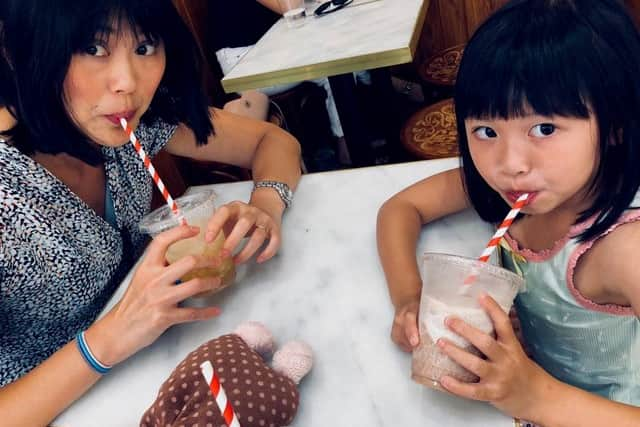
“I’m staying hopeful that Sofia will be able to receive the treatment, as it will save her life.”
For Michelle, it was not until Sofia was about two and a half that she started to notice she was not hitting her milestones.
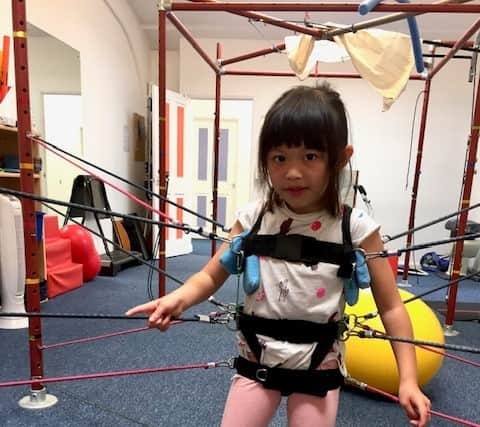
Michelle says that with her training as a geneticist, she knew there was a neurological problem at the root of Sofia’s walking issues.
It took three years of appointments and scans before Sofia was diagnosed with TUBB4a leukodystrophy, an incurable genetic disorder that affects the nervous system.
Symptoms of TUBB4a leukodystrophy include seizures, deafness, poor co-ordination, loss of balance, involuntary movements and speech problems.
Michelle said: “My hunch was right, it was related to her neurotransmission.
“After finding out the condition, I did my research and further diagnosed her with H-ABC, or hypomyelination with atrophy of the basal ganglia and cerebellum, an extreme form of TUBB4a leukodystrophy.”
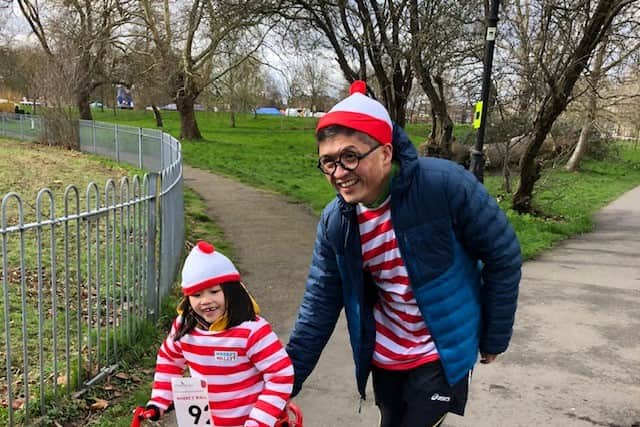
The news was a devastating blow for Michelle and her family, but she says she immediately became focused on finding a solution.
“It took a long while before we got to the answer, but there is a measure of relief that you know at least what you are dealing with, but also great denial because she was such a sprightly, happy child,” she said.

“It is every parent’s nightmare but for me, I think I could hold on to the fact that I understood the condition and that meant I could potentially find a way forward to treat the condition or look at different therapeutic options that are out there.
“In a way, I was saved by my own rational thinking because I think I would have just spent many, many days crying otherwise.”
Babies and children who develop the mutation often face an early death.
In 2019, Michelle set up the H-ABC foundation as a way to raise money for the research being conducted at Children’s Hospital of Philadelphia.
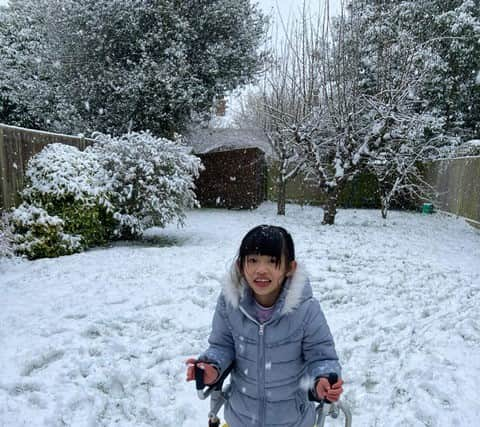
At the moment Sofia’s mobility is affected by the disease, and she uses a wheelchair and walking aid to move around.
If untreated, her condition will deteriorate but Michelle hopes that a new drug will halt the progress of this deterioration.
She said: “It’s a horrible thing for a parent to witness their child go through but I remain hopeful that we can find a solution.
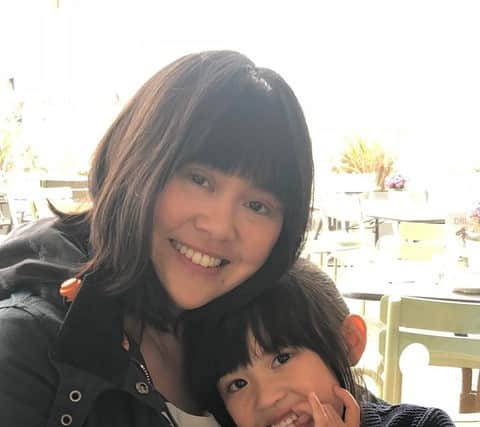
“But setting up a foundation isn’t enough because you need proper capital to develop a drug, that is the painful reality.
“It’s not something one individual can change but we rely on investors to get this research moving.
“I’m doing everything I can to help my daughter, and will continue to search for a solution.”
Michelle’s biotech company, SynaptixBio, is now also developing the world’s first treatment for the condition.
Antisense oligonucleotides (ASOs) therapy, which has previously been used to treat conditions such as Duchenne muscular dystrophy and spinal muscular atrophy, is believed to dramatically improve the quality and life expectancy of leukodystrophy patients.
Dr Dan Williams, chief executive and co-founder of Oxford-based biotech business SynaptixBio, said: “The new approach provides the potential to stabilise, improve quality of life and extend life expectancy in children suffering from the condition.
“Successful prevention of leukodystrophy progression would be a revolutionary life-saving and life-enriching treatment.
“This project will change people’s lives. The research and development of a clinically-proven treatment for TUBB4a would be a real game-changer for patients and their families.
“There is a real chance to improve the lives of leukodystrophy sufferers. We want to ensure that dream becomes a reality.”
For more information visit: www.synaptixbio.com and www.h-abcfoundation.org.