
Musician diagnosed with anorexia as a teenager warns boys are at risk from exposure to fitness ‘propaganda’
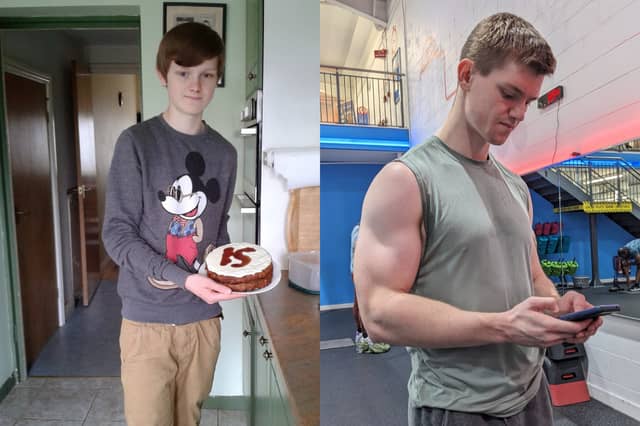

A musician who developed an eating disorder at 14 after wanting to look like “chiselled” male magazine models has warned of the risks young boys face from exposure to fitness “propaganda”.
John Tibbits, 27, who lives in Colliers Wood, south-west London, started working out three hours a day and eating nowhere near enough food after seeing pictures of muscular men at the supermarket and wondering “Why don’t I look like this?”
While John was diagnosed with anorexia in June 2012 and weighed just 40 kilos, in his eyes, he was working towards the perfect body.
Only after witnessing first hand the seriousness of his condition when a fellow patient collapsed in front of him did John manage to change his eating habits.
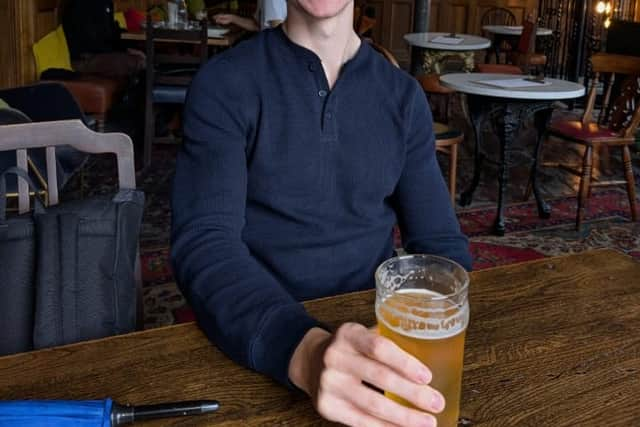
A musician, John has written a song called Disordered Thinking about his experience to help raise awareness about the impact of eating disorders on young boys and said “not enough people are talking about this”.
“If you looked at me, you wouldn’t think I have a mental health problem, but it manifests itself every day,” John, who is originally from Birmingham, told PA Real Life.
“I think it will stay with me for the rest of my life in some form. I will always have the warped perception of what a good male body looks like.
“I have basically written an angry song about the people who, in my eyes, cause significant amounts of harm to young men, like men’s health magazines and Hollywood.

John developed an eating disorder at 14 after feeling unhappy about his body shape.
He said: “I remember being in Sainsbury’s, seeing the men’s health magazines and thinking that’s what I want to look like – why don’t I look like that?
“It’s basically propaganda in a lot of ways.”
Over the next year, John became obsessed with his physical appearance and started working out three hours a day on an exercise bike.
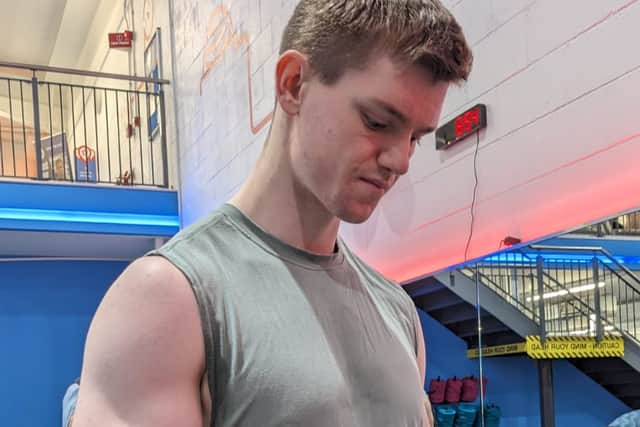
“They banned me from using the bike so I would get up at like 2am and spend hours exercising,” he said.
“It’s ridiculous things like that, where you look back and think what the hell was I doing?”
He changed his diet, cutting out fatty food groups and counting calories, before being diagnosed with anorexia in June 2012.
“I stopped enjoying food and started treating it like the enemy,” he said.
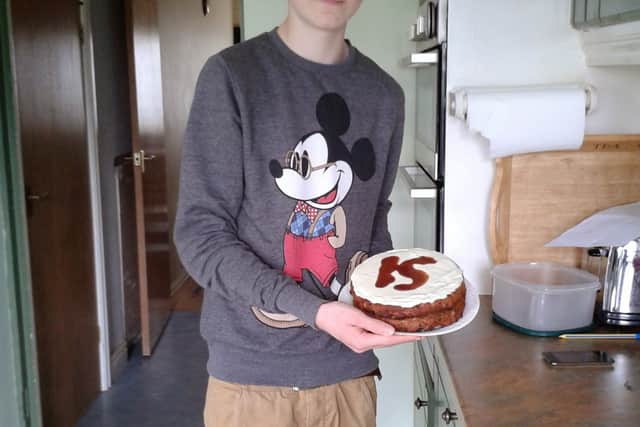
A small bowl of muesli for breakfast and vegetable-packed salads for lunch were John’s staple meals.
“I was eating nowhere near enough food,” he added.
It was through “gritted teeth” that John ate his mother’s home-cooked meals.
“It would take me 45 minutes to an hour to eat it,” he said.

John recalled the moment he realised the seriousness of his condition and decided to change.
He visited a nutritionist and witnessed an anorexic woman faint in the waiting room.
John said the look on his mother’s face is what made him realise that his disorder was not only affecting him, but also his family.
“She completely collapsed on the floor… and they rushed to help her,” he said.

John started reducing his exercise time by a couple of minutes every session and was prescribed weight-gain drinks.
It took around a year for John to recover from anorexia, but the disorder has left him with mental scars.
“I still suffer from body dysmorphia to this day,” he said.
“I don’t actually know what an attractive male body looks like because I’ve been f***** by… thinking I need a chiselled six or eight pack.”
An estimated 1.25 million people in the UK are living with an eating disorder, according to Children’s Commissioner.

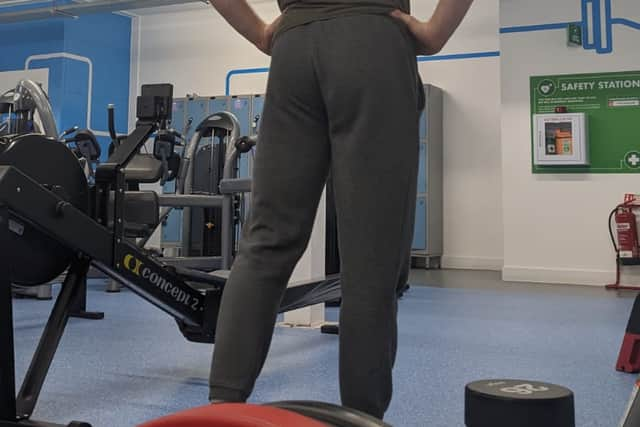
“You step into a gym and see these guys flexing in the mirror who are clearly unhappy with themselves,” said John.
“When you hear ‘eating disorder’, you think of skin and bone, but for a lot of men it’s called bigorexia.”
Bigorexia, also known as muscle dysmorphia, is a health condition where someone constantly thinks about building muscle on their body.
“The people I see in the gym are getting younger and younger,” John continued.
John, who has been playing music since childhood, decided to write a song about his experience which is available to listen to on Spotify.
One of the lyrics, “stood naked and proud in their own deception” is a reference to bodybuilders giving a false impression that their physique is natural, explained John.
“Obviously it’s about my personal struggles as well,” he added.
“I still have an unhealthy relationship with the gym – I exercise six days a week – and I really struggle if I’m unable to go.
“This song is a way for me to express the way I feel and hopefully people who listen to it and have similar problems will be able to empathise and understand the messaging.”
Listen to Disordered Thinking at: www.soundcloud.com/user-968788460.
For more information and support visit: www.nhs.uk/mental-health/feelings-symptoms-behaviours/behaviours/eating-disorders/overview/.