
Newborn white rhino Silverio takes his first steps in Chilean zoo


Hannah, a 13-year-old white rhinoceros, has delivered a newborn calf in a rare zoo birth for the almost-endangered species.
The arrival of the male calf, named Silverio, two weeks ago marked the third time that a white rhino had ever been born in South America.
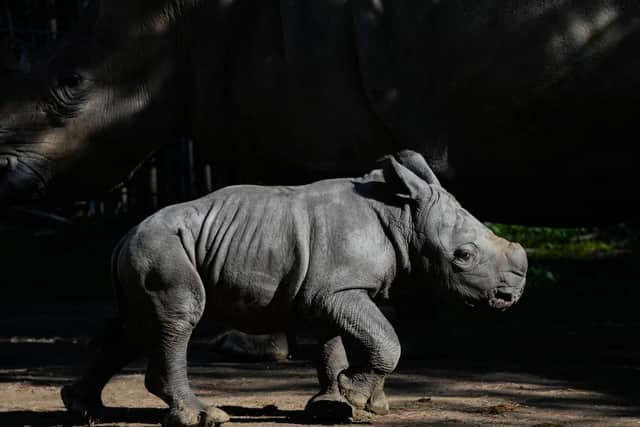
The zoo hailed his birth as a “big achievement” for conservationists worldwide. Over the past year, only eight other southern white rhinos have been born.
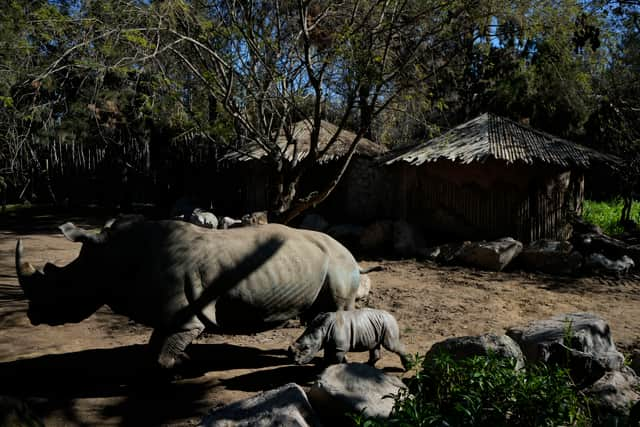
The director of Buin Zoo explained that a recent string of failed rhino romances had dashed the hopes of conservationists attempting to breed the species across the continent. But Hannah and Oliver — a pair of southern white rhinos shipped to Santiago all the way from sub-Saharan Africa just over a decade ago — have hit it off, producing three calves in this one zoo.
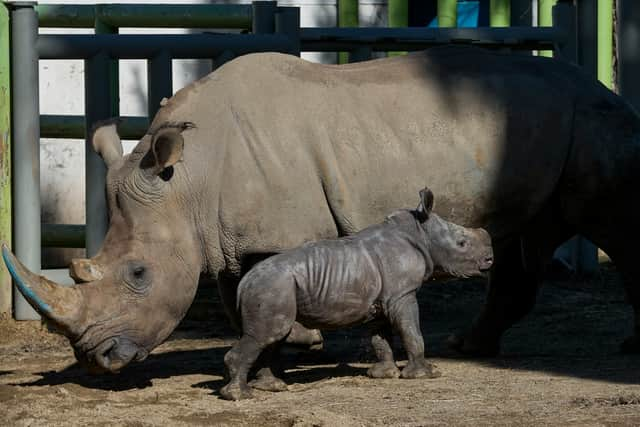
A team of veterinarians closely monitoring Silverio declared him healthy on Tuesday.
The success story comes as fewer and fewer white rhinos roam the African plains. Northern white rhinos have effectively gone extinct, although the international scientific community has started to revive the species through assisted reproduction and stem cell research.
Southern white rhinos, the northern’s close cousin and a more common species, have been classified as “nearly endangered” by the International Union for Conservation of Nature, the world’s main scientific authority on the status of species. There are just over 10,000 individual southern white rhinos left in the world, the vast majority of them in zoos.
But that could change, conservationists say, as hunters continue to kill rhinos for their horns and the mammals can struggle to reproduce in captivity, with a gestation period of 18 months and often more than one male needed to stimulate reproduction.
Humans are the only predators of rhinos, reports the International Conservation Union, with hunters killing an estimated 1,000 rhinos a year.
It says that roughly 17 rhinos are born each year.