
NHS pressure like ‘slow national major incident’, warns senior medic
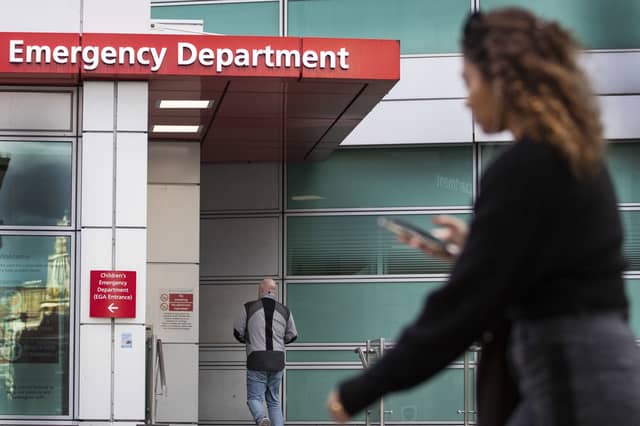

Pressure on the Scottish NHS is akin to a “slow national major incident across the country”, a leading medic has said.
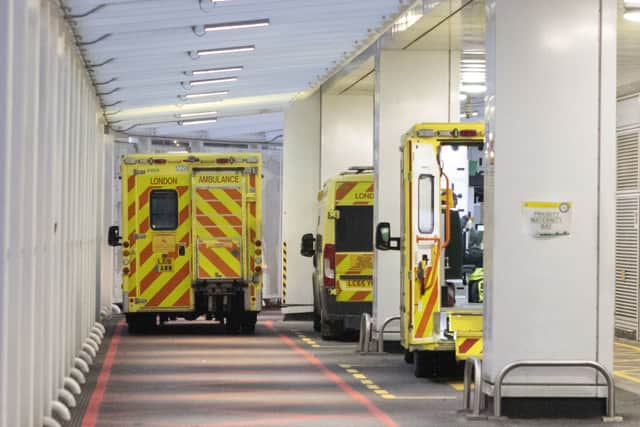
John-Paul Loughrey, vice-president of the Royal College of Emergency Medicine in Scotland, said the numbers of patients in ambulance queues outside hospitals is larger than would be seen after an incident like a bus crash.
The NHS has come under severe pressure during the winter with accident and emergency waiting time performance hitting a record low in December.
In an interview with The Times, Dr Loughrey said other senior consultants have called for major incidents to be declared at their hospitals.
He said: “You may have 10, 20, 30 patients arrive after a bus crash. We now have more than that in ambulances queued outside emergency departments.
“The number of patients at risk is more than the numbers you would see in a conventional major incident.”
Ambulances have been so busy that sometimes every vehicle in a health board region has been tied up at hospitals, he said, meaning crews from neighbouring regions have to fill in.
Dr Loughrey said Scotland is now experiencing “a slow national major incident across the country”, adding: “This is much worse in emergency departments than any phase of the pandemic.
“We need recognition from the powers that be – political, Government and health board leaders – and staff have to be diverted in-house to attend to A&E.
“We have to address ambulance delays because of the risk that is being posed to the community.”
Other senior medics said they agree with recent statements from the Royal College of Emergency Medicine about the seriousness of the situation across the UK.
Professor Andrew Elder, president of the Royal College of Physicians of Edinburgh (RCPE), and Dr Tim Cooksley of the Society for Acute Medicine (SAM) issued a joint statement.
They said they have “never been more concerned about standards of acute medical care across hospitals in the UK” as they are now.
Their statement added: “Whilst Covid-19 has not left us, and influenza is now contributing, these infections are not the primary cause of the problems.
“With patients waiting many, many hours to be assessed and treated, sometimes in ambulances queueing outside our hospitals, the maxim that our patients should receive ‘the right care, in the right place, at the right time’ has never been further away from the reality of what is actually being provided.
“This is an issue central to patient safety and quality of care – the core values the RCPE and SAM represent and that all in the NHS seek to safeguard.
“If the current situation is not a crisis in acute care, we ask our governments to define what they believe a crisis to be.”
On Monday, the Scottish Conservatives said MSPs should be recalled to urgently discuss the situation in the NHS.

Dr Gulhane, who has been working as a GP over the festive break, said: “It’s no exaggeration to say Scotland’s NHS is on life support at the moment – and an emergency response is needed from Nicola Sturgeon.”
A spokeswoman for the Scottish Government said: “We know that this is one of the toughest winters in the NHS’s 74-year history.
“We are monitoring the situation in emergency departments extremely closely and are in daily contact with health boards to ensure all possible actions to support services are being explored.
“Covid has still not gone away and these pressures, combined with pandemic backlogs, are making it a very challenging time for the NHS.
“We have been dealing with one of the coldest periods for many years which put an increasing strain on the NHS.
“On top of that, flu has been classified at extraordinary levels, with cases admitted to hospital the highest in five years.
“We also had to deal with rising cases of Strep A and other respiratory viruses which has resulted in significant demand on services.
“Delayed discharge continues to have a major impact in driving up accident and emergency waits, and we are working with health boards to ensure people leave hospital without delay, freeing up vital beds for those who need them most.”