
NHS recovering more slowly in Scotland than England, says think tank
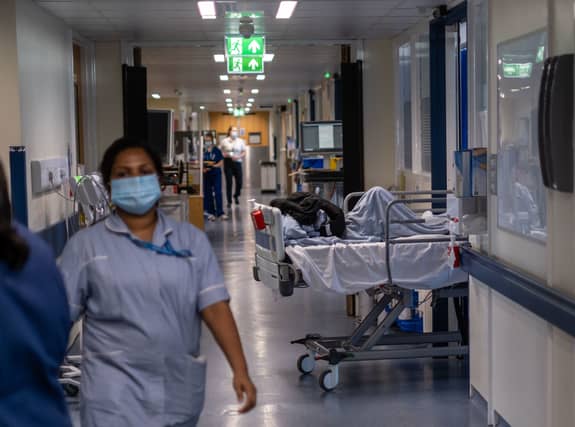

The recovery of Scotland’s health service from the pandemic has been slower than that of England, a leading think tank has said.
A briefing by the Institute for Fiscal Studies as part of a series ahead of the Scottish Budget next week has shown the performance of the health service in key metrics remains worse than before the pandemic, and has continued to decline in all but one in the past year.
The report focused on how both nations have improved compared to their own previous record, rather than comparing the performance of the two to each other, which cannot be easily done due to differences in collecting data.
The size of the elective care waiting list and length of time patients are waiting on the list, as well as A&E performance and cancer treatment waiting times, have all declined in Scotland, while the proportion of people waiting six weeks or less for a diagnostic test has improved.
England has seen a similar performance dip compared to before the pandemic, but in the past 12 months there have been signs of improvement in all of the studied areas except the percentage of people waiting more than 18 weeks from referral to elective treatment.
Research economist Max Warner, who wrote the report, said the reason for the difference in Scotland’s NHS is due to a lower number of patients being seen compared to before the onset of Covid-19.
The number of day cases is the only area of hospital care which has returned to pre-2020 levels, while there were 15% less elective inpatient admissions, a 9% drop in emergency inpatient admissions, and 6% fewer outpatient appointments between April and June of this year compared to the final quarter of 2019.
Mr Warner said: “The Scottish and English NHS are now recovering differently from the Covid-19 pandemic.
“In Scotland, hospital activity remains below pre-pandemic levels, and waiting time performance has worsened over the last year.
“The same is not true in England, where performance remains poor but is at least moving in the right direction.
“The UK Government has been honest about the poor performance of the English NHS and has made understanding and improving NHS performance and productivity a major priority.
“It is vital the Scottish Government does the same, particularly given the concerning divergence in recovery between England and Scotland.”
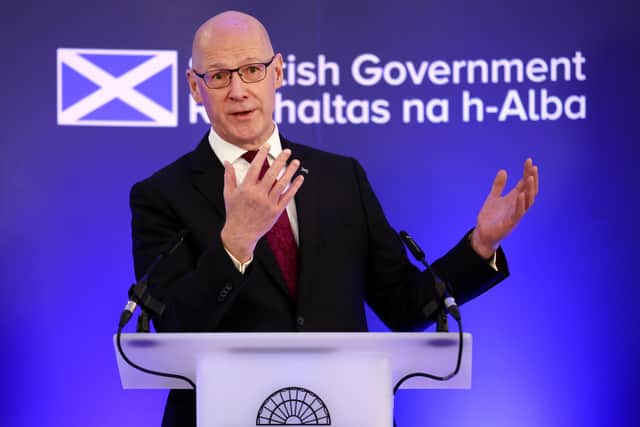
“Obviously, we have significant challenges to overcome as a consequence of Covid, but we also have got to recognise that… we have comparatively greater challenge in the Scottish population compared to the population of the rest of the United Kingdom,” he said.
“That is an underlying, long standing issue that we have to overcome, which is why we have such an emphasis on the public health measures going forward.”
He added the Scottish Government has to “take the steps” to intervene earlier to improve health outcomes for people in Scotland, saying work is under way to enhance the NHS’s performance.
But Scottish Liberal Democrat leader Alex Cole-Hamilton said the briefing was a “damning indictment” of the Scottish Government’s handling of the NHS.
“Ministers have repeatedly boasted about Scotland’s superior performance to England, but this report makes a total mockery of those claims,” he said.

“This Government must stop making up bogus excuses and finally confront the emergency in front of them.”
Scottish Conservative health spokesman Dr Sandesh Gulhane said the report delivered a “damning verdict”.
He added: “On the SNP’s watch, hundreds of thousands of patients remain on NHS waiting lists, delayed discharge has hit record levels and cancer waiting times have not been met in over a decade.
“The IFS’s findings should be an urgent wake-up call for Neil Gray, who should be honest about the permanent crisis in Scotland’s NHS.”
Scottish Labour deputy leader Dame Jackie Baillie said the report told the Government what patients and staff have known for years, “Scottish hospitals are buckling under the strain of SNP incompetence”.
She added: “The SNP pledged over a year ago that it would spend £300 million in driving down waiting lists, but just £30 million of this funding has been allocated to health boards so far.
“At the same time, we know that there were 50,000 fewer planned ops in the last 12 months compared to same point pre-pandemic. This is simply unacceptable.
“Scottish Labour will tackle delayed discharge and reduce waiting lists so our hospitals can focus on emergency treatment once again.”
Health Secretary Neil Gray said: “We are investing £30 million to reduce pandemic backlogs, adding 12,000 outpatient appointments, 12,000 inpatient procedures and over 40,000 diagnostic tests.
“There is more to do but we are making progress, with improvements in waiting lists for diagnostics and the treatment time guarantee, as well as cancer care, where – despite still being a challenge – the most recently published data shows improvement.
“Additionally, Scotland’s core A&Es have been the best-performing in the UK for 9 years.”