
No date set for Trump’s classified documents case despite push from prosecutors


Federal prosecutors pressed a federal judge on Friday to schedule a trial for this summer in the classified documents case against former President Donald Trump, while defence lawyers sought to put it off until after the election.
US District Judge Aileen Cannon did not set a date during the pivotal hours-long hearing in Fort Pierce, Florida, attended by Trump, though she did express scepticism that the case could proceed to trial on the timeline requested by prosecutors.
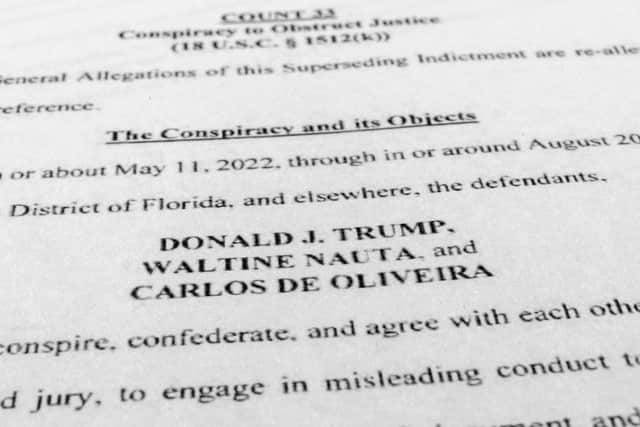
Given the gravity of the allegations and the breadth of evidence that prosecutors say they have accumulated, the documents case has long been seen as the most legally perilous of the four criminal prosecutions that Trump is facing this year.
The case had been scheduled for months to reach trial on May 20, but with Ms Cannon signalling months ago that she intended to reconsider that date, the two sides submitted competing proposals this week that could theoretically result in Trump standing trial at some point this summer — or not anytime this year.
Prosecutor Jay Bratt, a member of special counsel Jack Smith’s team, which has pressed for a July 8 trial date, said: “This case can be tried this summer.”
Defence lawyers, by contrast, contend there is no fair way to hold a fair trial this year at a time when Trump is looking to clinch the Republican presidential nomination, but they have nonetheless offered August 12 as a possible date to begin jury selection.
Lawyer Todd Blanche said: “We very much believe that a trial that takes place before the election is a mistake and should not happen.

Though she did not immediately rule, Ms Cannon hinted that she did not see the case as being on the cusp of trial, telling lawyers that “a lot of work remains to be done”.
Trump, who has had combative exchanges in the past with judges, sat quietly during Friday’s arguments and appeared to listen intently, at times whispering with his legal team.
Mr Smith was also present, as were Trump’s two co-defendants, his valet Walt Nauta and Mar-a-Lago property manager Carlos De Oliveira.
The trial date has taken on added significance in light of the uncertainty surrounding a separate federal case in Washington charging Trump with scheming to overturn the 2020 presidential election.
The Supreme Court said this week that it would hear arguments in late April on whether Trump as a former president is immune from prosecution, leaving it unclear whether that case — also brought by Mr Smith — might reach trial before the election.
If the Florida classified documents case were to be postponed until after the election, and if the Washington election subversion case does not take place this year, that would mean voters would head to the polls without two blockbuster federal prosecutions — one charging Trump with seeking to undermine American democracy, the other accusing him of mishandling sensitive national secrets — being resolved by a jury.
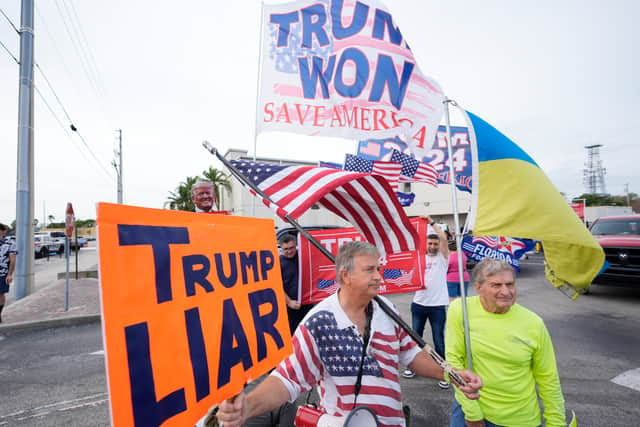
Republicans will hold their nominating convention in July while the Democrats will meet in August.
The general election campaign typically moves into a more frenzied pace after Labour Day, when many voters begin to pay closer attention to the political season.
In some states, voters can begin participating in early voting by September or October, raising the possibility that a trial could play out as ballots are being cast.
The highly anticipated hearing was the first public one in weeks in the Florida case.
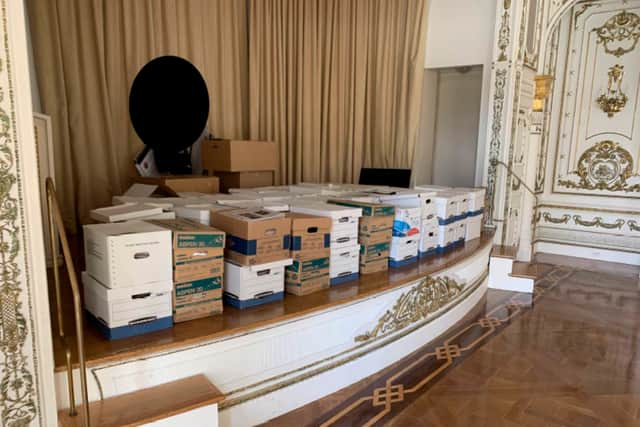
Trump faces 40 felony counts in Florida that accuse him of wilfully retaining after he left the White House dozens of classified documents and rebuffing government demands to give them back.
Prosecutors in recent court filings have stressed the scope of criminal conduct that they say they expect to prove at trial, saying this week in one brief that “there has never been a case in American history in which a former official has engaged in conduct remotely similar to Trump’s”.
They allege, for instance, that Trump intentionally held onto some of the nation’s most sensitive documents — only returning a fraction of them upon demand by the National Archives — and then urged his lawyer to hide records and to lie to the FBI by saying he no longer was in possession of them.
He’s also charged with enlisting staff to delete surveillance footage that would show boxes of documents being moved around the property.
Trump and his lawyers have denied any wrongdoing.
They asked Ms Cannon last week to dismiss the case, citing among other arguments the same immunity theory now being considered by the Supreme Court.