
Non-binary parent finally ‘comfortable in their own skin’ after breast cancer prompts double mastectomy
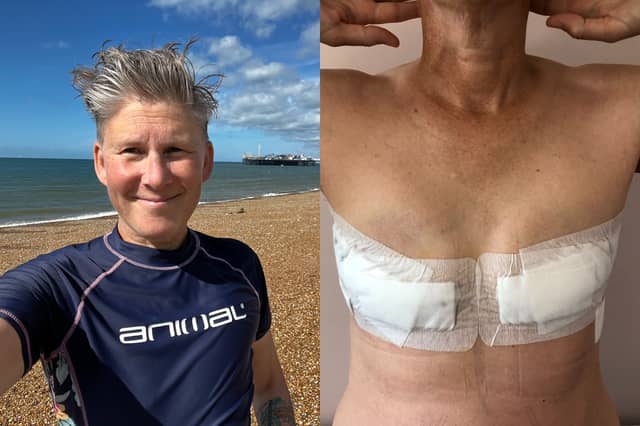

A non-binary parent has said they finally feel “comfortable in their own skin” after their breast cancer diagnosis prompted a double mastectomy.
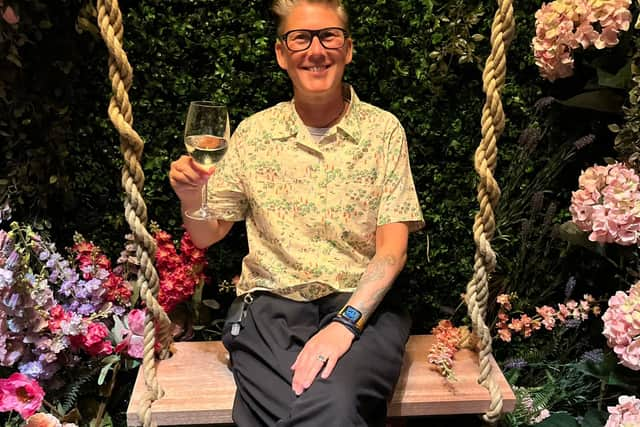
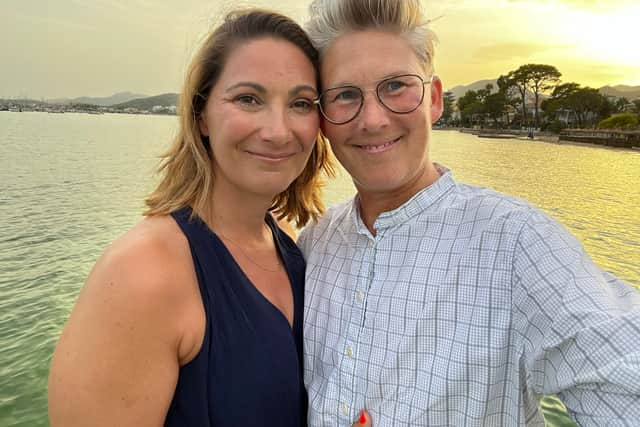
Kit Morey, 53, who lives in Brighton, East Sussex, with their wife, Emma, and their three teenage children, came out as trans non-binary in October 2019 after experiencing gender dysphoria since their childhood.
In May 2021, a routine mammogram revealed Kit had a cancerous tumour growing in their left breast which left them feeling at fault because they “never checked” their breasts, “couldn’t bear to touch them” and wanted to “forget them”.
Kit was informed their cancer treatment would require a single mastectomy but they asked for both breasts to be removed as they “just needed to get rid of them”, but this surgery could not be performed on the NHS as it was not Kit’s prescribed treatment – prompting them to seek the operation via a private surgeon.

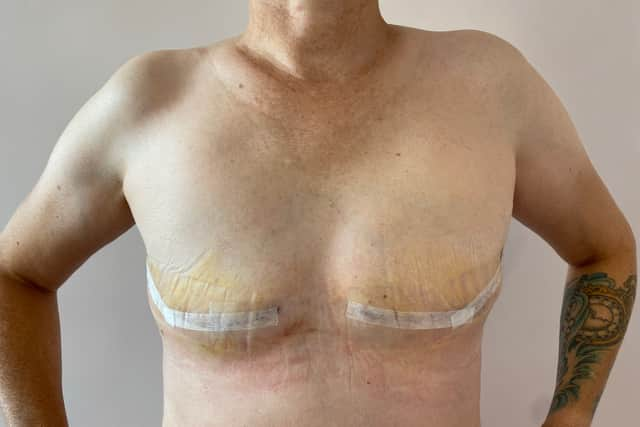
Most recently in January this year, Kit’s surgeon was able to create nipples from their own skin, which they are looking to have tattooed over the coming winter months.
Kit now hopes cancer care and treatment options will be viewed through a more non-gender specific lens as they say “medical care isn’t binary” and there “isn’t a one size fits all for cancer care”.
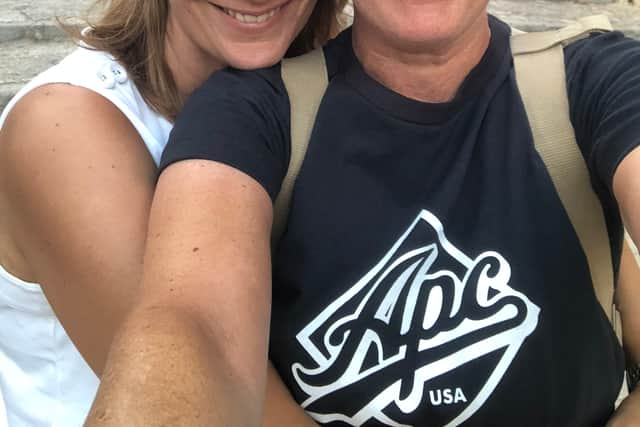
“I was so lucky (the surgery) freed me from cancer, first and foremost, but it also gave me the chest I’d always wanted.
“I’m grateful to finally feel comfortable in my own skin.”
“I feel very sad that I’ve reached the age I have and wasn’t brave enough or had the words to do this in my 20s,” Kit said.
“We didn’t have the words to identify as non-binary or have top surgery back then, so I do feel quite a lot of regret.”
“For me, having any form of medical test or exploration, anything that was to do with my breasts or gynaecological issues, I found very distressing because it just didn’t relate to me,” Kit said.
“I never checked my breasts as I couldn’t bare to touch them, I wanted to forget them.”
They had 12 biopsies and an ultrasound scan, which Kit described as “horrific” due to the further examinations on their breasts.
“To me, it sounded like they knew what it was already,” they said.

The biopsies revealed Kit had ductal carcinoma in situ, a 1.9cm cancerous tumour growing in the milk duct of their left breast.
As it was contained to one area, they were told the treatment would be a single mastectomy but they felt this would not align with their ongoing gender identity journey.

“I knew I was going to have to have an operation but it was then, how is this going to fit in with the way I feel about myself,” Kit said.
“I just needed to get rid of my breasts, I didn’t want to have them anymore and I was not going to have just one.
“But every time I tried to say I didn’t want them, I felt really guilt because I know there are women who lose their breasts to cancer everyday and it can be devestating.

Kit spoke to several health professionals and gender surgeons but said they were told they would not be able to have gender affirming top surgery after their cancer diagnosis.
“That just felt even worse than the cancer because I thought I’m always going to feel uncomfortable about my body,” Kit said.
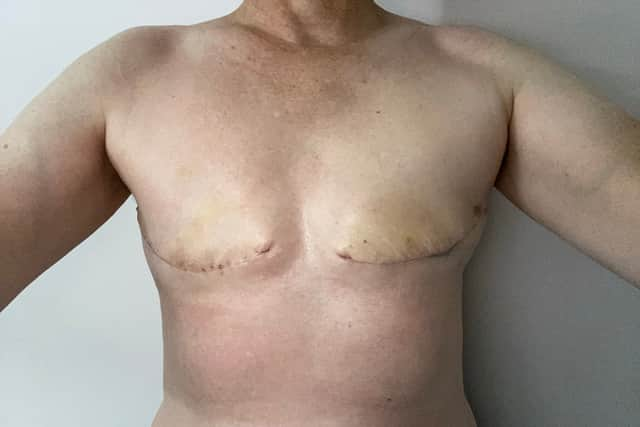
Kit was then able to seek the help of a private onco-plastic surgeon at King Edward VII’s Hospital in London who was able to offer them a double mastectomy to remove both breasts.
“I’m aware how lucky I was able to access private healthcare, not everybody has it at their disposal,” Kit said.
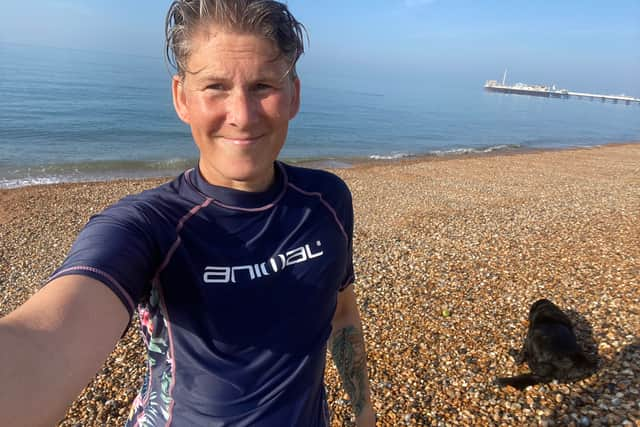
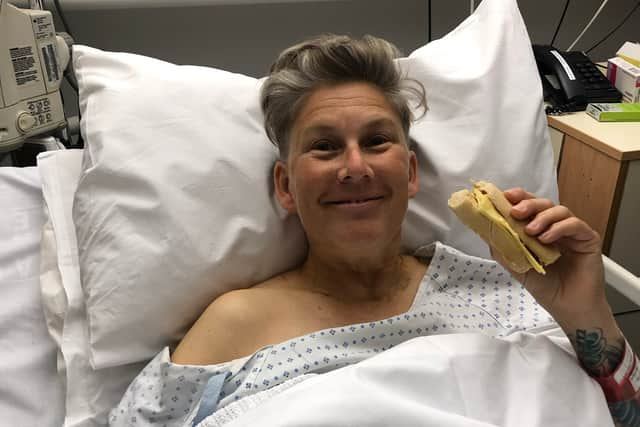
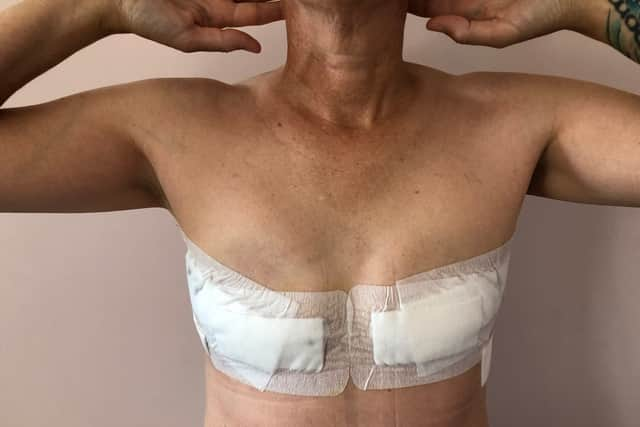
After several consultations, Kit was able to go under the knife to have both breasts removed in a six-hour operation.
“I felt grateful I was able to wake up with a flat chest and I was very grateful I had a cancer that could be dealt with by surgery,” they said.
“It gave me the chance to make something good out of something bad.”
Kit now wants to urge others to adhere to health checks and screenings.
“No matter who you are or how you identify, absolutely go and have your health checks,” Kit said.
“If you still have a womb and ovaries for example, don’t forget about them, I know you may want to but those things can kill you if you aren’t seeking the appropriate care.”
“Medical care isn’t binary, there isn’t just male and female,” Kit said.
“I think we should be looking at this as though there isn’t a one size fits all for cancer care.
“I feel the rest of someone’s situation should be taken into consideration when making those decisions.”
Kit has also worked and fundraised for Cancer Research UK, raising around £7,000 to date.
They are sharing their story in support of Stand Up To Cancer, the joint fundraising campaign from Cancer Research UK and Channel 4.
To find out more, visit: standuptocancer.org.uk/get-involved