
Old Bailey hauntings: Victorian baby killer, ghostly barrister and spectral cat
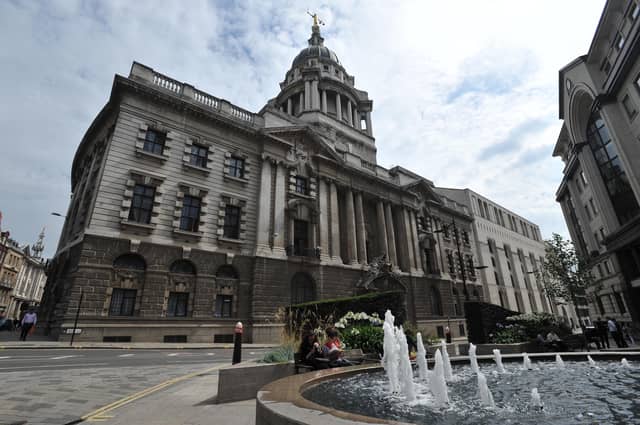

The ghostly figure of a Victorian murderess is among the spectres believed to wander the halls of the Old Bailey.
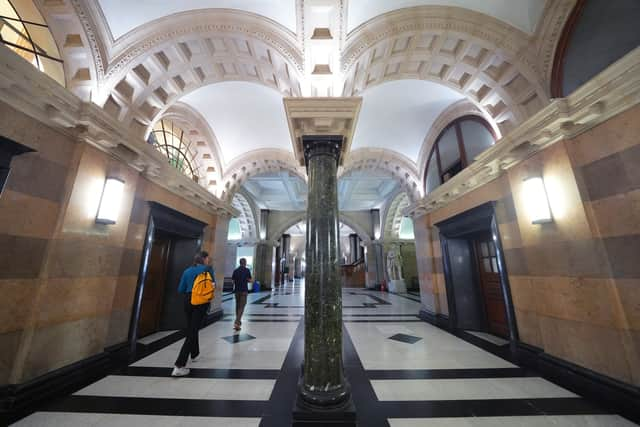
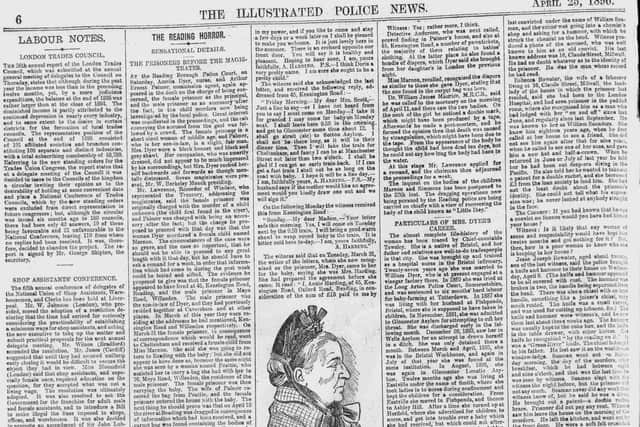
More than a century later, a phantasmal woman seen lurking outside a jury room is believed by some at the Central Criminal Court to be that of Dyer, dubbed by newspapers in her lifetime as the Ogress of Reading.
Other reported sightings have included the dark figure of a ghostly barrister passing through the famous Court One, as well as footsteps, rustling noises and whispers in empty corridors.
One member of staff joked he put garlic outside his office door after hearing a voice calling his name in a dark corridor behind Court One while working alone one evening.
He told the PA news agency: “I was scrambling for the lights. Before I switched it on, someone mentioned my name and I carefully retired, turned my back, slowly moved out and ran to the lift.

PA was granted a rare opportunity to photograph historic artefacts and explore behind the scenes of the world’s most famous courthouse.
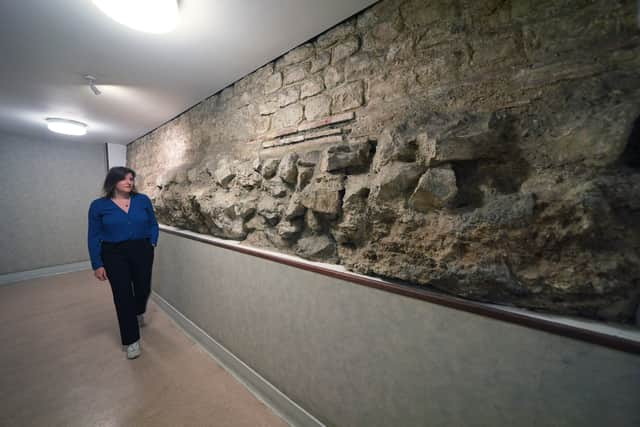
The oldest working courtrooms were built on top of part of the City of London’s Roman Wall and what was once Newgate Prison in the Victorian era.
According to popular folklore, a ghostly “black dog” had prowled the Newgate cells seeking vengeance on prisoners.
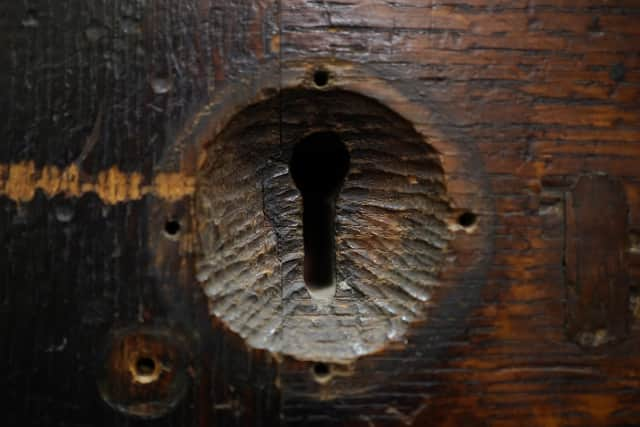
In 1836, he wrote an evocative first-hand account of Newgate Prison with its “heavy oaken gate, bound with iron, studded with nails” guarded by a “turnkey”.
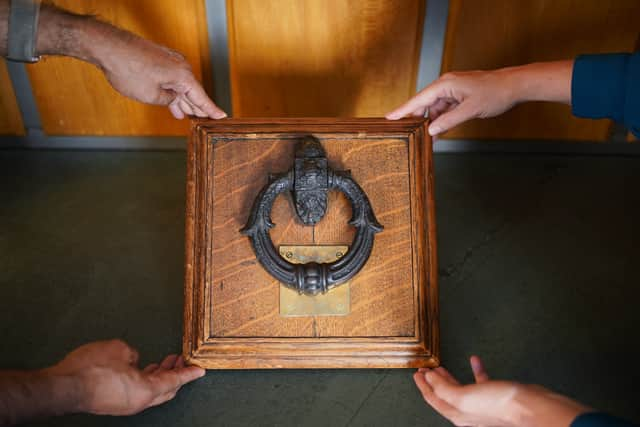
Although the prison was partly destroyed to convert the building into courts in use today, the original heavy wooden prison door and knocker have survived.
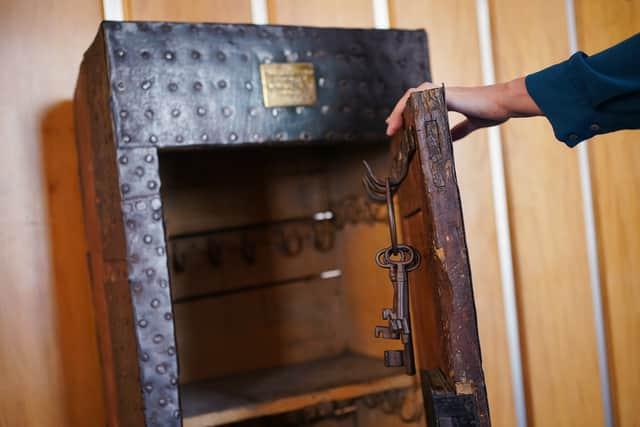
Other clues to the building’s past life include a warder’s safe dated 1903, complete with a set of chunky keys.
Dead Man’s Walk is one of the most chilling parts of Newgate Prison that was not destroyed to make way for courts.

A lesser-known facet of the Old Bailey was a secret tunnel enabling clergy from a nearby church to enter the cells to give prisoners their last rites.
Any defendants considering a break for freedom will be disappointed as it has long since been blocked off.
There is however an old access hatch in a basement to the River Fleet, which runs beneath the building and is often blamed for bad odours in the summer.
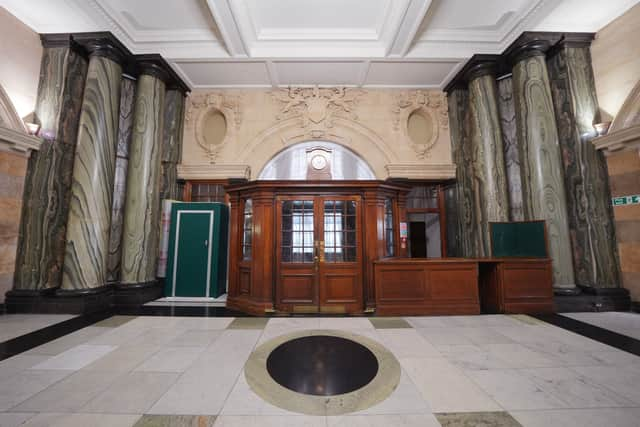
It would take more than 60 years before the last prisoners were executed in the UK, with the death penalty for all crimes not being abolished until 1998.
Designed by Worcestershire-born architect Edward Mountford, the Old Bailey was formally opened by King Edward VII and Queen Alexandra in 1907.
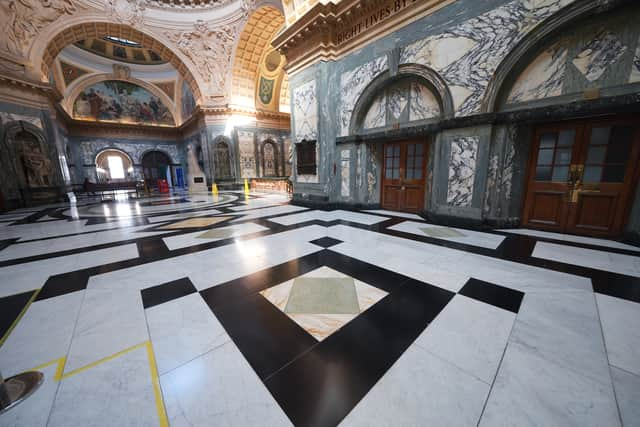
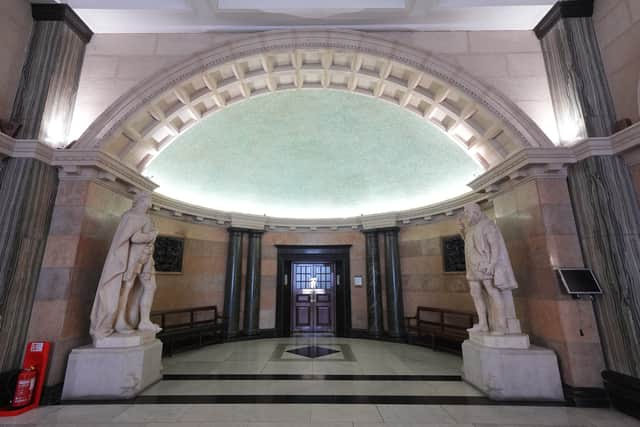
Statues of Charles I and his successor Charles II, who restored the monarchy in 1660, take a prominent position in the Grand Hall.
The Martyr King’s execution in 1649 is remembered today as barristers still don traditional black mourning gowns.
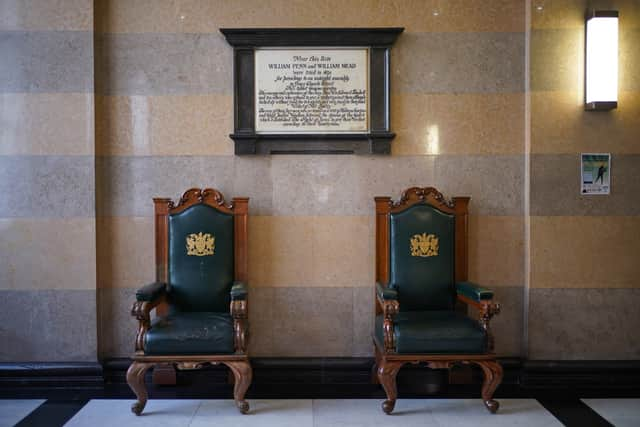
In a more discreet corner of the Old Bailey is a plaque to commemorate a group of rebellious jurors.
The case established the “right of juries to give their verdict according to their convictions”, a rallying cry more recently adopted by climate protesters.
Penn was later gifted Pennsylvania in the United States by Charles II where he founded a refuge for Quakers and other religious minorities.

Standing 12ft high and 6ft wide, the statue is made of gilded bronze and is the only known representation of Lady Justice without a blindfold.

A shard of glass inside the entrance hall is all that remains of the damage caused when a car bomb exploded in 1973, killing one person and injuring many more.
Its category A prison cells have hosted countless high-profile defendants, such as Soham killer Ian Huntley, Yorkshire Ripper Peter Sutcliffe and the Kray twins, Ronnie and Reggie.But whether or not they scrawled any messages on the graffiti-marked cell walls remains a mystery as they are strictly out of bounds to all but inmates – and their guards.
Members of the public can book Saturday tours of the Old Bailey via https://www.eventbrite.com/e/guided-tour-of-the-old-bailey-tickets-954848075297 or for group bookings via [email protected].