
One final drive in the epochal Alpine A110
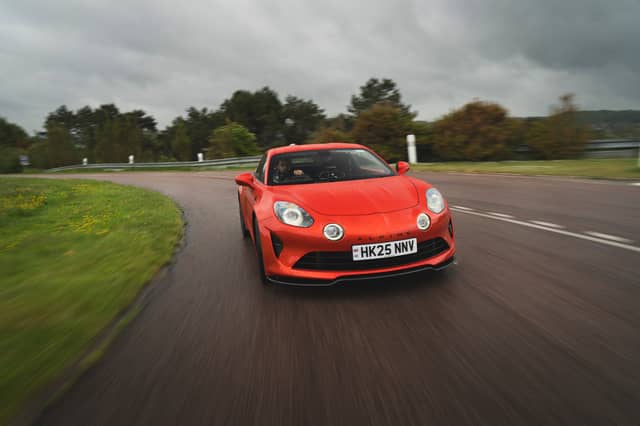

Car manufacturers who build just one car don’t tend to last very long these days. The time when a sports car maker could concentrate on honing its only product, which it had pored over for years and years, built for a loyal but small audience, is all but over. And yet that’s exactly how Alpine has operated for the last eight years.
The charismatic little French brand has quite happily been building the A110 sports car since 2017. But that changed this year when its range swelled with the Renault 5-derived A290 electric hot hatchback, and pulled the covers off an electric SUV – the A390.
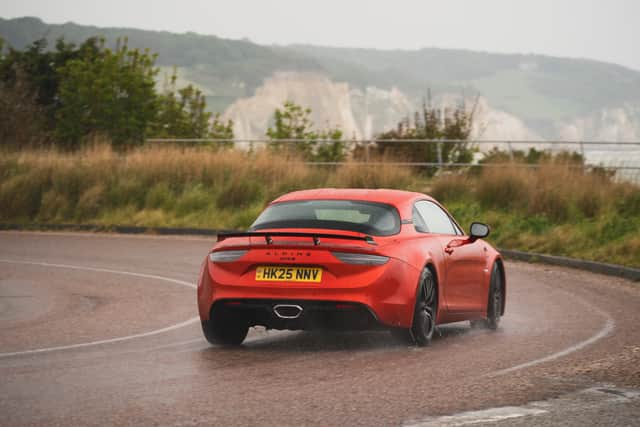
The drive down to the home of Alpine, Dieppe, was a simple one. It takes around three hours from Calais – whether you fly along the autoroutes or elect to take the D-roads. I took the second option, and while it won’t go down as the one of the most spell-binding drives of my life, there was pleasure to be had nosing the A110 S through picture-perfect villages before letting the little 1.8-litre turbocharged engine sing on long, straight tree-lined avenues.
It was rather an uneventful drive, but it allowed me to reflect on what a special car the A110 is. While production started in 2017, the story of the revived sports car brand began some five years earlier when Renault Group signed a 50/50 partnership with Caterham to create a new sports car project. It would allow the tiny British sports car maker to push upwards into more premium circles occupied by Lotus, while, for Renault, it would allow the French manufacturer to bring back the Alpine brand that had been mothballed for over 20 years.
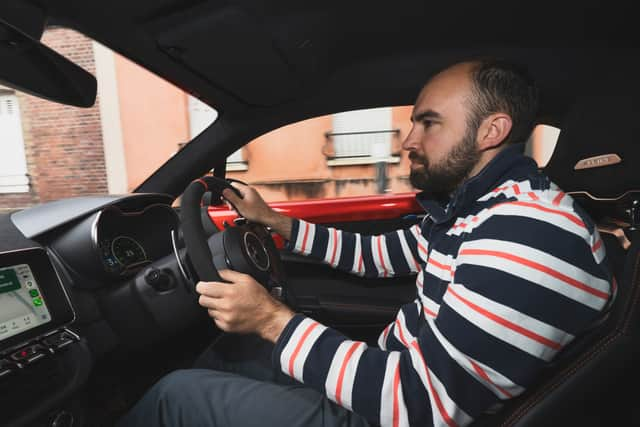
The A110 S’s stiffer springs, 4mm lower ride height, and optional aero kit weren’t exactly tested on this relaxed jaunt along the coastline of northern France. Soon after passing through the town of Criel-sur-Mer, the remaining 23km of road to Dieppe began to get a little more interesting. The A390’s world premiere had brought out Alpines from all over Europe it seemed, as owners of original and new A110s, A310s, GTAs, A610s and even Alpine-tuned original Renault 5s negotiated their way through the busy town centre to the main esplanade. Here, Alpine had erected a large building to showcase the new member of the family that evening.
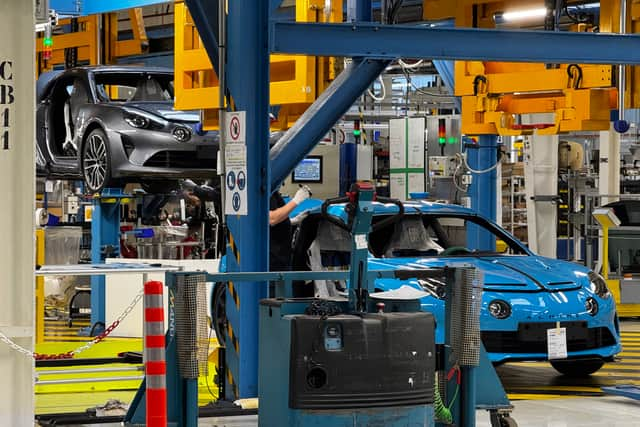
The Alpine factory is unequivocally a matter of local pride. The story began in 1955 when Renault dealer and motorsport fanatic Rédélé decided to build his own cars. Throughout the 1970s, the factory, built in 1969, handcrafted the A110 Berlinette, while the A310, GTA and A610 kept the workers busy and the Alpine name alive well into the mid-1990s.
Renault finally mothballed Alpine in 1995, with the last car leaving the factory that April. Yet the Dieppe plant thrived, producing the Renault Sport Spider from 1996 before becoming home to many high-performance Renaults, with the Alpine name returning above the door for the reborn A110 of 2017.
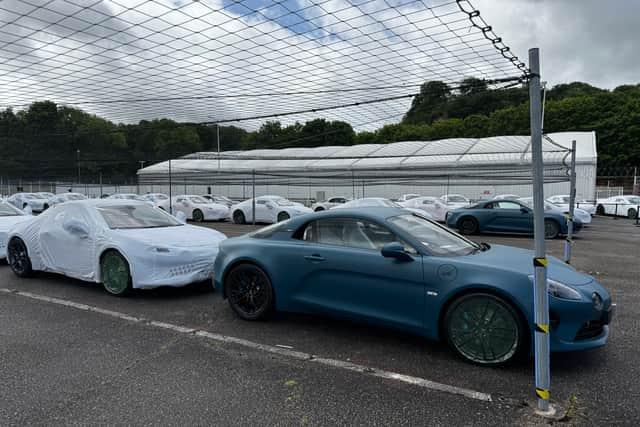
Unlike some other plants I’ve visited, you can tell the workers love building the A110. It’s a mixture of automation and manual labour, like in most facilities, but there seems to be more human involvement at Dieppe. The cars creep along at a glacial pace, and roll off the end in tens rather than hundreds, with the complete build process taking around three weeks. At various points, the aluminium bodies are lovingly checked and checked again for quality control, the engine and suspension are bolted in, and the cars are test-driven for 15 miles before awaiting transportation.
While it’s a sad drive back to Calais knowing that the A110 is the last chapter in Dieppe’s petrol sports car novel, I doubt the factory and the town’s passion for cars will die just because a pure-electric future is on the horizon. If anything, the Alpine brand has never looked so healthy.